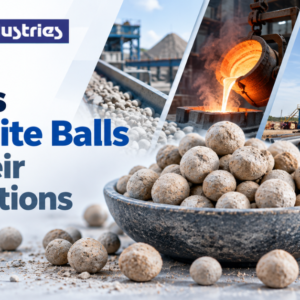



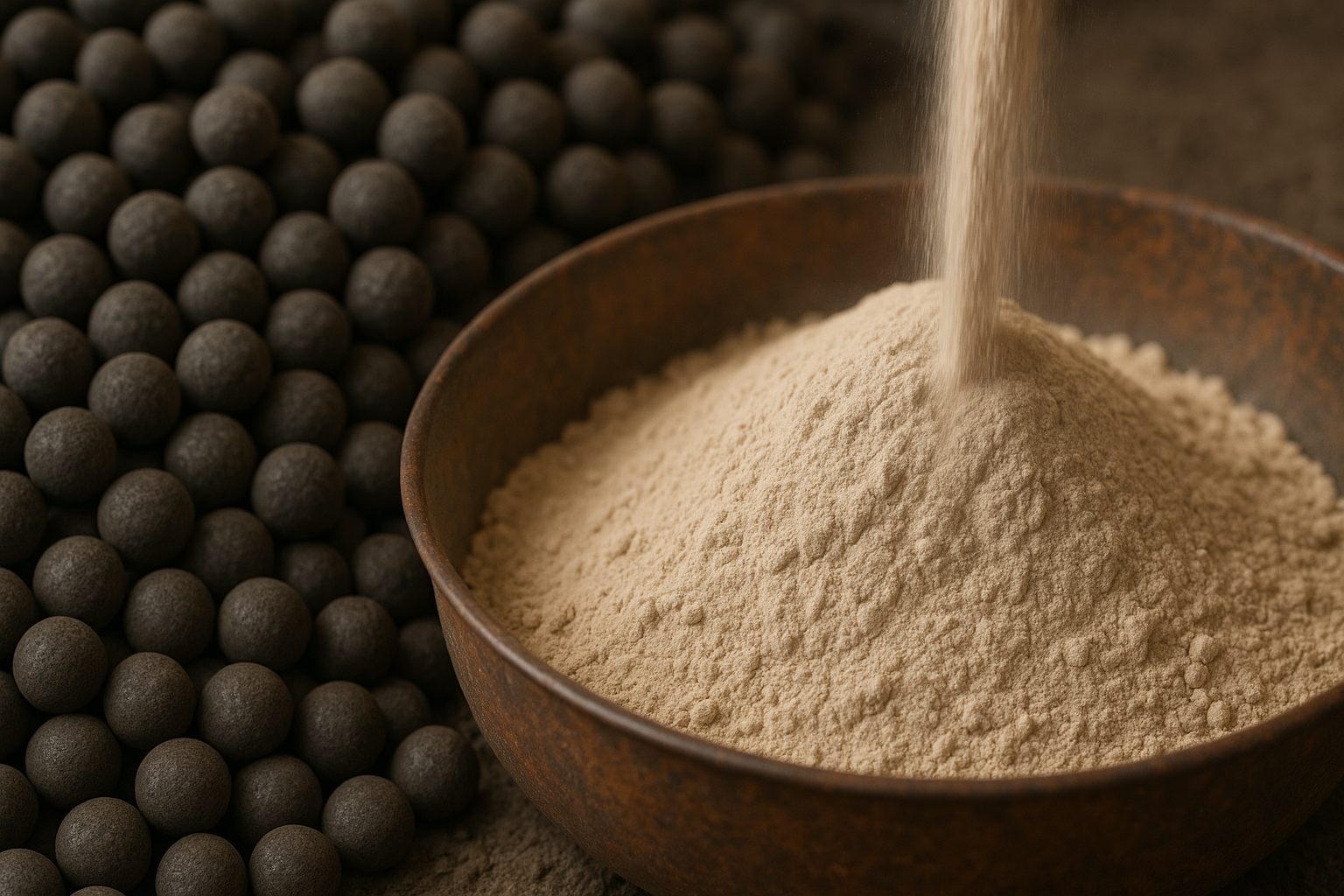
Iron ore pelletization has become the backbone of modern steel production. At the heart of this process sits a naturally occurring clay mineral called bentonite. This substance works as a binding agent, transforming fine iron ore particles into durable spherical pellets that can withstand the intense conditions inside blast furnaces.
Understanding Pelletization Bentonite
Pelletization bentonite is a specialized grade of clay primarily composed of montmorillonite, a member of the smectite mineral group. When iron ore fines are too small for direct use in steelmaking, bentonite serves as the glue that holds these particles together. The material possesses unique physical and chemical properties that make it nearly irreplaceable in iron ore processing.
The mineral structure of Bentonite Montmorillonite vs Montmorillonite consists of layered aluminum silicate sheets. These microscopic platelets stack together loosely, allowing water molecules to penetrate between the layers a unique trait that gives bentonite its signature ability to swell dramatically when exposed to moisture.
Why Iron Ore Needs Pelletization
Iron ore pellets are spherical balls ranging from 6 to 16 millimeters in diameter. These pellets typically contain 64 to 72 percent iron content, along with other materials that adjust their chemical and metallurgical properties. The steel industry prefers pellets over fine powders for several practical reasons.
When fine iron ore powder sits in a blast furnace, it packs tightly together, restricting airflow. The dense configuration creates resistance that slows down the smelting process. Pellets, by contrast, maintain gaps between spheres that allow air to flow freely through the furnace layers. This improved circulation makes the entire operation more efficient.
The pelletization process also addresses transportation challenges. Fine ore powders generate excessive dust during handling and shipping, creating workplace hazards and material losses. Compact pellets eliminate these concerns while remaining easy to handle and transport across long distances.
The Role of Bentonite as a Binder
Pelletization bentonite performs multiple functions during iron ore processing. The binding mechanism begins when moisture activates the clay particles. Water molecules hydrate the exchangeable cations between montmorillonite layers, causing the clay to expand and disperse throughout the iron ore mixture.
This swelling creates a voluminous network that occupies spaces between mineral particles. The bentonite forms a gel-like matrix that coats iron ore surfaces and binds them together through both physical and chemical interactions. When mechanical forces compress and tumble the mixture, pellets gradually form into spherical shapes.
Companies like CMS Industries manufacture high-quality bentonite specifically designed for iron ore pelletization applications. The proper selection of bentonite grade directly influences pellet strength and overall process efficiency.
Types of Pelletization Bentonite
Two main categories dominate the bentonite market: sodium bentonite and calcium bentonite. Each type offers distinct characteristics based on the predominant cation occupying the interlayer spaces within the montmorillonite structure.
Sodium bentonite exhibits superior swelling capacity compared to its calcium counterpart. This makes it the preferred choice for applications requiring strong binding properties. When sodium cations hydrate, the clay can absorb 8 to 15 times its dry weight in water, sometimes expanding up to 30 times its original volume.
Calcium bentonite has lower swelling capacity but remains useful after sodium activation. Many operations use sodium-activated calcium bentonite to leverage benefits from both types. The activation process involves treating calcium bentonite with sodium compounds, enhancing its swelling properties and making it more suitable for pelletization.
Key Properties That Matter
Several physical and chemical characteristics determine bentonite quality for pelletization. Montmorillonite content stands as the most critical factor. Higher montmorillonite percentages correlate directly with better binding performance and pellet strength.
Water absorption capacity measures how much moisture the bentonite can hold. This property affects both the balling process and the final pellet characteristics. Materials with higher water absorption promote better formation of green pellets while preventing premature moisture loss.
The swelling index indicates how much the bentonite expands when exposed to water. Greater swelling capacity generally produces stronger bonding between iron ore particles. The methylene blue absorption test provides another indicator of montmorillonite content and overall bentonite quality.
Particle size distribution also plays a role. Finer bentonite particles disperse more evenly throughout the iron ore mixture, creating uniform binding throughout each pellet. CMS Industries processes bentonite to optimize particle size for maximum effectiveness in pelletization applications.
The Pelletization Process Step by Step
The journey from iron ore concentrate to finished pellets involves several distinct stages. First, operators mix finely ground iron ore (typically 80 percent passing 25 micrometers) with bentonite and water. The standard bentonite dosage ranges from 0.5 to 1.5 percent of the concentrate weight, though this varies based on ore characteristics and desired pellet properties.
Moisture content must be carefully controlled during mixing. The combination creates a plastic mass that can be shaped but maintains enough cohesion to hold together. Proper moisture distribution throughout the mixture prevents weak spots that could cause pellets to collapse.
Next comes the balling stage, where the mixture enters a disc pelletizer or rotating drum. As the material tumbles, small seed pellets form and gradually grow larger as additional material adheres to their surfaces. The rolling action, combined with moisture and bentonite binding, shapes the pellets into uniform spheres.
Green pellets emerge from the balling process with sufficient strength to withstand handling but not yet durable enough for long-term use. These pellets then move through drying, preheating, and firing stages where high temperatures create ceramic bonds between particles, transforming soft green pellets into hard, durable spheres ready for blast furnace use.
How Bentonite Creates Pellet Strength
Understanding the binding mechanisms helps explain why pelletization bentonite works so well. In wet green pellets, bentonite creates strength through two primary mechanisms: capillary forces and particle interlocking.
When water activates bentonite, the swollen clay particles form a network structure throughout the pellet. This network holds iron ore particles in place while capillary forces from moisture create additional cohesion. The combination gives green pellets enough strength to survive transfer to the next processing stage.
During drying, bentonite migrates toward contact points between iron ore particles. As moisture evaporates, the clay consolidates at these junctions, forming solid bridges that dramatically increase pellet strength. The high water absorption capacity of bentonite slows moisture evaporation, allowing water to escape gradually rather than explosively. This controlled release prevents internal steam pressure from cracking pellets during drying.
Recent research has identified an additional binding mechanism: fiber formation. Under proper mixing conditions involving compressive shear forces, bentonite platelets can align and form fibrous networks that tie iron ore particles together. This fiber mechanism can reduce required bentonite dosage by up to 50 percent while maintaining acceptable pellet strength.
Optimal Bentonite Dosage Considerations
Determining the right amount of bentonite requires balancing multiple factors. Too little bentonite results in weak pellets that break apart during handling. Too much bentonite increases costs and introduces unwanted impurities into the final product.
Iron ore particle size distribution affects bentonite requirements. Finer ore particles have larger total surface area, requiring more binder to coat all surfaces adequately. Coarser particles need less bentonite to achieve the same binding effect.
Different iron ore mineralogies also influence binding needs. Some ore types naturally bond more readily, requiring less bentonite assistance. Others need higher binder dosages to achieve acceptable strength specifications.
The desired pellet properties set another parameter. Applications demanding very high compressive strength require more bentonite than those with lower strength requirements. Typical industrial specifications call for dry pellets to withstand at least 22 Newtons of compressive force.
Curious about which type of bentonite is best for pond sealing – sodium or calcium? Please read this blog to find out the key differences and best choice for your project.
Challenges and Considerations
Despite its effectiveness, bentonite use in pelletization presents several challenges. The material contains silica and alumina, which are undesirable contaminants in iron ore pellets. Each 1 percent of bentonite added can decrease iron content by 0.6 to 0.7 percent.
These acid gangue materials increase slag formation during steelmaking, requiring additional energy to process. Some estimates indicate that every 1 percent increase in acid gangue raises energy consumption by 30 kilowatt-hours per ton of direct reduced iron produced.
Bentonite quality varies by source and origin. Natural variation in montmorillonite content, water absorption capacity, and other properties means that bentonite from different suppliers can perform quite differently. This variability requires careful testing and quality control.
Cost represents another consideration. While bentonite remains relatively inexpensive compared to alternative binders, large pelletizing operations consume thousands of metric tons annually. Optimizing bentonite usage without sacrificing pellet quality offers significant economic benefits.
Alternative and Complementary Binders
The steel industry continues researching alternatives to reduce bentonite dependence. Organic binders like carboxymethyl cellulose, starch, and dextrin offer some advantages. These materials burn completely during firing, leaving no silica residue and producing pellets with higher iron content.
Organic binders also increase pellet porosity, improving reducibility in blast furnaces. The enhanced pore structure allows reducing gases to penetrate more easily, speeding up the conversion of iron ore to metallic iron. This can reduce coke requirements and lower overall production costs.
Some operations use combined binder systems that mix organic materials with reduced amounts of bentonite. The organic component provides sufficient wet and dry pellet strength while bentonite contributes to preheated and fired pellet durability. This approach balances the benefits of both binder types.
Polymer-type binders represent another emerging option. Recent studies show that combining small amounts of novel polymers with reduced bentonite dosages can maintain or even improve pellet properties while decreasing total binder costs and silica contamination.
Quality Standards and Testing
Ensuring pelletization bentonite meets industry requirements involves comprehensive testing protocols. Standard tests measure montmorillonite content, typically using methylene blue absorption as an indicator. Higher values correlate with better binding performance.
Swelling tests determine expansion capacity. Laboratory procedures measure how much bentonite volume increases when saturated with water under standardized conditions. Results indicate the material’s potential effectiveness as a binder.
Water absorption tests quantify moisture retention capacity. These measurements predict how the bentonite will behave during mixing and balling operations. Colloid value tests assess the percentage of fine particles that remain suspended in water, providing another indicator of quality.
CMS Industries maintains rigorous quality control throughout production to ensure consistent bentonite properties. Regular testing verifies that each batch meets specifications for pelletization applications, giving customers confidence in product performance.
The Future of Pelletization Bentonite
Research continues advancing pelletization technology and bentonite applications. Scientists are exploring methods to enhance bentonite effectiveness through chemical modification and physical processing. Surface treatments can improve dispersion characteristics and binding strength.
Processing innovations aim to reduce bentonite dosages without compromising pellet quality. The fiber formation mechanism discovered in recent years demonstrates that mixing procedures significantly impact binding effectiveness. Optimizing mechanical processing parameters may allow substantial bentonite savings.
Environmental concerns drive interest in sustainable alternatives and reduced material consumption. Lower bentonite usage means less mining, reduced transportation impacts, and decreased silica contamination in steel production. These factors align with broader industry sustainability goals.
Digital technology and process control systems enable more precise bentonite dosing and mixing. Real-time monitoring of pellet properties allows operators to adjust binder levels dynamically, optimizing performance while minimizing waste.
Frequently Asked Questions
What makes bentonite effective as a pelletization binder?
Bentonite’s effectiveness comes from its unique crystal structure. The material consists primarily of montmorillonite, a clay mineral with layered sheets that can absorb large amounts of water and swell dramatically. When mixed with iron ore concentrate, the swollen bentonite particles disperse between ore particles, creating a binding matrix. This network holds particles together during pellet formation and creates solid bridges after drying. The high surface area and cation exchange capacity of montmorillonite enable strong physical and chemical bonds with iron ore surfaces.
How much bentonite is needed for iron ore pelletization?
Typical bentonite dosages range from 0.5 to 1.5 percent of the moist iron ore concentrate weight. The exact amount depends on several factors including iron ore particle size distribution, ore mineralogy, desired pellet strength, and bentonite type and quality. Finer ore particles require more binder due to their larger total surface area. Sodium bentonite’s higher swelling capacity means it can be used at lower dosages compared to calcium bentonite. Recent advances in mixing technology and fiber formation mechanisms have shown potential to reduce bentonite requirements by up to 50 percent while maintaining acceptable pellet properties.
Why can’t steel producers eliminate bentonite entirely from pelletization?
While alternative binders exist, completely eliminating bentonite remains challenging. The material provides a unique combination of benefits at relatively low cost. Bentonite offers excellent wet, dry, and fired pellet strength across all processing stages. It withstands the thermal stresses during preheating and firing that cause many organic binders to fail. The material’s natural availability and established supply chains make it economically attractive. Although organic binders reduce silica contamination, they often struggle to provide adequate preheated and fired strength without support from inorganic materials like bentonite. Most successful alternative approaches combine reduced bentonite with complementary binders rather than eliminating it completely.
What is the difference between sodium and calcium bentonite for pelletization?
Sodium bentonite exhibits significantly higher swelling capacity than calcium bentonite, sometimes expanding up to 30 times its dry volume when saturated with water. This superior swelling makes sodium bentonite more effective as a pelletization binder, allowing lower dosages to achieve the same pellet strength. Calcium bentonite has lower natural swelling capacity but costs less and occurs more abundantly. Many operations use sodium-activated calcium bentonite, which involves treating calcium bentonite with sodium compounds to improve its swelling properties. This activation process makes calcium bentonite perform more like sodium bentonite while maintaining cost advantages. Both types contain montmorillonite as their primary mineral component.
Does bentonite quality vary between different suppliers?
Bentonite quality varies considerably based on geological source, processing methods, and quality control practices. Natural variation in montmorillonite content, water absorption capacity, swelling index, and particle size distribution means that bentonites from different deposits perform quite differently. Processing techniques also affect final product characteristics. Proper sodium activation, particle size reduction, and removal of impurities all influence pelletization performance. Reputable suppliers like CMS Industries maintain consistent quality through careful source selection, controlled processing, and comprehensive testing. When changing bentonite suppliers, pelletizing operations should conduct thorough testing to verify the new material meets performance requirements and adjust dosages accordingly.