


If you have oily skin, you already know the drill: the midday shine, clogged pores, and breakouts that seem to come from nowhere. Bentonite clay has been around as a skincare ingredient for decades, but lately it has made a real comeback as people look for straightforward, well-sourced ingredients that do what they claim. So is a bentonite clay mask actually good for oily skin, or is it just a trend backed by marketing? Let’s look at what the research says.
What Is Bentonite Clay?
Bentonite manufacturers is a naturally occurring clay mineral that forms from the weathering of volcanic ash. It gets its name from Fort Benton, Wyoming, where large deposits were first identified. Chemically, it is a hydrated aluminum magnesium silicate, and it belongs to the smectite group of clays. Two main types exist: sodium bentonite and calcium bentonite. Both are used in cosmetics, though they have slightly different properties.
What makes bentonite interesting for skincare is not just what it is, but how it behaves. When mixed with water, bentonite swells and takes on a gel-like consistency. Each particle carries a net negative electrical charge on its surface. Most impurities found on and in skin, including bacteria, sebum components, and environmental pollutants, carry a positive charge. The clay essentially acts like a magnet, binding those positively charged particles and holding them until you rinse the mask away.
Bentonite also works through a process called adsorption, which is different from regular absorption. With adsorption, molecules stick to the surface of the clay particles rather than being absorbed into them. This dual action, adsorbing and absorbing, makes bentonite particularly good at lifting out what you do not want sitting in your pores.
CMS Industries, one of India’s largest bentonite manufacturers and exporters, produces a dedicated cosmetic grade of bentonite called CMS COSMETICBENT®, which is specifically formulated for higher oil absorption capacity and the removal of impurities from the skin. The difference between industrial-grade and cosmetic-grade bentonite matters, as cosmetic applications require strict purity and particle-size standards.
How Bentonite Clay Benefits Oily Skin
Here is a breakdown of the specific ways bentonite clay benefits oily skin.
1. Absorbs Excess Sebum
Oily skin produces more sebum than necessary. Sebum itself is not a problem; it protects and moisturizes the skin. The problem is overproduction, which leads to clogged pores, blackheads, and acne. A 2023 clinical study published in Skin Research and Technology enrolled 75 adults with oily or combination skin and had them use a clay mask containing bentonite twice weekly for four weeks. Researchers used a Sebumeter to measure sebum content at baseline and after one, two, and four weeks. The results showed a measurable reduction in sebum content over the course of the study, with improvements appearing as early as week one.
Bentonite clay’s large surface area and porous structure give it a strong capacity for oil uptake. According to research published in the journal Cosmetics (MDPI, 2024), clay particles adsorb excess sebum, impurities, and skin exudates, and the absorption capacity relates directly to particle porosity.
2. Unclogs Pores and Reduces Blackheads
When sebum oxidizes inside a pore and gets exposed to air, it turns dark and becomes what we call a blackhead. Bentonite clay masks work against this by drawing out the trapped oil before it has a chance to oxidize. With regular use, pores tend to appear smaller simply because they are not stretched open by accumulated oil and debris.
The same 2023 clinical trial measured pore characteristics and skin evenness using VISIA-CR imaging. Participants showed improved skin evenness and pore appearance by week four, supporting the idea that consistent use produces noticeable change rather than just a temporary tightening effect.
3. Fights Acne-Causing Bacteria
Oily skin creates an environment where Cutibacterium acnes (formerly Propionibacterium acnes) bacteria can thrive. Bentonite clay has demonstrated antibacterial properties in several studies. A review of bentonite’s biomedical applications found that the clay can reduce inflammation and inhibit bacterial growth, both of which are relevant to managing acne in oily skin.
This does not mean bentonite is a treatment for severe acne. If you have cystic or nodular acne, you need to work with a dermatologist. But for the typical surface-level breakouts that come with oily skin, the antibacterial action of a clay mask is a real benefit.
4. Gently Exfoliates Dead Skin Cells
Bentonite clay is mildly abrasive at the microscopic level. When you apply a paste and let it dry, it works against the top layer of dead skin cells, grime, and debris. This light exfoliation helps prevent comedones (whiteheads and blackheads) from forming and leaves the surface of the skin smoother. It also means that any products you apply after washing off the mask, like a moisturizer or a serum, absorb better.
5. Calms Inflammation
Inflamed acne lesions are red, swollen, and often painful. The minerals in bentonite clay, including calcium, magnesium, and silica, have a soothing effect on irritated skin. Research in the review mentioned above noted that bentonite and related montmorillonite clays demonstrate anti-inflammatory properties in both laboratory and animal model studies. For oily, acne-prone skin that is already inflamed, this is a meaningful secondary benefit.
Does Bentonite Clay Dry Out Oily Skin Too Much?
This is a fair concern. Oily skin still needs moisture. Stripping every bit of oil from the skin can actually backfire: the skin reads the loss of moisture as a signal to produce even more sebum to compensate.
The 2023 clinical trial addressed this directly. Researchers also tracked skin hydration using a Corneometer alongside sebum measurements. Interestingly, they found that skin hydration actually increased over the four-week period, and transepidermal water loss (the rate at which water evaporates from the skin) decreased. This suggests that when used at the right frequency, a bentonite clay mask does not necessarily compromise the skin’s moisture barrier.
The key phrase there is “at the right frequency.” Using the mask two to three times per week for oily skin is the generally supported approach. Daily use would likely be too aggressive and could cause dryness, redness, and irritation. If you notice your skin feeling tight or flaky after use, scale back to once a week and follow with a non-comedogenic moisturizer.
How to Use a Bentonite Clay Mask for Oily Skin
Here is a simple step-by-step method:
- Start with clean skin. Wash your face with a gentle cleanser and pat dry.
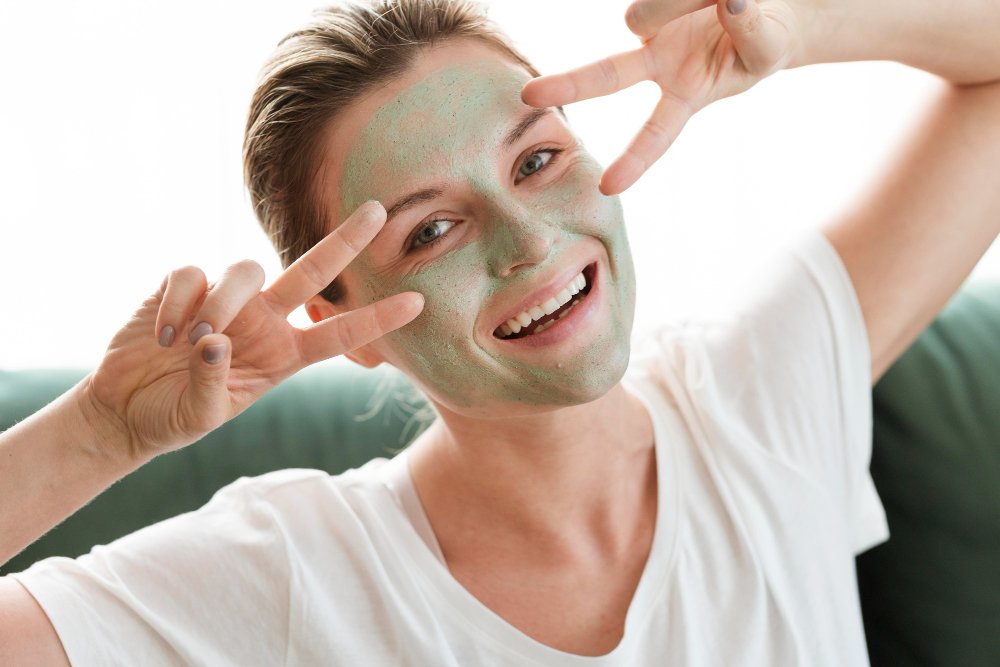
- Mix the mask. Combine one part bentonite clay powder with one part water (or apple cider vinegar, which adds antibacterial and mild exfoliating benefits for oily skin). Stir until you get a smooth, lump-free paste. Avoid metal spoons and bowls, as metal can reduce the clay’s electrical charge.
- Apply an even layer. Use your fingers or a brush to spread the paste evenly across the oily zones of your face. Avoid the eye area.
- Leave it on for 10 to 20 minutes. Do not wait until it feels painfully tight. A slight pulling sensation is normal; discomfort is not.
- Rinse thoroughly with warm water. Make sure no clay residue remains in creases or along the hairline.
- Moisturize. Apply a lightweight, non-comedogenic moisturizer while the skin is still slightly damp.
- Repeat two to three times per week.
Sodium Bentonite vs. Calcium Bentonite for Skin
Not all bentonite is identical. Sodium bentonite has stronger swelling properties and a higher liquid absorption capacity, which makes it more potent for oil control. Calcium bentonite, sometimes sold under the name “calcium montmorillonite,” is gentler and is often described as having higher detoxifying and healing properties. Because of these differences, sodium bentonite is commonly preferred in products like bentonite clay pomade, where strong oil absorption and firm texture help provide better hair styling and hold.
What to Watch Out For
Bentonite clay is considered safe for topical cosmetic use. According to a safety assessment cited in the Cosmetic Ingredient Review (CIR), dermal sensitization was not reported in human repeated insult patch tests using products containing bentonite at concentrations up to 14.5%. That said, a small number of people do experience sensitivity. Outside of cosmetics, the mineral is also widely used in products such as bentonite sand litter, where its strong absorption and clumping properties make it effective for moisture control and odor management.
A few cautions worth knowing:
- Do a patch test first. Apply a small amount to your inner arm, wait 24 hours, and check for any reaction before applying to your face.
- Buy cosmetic-grade clay. Industrial or agricultural grades are not purified for skin contact and may contain contaminants. Always verify you are using a cosmetic-grade product.
- Avoid leaving it on too long. The 20-minute maximum is not arbitrary. Extended contact can draw out too much moisture along with the sebum.
- Inhaling dry clay powder is a concern with prolonged exposure, but this is not a risk from occasional mask use if you mix the powder carefully away from your face.
The Bigger Picture on Bentonite Clay and Oily Skin
The evidence supports bentonite clay masks as a practical, well-tolerated addition to a skincare routine for oily skin. The clinical research shows measurable reductions in sebum content, improvements in pore appearance, and no significant compromise to skin hydration at recommended use frequencies.
What the research also makes clear is that no single ingredient solves oily skin on its own. Lifestyle factors, hormonal balance, diet, and environmental conditions all play roles. A bentonite clay mask is one useful tool, not a cure.
The quality of the clay matters, which is why sourcing is worth paying attention to. Companies like CMS Industries process bentonite to meet specific physical and chemical standards for cosmetic applications, ensuring particle size, purity, and oil absorption capacity are within the range that actually benefits skin.
If you have been dealing with excess shine, congested pores, or frequent surface breakouts, a bentonite clay mask used two to three times a week is a low-cost, well-researched option worth trying.
Frequently Asked Questions
Q1: How often should I use a bentonite clay mask if I have oily skin?
For oily or acne-prone skin, using a bentonite clay mask two to three times per week works well for most people. This frequency gives the clay enough opportunity to reduce sebum buildup without stripping the skin’s natural moisture. If your skin feels dry or tight after use, reduce to once a week.
Q2: Can bentonite clay mask help with acne on oily skin?
Yes, it can help with mild to moderate surface breakouts. Bentonite clay absorbs the excess sebum that feeds acne-causing bacteria and has demonstrated antibacterial properties in published research. It is not a substitute for medical treatment in cases of severe or cystic acne, but it is a reasonable part of a preventive routine.
Q3: Will a bentonite clay mask make oily skin drier?
When used at the right frequency, it should not. A 2023 clinical study found that skin hydration actually increased over four weeks of twice-weekly clay mask use. The key is not overusing it. Applying a non-comedogenic moisturizer after rinsing off the mask also helps maintain the skin’s moisture balance.
Q4: What is the difference between sodium bentonite and calcium bentonite for oily skin?
Sodium bentonite has a higher swelling capacity and stronger oil absorption, making it the more potent option for controlling excess sebum. Calcium bentonite is gentler, with properties suited to sensitive or combination skin. Both come from the same mineral family but have different performance profiles in cosmetic applications.
Q5: Can I mix bentonite clay with apple cider vinegar instead of water?
Yes, and it is a popular combination for oily skin. Apple cider vinegar is mildly antibacterial and contains alpha hydroxy acids that help with exfoliation. Use a 1:1 ratio of clay to vinegar. If you have sensitive skin, dilute the vinegar with water first to reduce its acidity and lower the risk of irritation.