


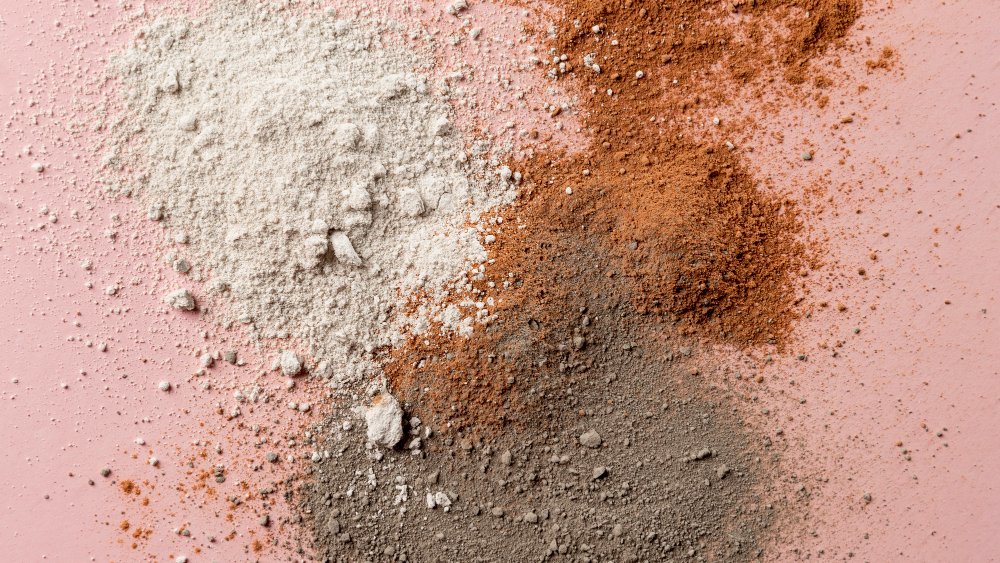
Two white powders. Both mined from the earth. Both used in agriculture, health products, and industry. And yet bentonite and diatomaceous earth are about as different from each other as clay is from fossils. Literally.
If you’ve been searching “bentonite vs diatomaceous earth” trying to figure out which one fits your application, this guide is for you. We’ll break down their origins, physical properties, industrial uses, and how to choose between them.
What Is Bentonite? Origins and Composition
Bentonite is a type of clay formed from the weathering and decomposition of volcanic ash over millions of years. The primary mineral in bentonite is montmorillonite, a smectite-group clay known for its remarkable ability to absorb water and swell sometimes expanding up to 15 times its dry volume.
There are two main types: sodium bentonite and calcium bentonite. Sodium bentonite has higher swelling capacity and is widely used in industrial applications like drilling fluids, pond sealing, and geosynthetic clay liners. Calcium bentonite swells less but has stronger adsorptive properties, making it popular in cosmetics, animal feed, and detox applications.
Bentonite carries a natural negative electrical charge, which draws positively charged toxins, heavy metals, and impurities toward it like a magnet. This is one of the core reasons it’s so widely used from cat litter to civil engineering to water treatment.
CMS Industries, one of India’s largest bentonite mine owners and processors, produces a wide range of application-specific bentonite grades including oil drilling bentonite, foundry bentonite, GCL bentonite, pond sealing bentonite, and more sourced from the mineral-rich deposits of Kachchh, Gujarat.
What Is Diatomaceous Earth? Origins and Composition
Diatomaceous earth (DE) is something entirely different. It’s a sedimentary rock formed from the fossilized shells of diatoms microscopic single-celled aquatic algae that lived millions of years ago. When these organisms died, their silica-rich cell walls settled to the bottom of lakes and oceans, accumulating over time into layered deposits.
Today, those deposits are mined, dried, and milled into a fine off-white powder. The primary component is amorphous silicon dioxide (silica), typically making up 80–90% of DE’s composition, with trace amounts of alumina, iron oxide, calcium, and magnesium.
Unlike bentonite clay mask good for skin, DE does not swell when it contacts water. It stays dry and powdery, and its structure is porous with microscopically sharp edges which is the key to how it works in pest control and filtration.
Bentonite vs Diatomaceous Earth: A Direct Comparison
Here’s a quick breakdown to see how these two materials stack up:
| Property | Bentonite | Diatomaceous Earth |
| Origin | Volcanic ash (clay mineral) | Fossilized diatom algae |
| Primary Mineral | Montmorillonite | Amorphous silica (SiO₂) |
| Color | Light gray to buff/brown | Off-white to white |
| Texture | Smooth, gel-like when wet | Fine, slightly abrasive powder |
| Behavior in Water | Swells significantly, forms gel | No swelling; stays powdery |
| Adsorption Mechanism | Chemical (negative charge attracts toxins) | Physical (porous structure traps particles) |
| Main Industrial Uses | Drilling, foundry, civil engineering, GCL, pond sealing | Filtration, pest control, food processing |
| Health/Cosmetic Uses | Skincare masks, detox, animal feed | Food-grade silica supplement, exfoliant |
| Pest Control | Not effective | Highly effective (damages insect exoskeletons) |
| Water Retention | High | Low |
| Swelling Capacity | High (sodium bentonite) | None |
Key Differences in Physical Properties
Let’s break it down into the properties that actually matter for real-world applications.
Swelling and Water Behavior
This is the biggest practical difference. Bentonite cat litter brands absorbs water and expands into a dense gel. That’s exactly why it’s used to seal ponds, line landfills, and stabilize boreholes during drilling — the swelling creates a near-impermeable barrier.
Diatomaceous earth doesn’t swell at all. Its powder structure remains loose even when exposed to moisture, which is why it works so well as a filtration medium. Liquid passes through the porous silica matrix while particles get trapped.
Surface Charge and Adsorption
Bentonite carries a net negative charge. This makes it chemically active it pulls positively charged contaminants (heavy metals, mycotoxins, ammonia) out of solutions and holds them. In animal feed applications, this is how it reduces the impact of aflatoxins and other harmful substances in livestock diets.
Diatomaceous earth works physically rather than chemically. Its porous, high-surface-area structure traps particles mechanically. In filtration systems for beer, wine, swimming pools, and industrial liquids, DE acts like a microscopic sieve.
Texture and Abrasiveness
Bentonite feels smooth and almost silky when dry. Mix it with water and it becomes a gel the same consistency used in cosmetic face masks and industrial drilling muds.
DE has a slightly gritty, abrasive quality because of the micro-sharp edges of the fossilized diatom shells. This is why food-grade DE works as a natural exfoliant in skincare, and why pest-control DE damages the waxy outer coating of insects, causing dehydration.
Industrial Applications: Where Each Material Excels
Where Bentonite Leads
Bentonite’s combination of swelling, binding, and adsorption properties makes it the go-to material across several heavy-duty industrial sectors:
- Oil and water well drilling: Bentonite-based drilling muds stabilize borehole walls, cool drill bits, and carry rock cuttings to the surface.
- Foundry industry: Bentonite acts as a binding agent in sand molds, giving them the green and dry strength needed for metal casting.
- Civil and geotechnical engineering: Used in slurry walls, tunnel boring, and horizontal directional drilling (HDD) to prevent wall collapse.
- Geosynthetic clay liners (GCL): Sodium bentonite is sandwiched between geotextile layers to create flexible, self-sealing barriers for landfills and reservoirs.
- Pond sealing: Applied directly to pond beds, bentonite swells upon contact with water to stop leakage.
- Water treatment: Bentonite’s adsorptive properties pull suspended solids, heavy metals, and organic pollutants from wastewater.
- Animal feed: Added to pellet feeds as a binder, and known to reduce the bioavailability of mycotoxins in livestock diets.
- Earthing and electrical grounding: Bentonite compound backfill lowers soil resistivity around grounding electrodes.
CMS Industries supplies purpose-formulated grades for each of these applications from CMS DRILL® for oil drilling to CMS GCL® for geosynthetic liners and CMS SEAL® for pond sealing.
Where Diatomaceous Earth Leads
DE’s strength is in filtration and pest control areas where bentonite simply doesn’t compete.
- Industrial filtration: DE is widely used as a filter aid in beer, wine, juice, and pharmaceutical production. It removes yeast, bacteria, and fine particles without altering the product.
- Pool filtration: Pool-grade DE provides superior particle capture compared to sand filters.
- Pest control: DE is a non-toxic insecticide effective against bed bugs, fleas, ticks, ants, and grain storage pests. Its physical action means insects can’t develop resistance to it.
- Grain storage: Food-grade DE can be mixed with stored grain to control weevils and other pests without chemical residues.
- Food supplement: Food-grade DE is consumed in small amounts as a silica supplement believed to support bone, cartilage, and connective tissue health.
Agriculture: Different Jobs on the Same Farm
Both materials find their way into farming, but for different reasons.
Bentonite improves soil structure in sandy soils by increasing water and nutrient retention. It acts as a slow-release carrier for fertilizers and reduces leaching. It’s also used as an anti-caking agent in fertilizer granules.
Diatomaceous earth is applied as a topical pest deterrent on crops. When dusted around plants or on foliage, it damages soft-bodied insects and larvae without leaving toxic residues. Unlike chemical pesticides, it’s safe for pollinators when dry, and leaves no harmful breakdown products in the soil.
Health and Cosmetics: Overlapping but Distinct
Both materials appear in natural health and beauty products, though they work differently.
Bentonite clay, particularly calcium bentonite, is the base of countless detox face masks. The clay absorbs excess oil, draws out impurities, and tightens pores. Internally, some people use it in small amounts to address digestive complaints, as the clay binds to toxins and is excreted from the body. Be aware that bentonite can also bind to medications and talk to a doctor before using it alongside prescription drugs.
Food-grade DE is taken as a silica supplement to support hair, skin, nail, bone, and connective tissue health. Its fine texture also makes it an ingredient in natural toothpastes and exfoliating scrubs.
Which One Should You Choose?
The answer depends entirely on what you’re trying to do. Here’s a simple guide:
Choose bentonite when you need:
- Waterproofing or sealing (ponds, landfills, GCL barriers)
- Drilling fluid or borehole stabilization
- Binding (foundry molds, feed pellets, fertilizer granules)
- Adsorption of toxins, heavy metals, or contaminants
- Soil amendment for improved water retention
- Earthing compound for grounding systems
- Cosmetic clay masks or skin detox applications
Choose diatomaceous earth when you need:
- Filtration of liquids (beverages, pharmaceuticals, pools)
- Non-toxic insect and pest control
- Grain storage protection
- Food-grade silica supplementation
- Mild abrasive for personal care or cleaning
The two materials rarely substitute for each other because their mechanisms are fundamentally different. Bentonite works through swelling and ionic adsorption; DE works through physical filtration and mechanical insect control.
Frequently Asked Questions
Q1. Can bentonite and diatomaceous earth be used together?
Yes, in some agricultural applications they complement each other well. Bentonite can improve soil structure and water retention, while DE handles pest control at the same time. However, they serve different functions and are not interchangeable for industrial or technical applications.
Q2. Is food-grade diatomaceous earth safe to consume?
Food-grade DE is generally recognized as safe (GRAS) by the U.S. FDA for use in food storage. It’s consumed in small amounts as a silica supplement. Avoid inhaling DE powder in any grade, as fine silica dust can irritate the lungs with repeated exposure.
Q3. What is the difference between sodium bentonite and calcium bentonite?
Sodium bentonite swells significantly in water, making it ideal for sealing applications like pond liners, GCL barriers, and drilling muds. Calcium bentonite swells less but has stronger adsorptive properties, making it better suited for detox, cosmetics, and animal feed applications.
Q4. Does bentonite kill insects like diatomaceous earth does?
No. Bentonite does not have any meaningful insecticidal properties. Diatomaceous earth works as a natural insecticide because its microscopically sharp silica particles damage the waxy exoskeleton of insects, causing them to dehydrate and die. Bentonite lacks this physical structure.
Q5. Where can I source industrial-grade bentonite in bulk for manufacturing or export?
India is one of the world’s major producers of bentonite, particularly from the Kachchh region of Gujarat. CMS Industries is an ISO 9001:2015 certified manufacturer and exporter with a production capacity exceeding 9,000 metric tons of bentonite powder per month across multiple grades, with direct access to the Mundra and Kandla ports for international export.