


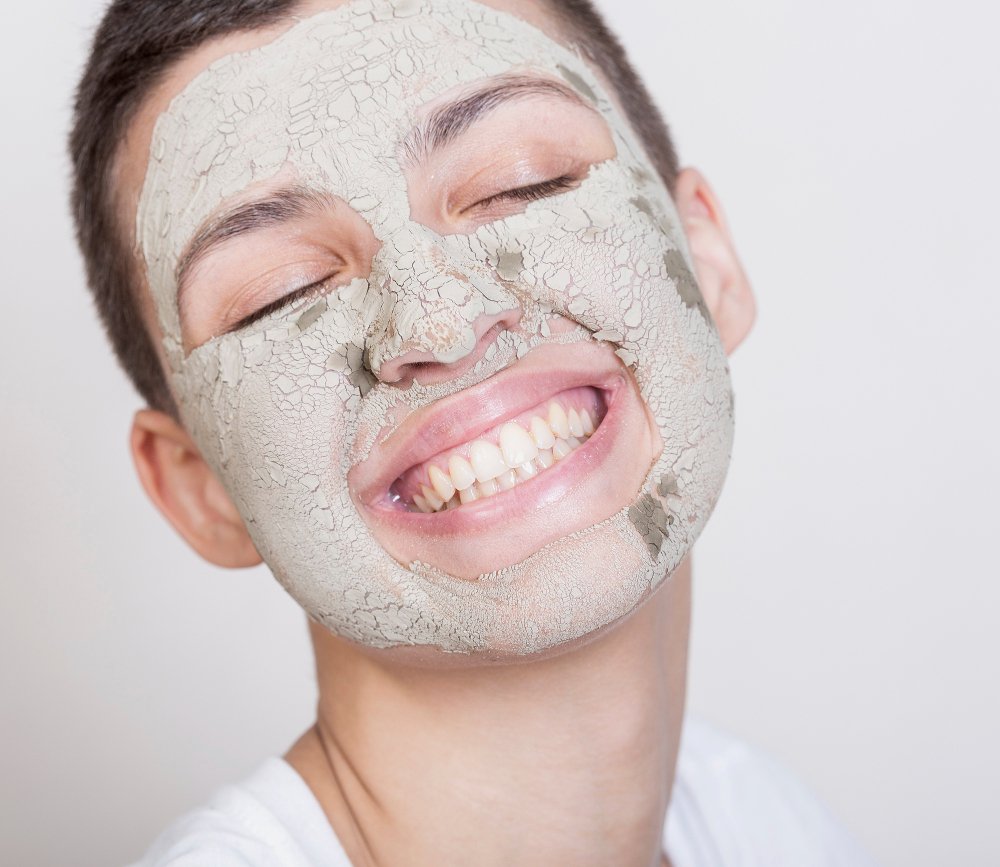
You’ve probably seen it on social media people brushing their teeth with a grayish, earthy paste and claiming their smile looks brighter. The ingredient getting all that attention? Calcium bentonite clay. But is this a legitimate natural remedy with some science behind it, or just another wellness trend that sounds better than it works?
Let’s break it down honestly, without the hype.
What Is Calcium Bentonite Clay?
Bentonite clay is a naturally occurring mineral-rich clay that forms when volcanic ash weathers and settles over time. The name comes from Fort Benton in Wyoming, USA, one of the world’s largest known deposits. Two main types exist: sodium bentonite and calcium bentonite. The calcium variety is often labeled “natural bentonite” because it requires minimal processing typically just drying, crushing, and milling into a fine powder.
The clay is composed primarily of a mineral called montmorillonite, along with naturally occurring calcium, magnesium, silica, potassium, and iron. When mixed with water, calcium bentonite takes on a negative electrical charge. This is the property that makes it so interesting from a health standpoint that negative charge allows it to attract and bind to positively charged particles like toxins, bacteria, and heavy metals through a process called adsorption.
It’s worth noting that calcium bentonite’s healing and detoxifying properties are well documented across a range of industries. Companies like CMS Industries, one of India’s largest bentonite manufacturers and exporters, supply calcium bentonite for cosmetic, pharmaceutical, and industrial applications including formulations where its surface activity and mineral content are the whole point.
The Case for Natural Teeth Whitening with Calcium Bentonite Clay
So how does any of this translate to whiter teeth? Here’s what the research and dentistry professionals actually say.
Mild Abrasion That Polishes Without Damaging Enamel
One of the clearest benefits of calcium bentonite clay for natural teeth whitening is its physical polishing action. The clay’s particles are extremely fine fine enough to scrub surface stains without the aggressive grinding that damages enamel.
A 2011 study published in The Journal of Clinical Dentistry compared 26 different toothpastes on their abrasion, polishing, and stain removal characteristics. Researchers measured the Relative Dentin Abrasivity (RDA) how rough a toothpaste is on the dentin beneath enamel alongside its Pellicle Cleaning Ratio (PCR), which measures how well it actually cleans. What they found was striking: toothpastes containing mineral clays like bentonite and kaolin achieved good cleaning efficiency without proportionally high abrasivity. In other words, clay-based toothpastes can be both gentle and effective, a combination that’s harder to achieve with many conventional whitening products.
Surface stains from coffee, tea, red wine, and tobacco are exactly what bentonite clay targets. It won’t touch intrinsic discoloration (stains deep inside the tooth structure), but for everyday surface yellowing, the mechanical polishing action is real and measurable.
Adsorption of Bacteria and Plaque
Plaque buildup is one of the main reasons teeth look dull and yellow. Calcium bentonite clay’s negative charge makes it effective at pulling positively charged bacteria and plaque away from tooth surfaces. A study published in the International Journal of Antimicrobial Agents confirmed that certain clays show measurable antibacterial activity against common oral pathogens.
By reducing the bacterial load in the mouth, clay can help prevent new staining from accumulating which makes a visible difference over time even if the clay itself isn’t a bleaching agent.
Alkalizing the Oral Environment
Tooth enamel begins to erode when the mouth’s pH drops below approximately 5.5 a condition that happens regularly after eating sugars and fermentable carbohydrates. Calcium bentonite clay has a naturally alkaline pH, typically between 8.7 and 9.8. When you brush with it or use it as a mouth rinse, it temporarily neutralizes the acids that would otherwise weaken enamel and promote discoloration.
Research published in the Journal of Dentistry has noted that maintaining an alkaline oral environment reduces the risk of cavity formation and supports overall dental health. A less acidic mouth is also a less hospitable environment for the bacteria that cause staining and gum disease.
Mineral-Rich Composition and Remineralization
Calcium bentonite clay safe for dogs contains calcium, magnesium, and silica — all minerals that play a role in tooth enamel integrity. The idea is that when the clay contacts tooth surfaces, it may deposit trace amounts of these minerals, supporting what dental researchers call remineralization.
Here’s where the science gets more cautious. While the minerals are definitely present in the clay, whether they transfer to tooth enamel in a bioavailable form is still debated. Research in the Journal of Clinical Dentistry acknowledges the remineralization potential of calcium and magnesium on enamel, but more specific long-term studies on clay-based remineralization in humans are still limited. It’s a promising mechanism not yet a confirmed one.
How to Use Calcium Bentonite Clay for Teeth Whitening Naturally
If you want to try this at home, here’s a straightforward approach used by most people who incorporate clay into their oral care routine:
Step 1: Start with food-grade or cosmetic-grade calcium bentonite clay powder. The grade matters because lower-quality clay can contain heavy metal contaminants.
Step 2: Mix about half a teaspoon of the powder with just enough water to form a smooth, toothpaste-like paste.
Step 3: Apply the paste to a soft-bristled toothbrush and brush gently for two minutes, the same way you’d brush with regular toothpaste.
Step 4: Rinse thoroughly with water. Some people follow up with a brief oil pull using coconut oil, though this is optional.
Step 5: Use it two to three times per week rather than daily, especially when starting out. Monitor your teeth for any increased sensitivity.
Alternative: Mix the clay powder with water to create a liquid mouth rinse. Swish for 60 seconds, then spit and rinse. This is a gentler option for people with sensitive teeth or existing enamel concerns.
A couple of things to keep in mind: never use metal utensils to mix bentonite clay. The clay’s ionic charge can interact with metal and reduce its effectiveness. Use ceramic, glass, or plastic tools instead.
What Calcium Bentonite Clay Cannot Do
It’s worth being straight about the limits here.
It is not a bleaching agent. Products that use hydrogen peroxide or carbamide peroxide actually penetrate the enamel and chemically oxidize the pigments inside the tooth. Calcium bentonite clay does none of this. It works at the surface level only, removing stains and polishing enamel rather than changing the tooth’s internal color.
It doesn’t replace fluoride-based protection for cavity prevention. While clay can help reduce bacteria and maintain alkalinity, it does not provide the same proven cavity protection as fluoride toothpaste. People with a history of cavities, active tooth decay, or significant enamel erosion should not treat clay as a fluoride substitute without discussing it with their dentist first.
Heavy metal contamination is a real concern. Because bentonite clay is mined from the earth, it can carry trace amounts of lead, arsenic, or mercury depending on the source. This is why sourcing matters enormously. Always choose products where the supplier can demonstrate purity testing and quality control. CMS Industries, which manufactures both calcium bentonite and cosmetic-grade bentonite, operates under ISO 9001:2015 certification the kind of quality standard that serious cosmetic and oral care formulators look for when sourcing raw clay for their products.
What Dentists Actually Say
Dental professionals generally take a measured position on this. Most acknowledge that bentonite clay can function as a mild, effective mechanical cleaner with legitimate polishing ability. Where they draw the line is in treating it as a standalone oral care solution.
The consensus from dental practitioners, as noted in several published overviews on clay minerals in dentistry, is that calcium bentonite clay works best as a complementary product alongside not instead of evidence-based dental care. People with sensitive teeth, enamel erosion, crowns, or veneers should consult their dentist before switching or adding clay-based products to their routine.
Calcium Bentonite Clay vs. Commercial Whitening Products
| Feature | Calcium Bentonite Clay | Peroxide-Based Whitening |
| Whitening mechanism | Surface stain removal, polishing | Chemical bleaching of enamel |
| Depth of whitening | Surface only | Subsurface discoloration |
| Enamel safety | Generally gentle, low RDA | Can cause temporary sensitivity |
| Antibacterial effect | Yes, through adsorption | No |
| Chemical additives | None (natural) | Hydrogen/carbamide peroxide |
| Remineralization support | Possible (minerals present) | None |
| Dentist supervision needed | Advisable | Often recommended |
Frequently Asked Questions
- Can calcium bentonite clay actually whiten teeth, or is it just a myth?
It can whiten teeth to a visible degree, but only by removing surface stains through gentle polishing and adsorption. It does not chemically bleach teeth the way peroxide-based products do. For people whose discoloration is mostly from coffee, tea, or food staining, the results can be noticeable. For deeper, structural discoloration, clay won’t be enough on its own.
- How long does it take to see results when using bentonite clay for natural teeth whitening?
Most people who use clay consistently two to three times per week report cleaner-feeling teeth within a week and visible brightening within three to four weeks. Results depend on how much surface staining is present and how consistently the clay is used. It’s a gradual process, not an overnight fix.
- Is it safe to use calcium bentonite clay on teeth every day?
Daily use is generally considered safe for most people, since the clay’s abrasivity is low. That said, starting with two to three times per week lets you assess how your specific teeth and gums respond. People with existing enamel erosion or sensitivity should consult a dentist before making it a daily habit.
- What is the difference between calcium bentonite and sodium bentonite for oral use?
Calcium bentonite is the type most commonly used in oral and cosmetic applications. It has a lower pH, is less reactive, and disperses more gently in water than sodium bentonite. Sodium bentonite has stronger swelling properties, which makes it better suited for industrial uses like oil drilling, pond sealing, and civil engineering, not toothpaste. When looking for clay for oral care, calcium bentonite is the appropriate choice.
- Can I use bentonite clay if I have dental restorations like crowns or veneers?
It’s best to check with your dentist first. The clay itself is unlikely to damage ceramic or porcelain restorations, but the abrasive action could affect the polish on older restorations over time. Your dentist can advise based on the age and material of your specific restorations and whether clay-based products are a good fit for your situation.