


Bentonite clay has earned its reputation as one of the most practical materials in ceramic work. From improving clay body workability to keeping glazes properly suspended, this volcanic ash derivative plays multiple roles that make ceramic production both easier and more reliable. If you’re working with ceramics or considering bentonite for your projects, understanding its properties and applications will help you get the best results.
What Makes Bentonite Clay Special for Ceramics?
Bentonite clay is primarily composed of montmorillonite, a mineral that forms from weathered volcanic ash. What sets it apart from other clays is its extremely fine particle size. While typical kaolin particles measure around 10 microns in diameter, bentonite particles are typically less than one micron. This microscopic size, combined with active surface chemistry, gives bentonite unique characteristics that ceramists value.
The clay’s ability to absorb water and swell to several times its original volume creates exceptional plasticity. This swelling property happens because water molecules penetrate between the clay’s layered structure, creating space between the platelets. The result is a material that becomes highly workable when wet and forms strong bonds between particles.
CMS Industries supplies sodium bentonite and calcium bentonite grades specifically processed for ceramic applications. Their material undergoes careful grinding and processing to meet the specific particle size requirements that ceramic work demands.
Primary Uses of Bentonite Clay in Ceramics
Improving Clay Body Plasticity
One of bentonite’s main roles is enhancing the plasticity of clay bodies. Plasticity refers to a clay’s ability to be shaped and hold that shape without cracking. When just 2–3% bentonite is added to a clay body, it significantly improves workability and strength. Beyond ceramics, bentonite is also known for its ability to bind and bentonite remove toxins, a property that comes from its high surface area and adsorption capacity—qualities that make it useful in applications such as environmental cleanup and water purification.
The fine particles fill spaces between larger clay particles, creating more contact points and a denser structure. This makes the clay easier to throw on the wheel, hand-build, or press into molds. Potters working with short or non-plastic clay bodies often rely on small bentonite additions to make their material more cooperative.
Here’s what happens when you add bentonite to clay bodies:
- Improved throwing characteristics on the pottery wheel
- Better hand-building performance with reduced cracking
- Increased wet and dry strength before firing
- Enhanced binding between all clay particles
The standard addition rate ranges from 1-5% of the total clay body weight. Going beyond 5% can cause problems because bentonite’s high shrinkage rate may lead to excessive cracking during drying.
Glaze Suspension Properties
Bentonite excels as a glaze suspending agent. Glazes need clay content to keep heavier materials like feldspars and metal oxides suspended in the water-based mixture. Without proper suspension, these materials settle to the bottom of the bucket, creating a hard pan that’s difficult to remix.
The suspending power of bentonite is remarkable. Just 1% bentonite provides suspension equivalent to approximately 5-10% kaolin or ball clay. This efficiency means you can achieve good glaze suspension without significantly altering the glaze chemistry or firing characteristics.
When glazes contain bentonite:
- Particles stay evenly distributed during storage
- Application consistency improves across multiple pieces
- Less frequent stirring is required between uses
- The dried glaze layer becomes harder and more durable
Most glaze recipes use between 0.25-2% bentonite. Amounts beyond 2% can create excessive shrinkage during drying, potentially causing the glaze to crack or crawl during firing. The high iron content in some bentonites may also cause unwanted speckling on lighter colored glazes.
Controlling Glaze Application Thickness
Bentonite helps control how glaze adheres to bisque-fired pottery. When you dip a porous bisque piece into glaze, it initially absorbs water rapidly. The bentonite particles quickly clog the surface pores, slowing further water absorption. This creates more even coating thickness across the entire piece.
The thickening effect makes glazes easier to apply by dipping, brushing, or spraying. You’ll have better control over the final coating without drips or bare spots. This property is particularly useful when working with glazes that have low clay content, which might otherwise be too runny for consistent application.
Strengthening Greenware and Dry Ware
Adding bentonite to clay bodies increases the strength of unfired pieces. The tiny particles create numerous connection points between larger clay particles, resulting in a stronger matrix. This makes greenware less likely to crack or break during handling before firing.
Dry strength also improves with bentonite additions. Pieces can be handled more confidently during loading into the kiln. This property is especially valuable in production settings where pieces need to withstand some handling before firing.
Technical Considerations When Using Bentonite
Particle Size and Surface Area
Bentonite’s effectiveness comes from its colloidal particle size. The specific surface area of bentonite ranges from 80-300 square meters per gram, compared to 15-50 square meters per gram for standard clays. This massive surface area creates more sites for water absorption and particle interaction.
The layered crystal structure of montmorillonite allows water to penetrate between individual plates. This interlayer swelling creates the gel-like consistency that gives bentonite its unique working properties.
Sodium vs. Calcium Bentonite
CMS Industries processes both sodium and calcium bentonite varieties. Sodium bentonite provides superior swelling capacity and suspension properties, making it the preferred choice for most ceramic applications. The sodium ions allow greater water penetration between the crystal layers.
Calcium bentonite has less swelling capacity because calcium ions create stronger bonds between layers. While it still offers some plasticity improvement, it’s less effective as a suspending agent in glazes.
Mixing Procedures
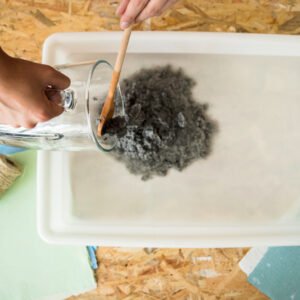
Proper mixing is important when adding bentonite to either clay bodies or glazes. When bentonite contacts water, it swells and can form clumps if not handled correctly. The standard practice is mixing bentonite with dry materials before adding water.
For adding bentonite to already-prepared glazes, sprinkle the dry powder onto the water surface without stirring. Allow it to slake down for several minutes before mixing. This prevents clumping and ensures even distribution throughout the glaze.
Drying Rate Considerations
Bentonite significantly slows drying time. The water-barrier property created by swelled bentonite particles means moisture releases more gradually. While this can prevent cracking in some situations, excessive bentonite content (over 5% in bodies or 2% in glazes) may cause inconveniently long drying times.
Production schedules should account for slower drying when using bentonite-enriched formulations. The trade-off is often worthwhile given the improved working properties and reduced breakage.
Practical Applications Across Different Ceramic Types
Porcelain and White Ware Production
White-burning clay bodies benefit from bentonite additions despite its iron content. Testing shows that bodies can tolerate up to 5% bentonite without significant darkening of the fired color. The plasticity improvement often outweighs the slight color change.
CMS Industries offers refined bentonite grades with lower iron content specifically for porcelain applications where color purity matters most.
Stoneware and Earthenware
These clay bodies typically contain iron-bearing materials, making bentonite’s iron content less problematic. The plasticity enhancement helps with throwing and hand-building while the strengthening properties reduce handling losses.
Glaze Formulation
Glaze recipes with low clay content especially benefit from bentonite additions. Recipes that rely primarily on feldspars, frits, and silica often need extra suspension help, which bentonite provides effectively. The same fine-particle and binding properties that make bentonite valuable in ceramics are also why bentonite is used in cosmetics, where it helps improve texture, stability, and consistency. A 1–2% bentonite addition delivers adequate suspension in glazes without substantially changing the fired glaze surface.
Commercial glaze manufacturers regularly include bentonite in their formulations to improve shelf stability and application characteristics.
Common Problems and Solutions
Excessive Shrinkage
If pieces show excessive cracking during drying or firing, the bentonite percentage may be too high. Reduce the amount by 0.5-1% increments and test again. Remember that bentonite has much higher shrinkage than other clay types.
Slow Drying
When pieces take too long to dry, you’re likely using too much bentonite. Reduce the amount or adjust your drying conditions to provide more air circulation and gentle warmth.
Glaze Crawling
If glazes pull away from the clay surface during firing, excessive bentonite may be causing too much shrinkage as the glaze layer dries. Reduce the bentonite content to 1% or less.
Iron Speckling
Unwanted dark spots on lighter glazes often come from iron particles in the bentonite. Switch to a refined, low-iron grade or reduce the bentonite percentage.
Quality Standards and Selection
When sourcing bentonite for ceramic use, particle size matters. Look for material that’s 100% minus 325 mesh. This ensures the particles are fine enough to provide proper suspension and plasticity enhancement.
CMS Industries maintains ISO 9001:2015 certification and processes bentonite specifically for industrial applications including ceramics. Their strategic location near major ports in Gujarat, India, allows efficient distribution to ceramic manufacturers globally.
The company produces over 9,000 metric tons of bentonite powder monthly, with multiple grades available for different ceramic applications. Their quality control processes ensure consistent performance batch to batch.
Environmental and Safety Considerations
Bentonite is chemically inert and non-irritating in ceramic applications. The main health consideration is avoiding inhalation of fine dust particles. Always use proper dust masks when handling dry bentonite powder.
Like other clays, bentonite contains crystalline silica. Use appropriate ventilation and dust collection systems when mixing dry materials. These precautions protect against long-term respiratory exposure.
The material itself poses no environmental concerns. Bentonite is non-toxic and doesn’t support organic growth, making it safe for various applications beyond ceramics.
Conclusion
Bentonite clay serves multiple practical functions in ceramic production. Its ability to enhance plasticity, suspend glaze particles, and strengthen unfired ware makes it a valuable addition to many formulations. Understanding proper usage percentages and mixing techniques helps you avoid common problems while maximizing benefits.
Whether you’re adjusting clay body workability or improving glaze suspension, small bentonite additions often solve big problems. Start with conservative amounts, test thoroughly, and adjust based on your specific needs. The material’s versatility and effectiveness explain why it remains a staple in ceramic studios and production facilities worldwide.
Frequently Asked Questions
What percentage of bentonite should I add to my clay body?
Most clay bodies perform well with 2-3% bentonite by weight. Start with 2% and test the workability. You can increase to 5% if needed, but watch for excessive shrinkage and cracking. Going beyond 5% typically causes more problems than benefits. For white-burning bodies where color matters, limit additions to 3% or use refined low-iron grades.
Can I add bentonite to a glaze that’s already mixed?
Yes, but use the correct technique. Sprinkle dry bentonite powder onto the water surface of your glaze without touching it. Wait 5-10 minutes for it to slake down, then mix thoroughly with a high-speed mixer. This prevents clumping. Alternatively, pre-mix bentonite with water in a separate container, creating a gel you can add to the glaze.
Why does my glaze with bentonite dry so slowly?
Bentonite creates a water barrier as it swells, slowing moisture release. If drying takes too long, you’ve likely added too much. Reduce the bentonite content to 1% or less. Make sure you’re not exceeding 2% total, as this commonly causes slow drying and potential crawling during firing.
What’s the difference between sodium and calcium bentonite for ceramics?
Sodium bentonite swells more when wet, providing superior suspension and plasticity. It’s the standard choice for ceramic applications. Calcium bentonite swells less because calcium ions bond the layers more tightly. While it still improves plasticity somewhat, it’s less effective for glaze suspension. Always specify sodium bentonite for ceramic work.
Will bentonite affect my fired glaze color?
Standard bentonite contains iron that can cause speckling or slight color shifts in lighter glazes. The effect is minimal at 1-2% additions. If working with pure white or pastel glazes where color accuracy is critical, use refined low-iron bentonite grades. In colored or darker glazes, standard bentonite rarely causes noticeable color changes.