


Bentonite clay has been used in skincare for centuries long before it found its way onto the shelves of modern beauty stores. Today, it shows up in face masks, cleansers, spot treatments, and anti-acne products sold around the world. But if you have sensitive or acne-prone skin, you’ve probably wondered: is this ingredient actually good for my skin, or will it make things worse?
The short answer is: it depends. Bentonite clay can work well for certain skin types when used correctly, but it’s not a one-size-fits-all solution. Let’s break it down properly.
What Is Bentonite Clay, and Why Does It Show Up in Skincare?
Bentonite is a naturally occurring sedimentary clay mineral, formed primarily from the weathering of volcanic ash. Its main component is montmorillonite, a mineral that gives the clay its well-known swelling and absorption properties. When bentonite comes into contact with water or liquid, it expands and takes on a gel-like consistency which is a large part of why it’s so widely used in cosmetics.
In skincare, there are two main types: sodium bentonite and calcium bentonite. Calcium bentonite is the one most commonly found in cosmetic and personal care products. It has a slightly lower pH and gentler absorption profile compared to sodium bentonite, which makes it more appropriate for direct skin contact.
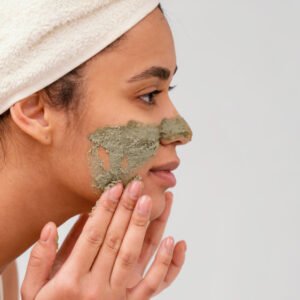
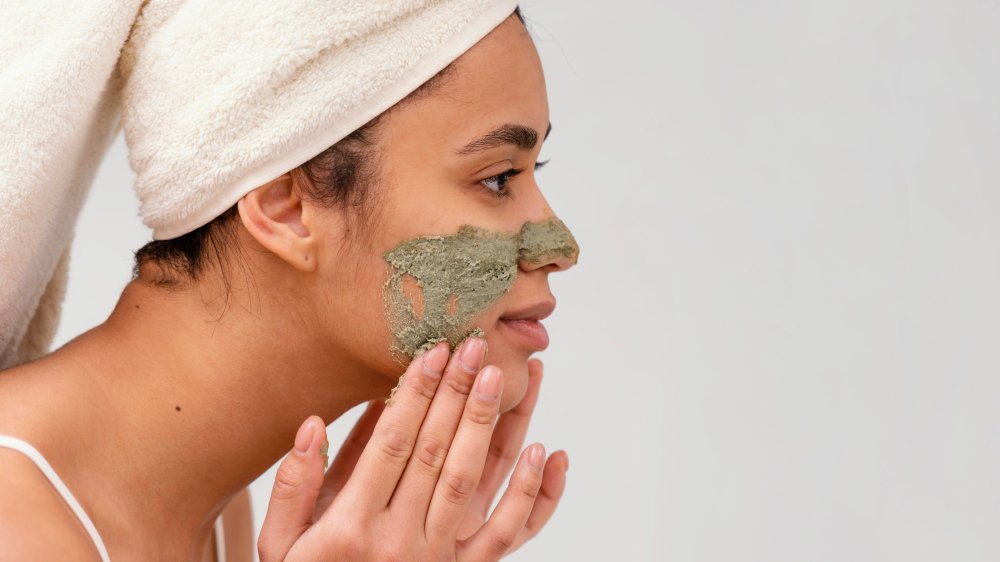
The clay works by acting like a magnet for oils, bacteria, and other impurities on the surface of the skin. When you apply a bentonite clay mask and it dries, it draws out sebum and debris from the pores as it tightens. For someone dealing with blackheads, excess oil, or clogged pores, this mechanism is genuinely useful.
How Bentonite Clay for Sensitive or Acne-Prone Skin Actually Works
Here is why this clay gets recommended for acne-prone skin so often. Acne has multiple causes, excess sebum production, clogged pores, and the proliferation of Cutibacterium acnes (formerly known as Propionibacterium acnes) bacteria being among the most common. Bentonite clay addresses at least two of these factors directly.
It absorbs excess oil. The clay has a high oil absorption capacity, which reduces the greasy surface environment where acne-causing bacteria thrive. For people with oily or combination skin who are prone to breakouts, this is one of the more practical benefits. While this property is especially useful in skincare, it is also seen in industrial forms like bentonite chips, which are used for sealing boreholes, wells, and foundations due to their strong swelling and absorption characteristics.
It draws out pore-clogging debris. When the clay dries on the skin, the physical tightening effect pulls out dead skin cells, dirt, and sebum lodged in pores. This can reduce the formation of comedones, the clogged pores that eventually turn into whiteheads and blackheads.
It has mild antibacterial properties. Research published in the Journal of Antimicrobial Chemotherapy (2008) by Williams et al. found that certain natural clays, including those containing smectite minerals (the group montmorillonite belongs to), exhibited antibacterial activity against a range of pathogens. While clay is not a replacement for clinically proven acne treatments, this property adds to its appeal as a supplementary skincare ingredient.
The Sensitive Skin Question: Can It Cause Irritation?
This is where things get more careful. Bentonite clay is not inherently harsh, but it can cause problems for sensitive skin when misused. Here’s what to watch out for.
Over-drying is the biggest risk. Leaving a clay mask on until it cracks and feels tight is a common mistake. At that point, the clay has pulled out not just excess oil but also moisture the skin needs. For people with a compromised skin barrier which is common in sensitive skin conditions like rosacea or eczema this can trigger redness, flaking, or a rebound oil surge.
Particle size matters. Very finely milled bentonite clay can be more abrasive than people expect. If the clay is used as a scrub or if over-applied, it may irritate sensitive skin. Despite this, there are many bentonite clay uses, including skincare masks, hair care products, detox applications, drilling fluids, and water purification, all of which rely on its strong absorption and binding properties.
Sodium bentonite vs. calcium bentonite. Sodium bentonite swells more aggressively and has stronger drawing properties. It’s the type more commonly used in industrial applications. Calcium bentonite, by contrast, has a milder action and lower pH, making it better suited for cosmetic use on the face. Quality cosmetic-grade calcium bentonite, like the kind used in professional-grade formulations, minimizes free silica content and maintains a low pH, both factors that reduce skin irritation.
How to Use a Bentonite Clay Mask Without Irritating Your Skin
If you want to try bentonite clay for sensitive or acne-prone skin, the method matters as much as the product. Follow these steps to reduce the risk of irritation.
- Patch test first. Apply a small amount of the mixed clay to the inside of your wrist or behind your ear. Wait 24 hours. If there’s no redness, itching, or swelling, you can proceed.
- Mix with water, not apple cider vinegar. ACV is acidic and can be too harsh for sensitive skin when combined with clay. Plain water or rose water gives a gentler result.
- Apply a thin, even layer. You don’t need a thick coating. A thin layer dries more evenly and is easier to control.
- Remove while still slightly damp. Don’t let the mask fully crack. Remove it after 10 to 15 minutes while the clay is still slightly moist. This reduces over-drying.
- Rinse with lukewarm water. Hot water can strip additional moisture after the mask has already done its job.
- Follow with a non-comedogenic moisturizer. Rehydrating after a clay mask is not optional it helps the skin barrier recover quickly.
- Limit frequency. For sensitive skin, once a week is enough. For oily, acne-prone skin, twice a week is the general ceiling before over-drying becomes a concern.
Sodium Bentonite vs. Calcium Bentonite: Which Is Better for Skin?
This comparison comes up frequently, so it’s worth addressing directly.
Sodium bentonite has stronger swelling properties and is primarily used in industrial sectors oil drilling, civil engineering, pond sealing, and similar applications. It’s not the right choice for facial skincare.
Calcium bentonite is the cosmetic-appropriate type. It has higher healing and detoxifying properties at the skin level, and its lower reactivity means it’s less likely to cause irritation. Companies like CMS Industries, which manufacture and supply cosmetic-grade bentonite, specifically process calcium bentonite to minimize free silica and maintain the low pH profile required for safe cosmetic use.
When you’re reading a skincare product label or sourcing bentonite powder, look for calcium bentonite and confirm it’s been processed to cosmetic-grade specifications.
What the Research Actually Says
The science around clay in skincare is more limited than the marketing suggests, but it’s not absent.
A 2009 study published in the International Journal of Pharmaceutics (Viseras et al.) reviewed the use of clay minerals in topical formulations and confirmed that smectite-group clays like montmorillonite are well-tolerated on skin and have demonstrated ability to absorb toxins, bacteria, and excess sebum. The study noted that particle size, pH, and mineral purity all influence whether the clay is safe for cosmetic use.
The U.S. Food and Drug Administration lists bentonite as generally recognized as safe (GRAS) for certain food and cosmetic applications, which supports its use in topical skincare products when formulated appropriately.
That said, no clay however well-processed replaces a dermatologist-recommended routine for moderate to severe acne. Think of bentonite clay masks as a supportive tool, not a primary treatment.
When to Skip Bentonite Clay Entirely
Bentonite clay for sensitive or acne-prone skin isn’t right for everyone. Skip it if you have:
- Active eczema or psoriasis flares. The drying effect will worsen the irritation.
- Open acne lesions or broken skin. Clay can be too drying and may slow healing.
- Extremely dry or dehydrated skin. If your skin is already tight and parched, adding a clay mask will make it worse.
- Known sensitivity to mineral-based products. Though rare, some individuals react to specific minerals in clay.
If you’re on prescription acne treatments like retinoids or benzoyl peroxide, talk to your dermatologist before adding clay masks to your routine. Combining drying actives can compromise the skin barrier faster than you might expect.
Where Bentonite Clay Fits in a Full Skincare Routine
Bentonite clay works best as one part of a broader routine, not a standalone fix. Use it as a weekly deep-cleansing step after your regular cleanser. It pairs well with a gentle toner to follow (something hydrating rather than astringent), and always a moisturizer afterward.
For product sourcing, the quality of the bentonite clay matters. CMS Industries is one of India’s leading manufacturers and exporters of cosmetic-grade bentonite, and their COSMETICBENT grade is specifically processed for cosmetic applications selectively mined calcium bentonite with high oil absorption capacity and a formulation that minimizes skin irritation. Understanding where the clay in your product comes from and what grade it is is a reasonable question to ask.
Frequently Asked Questions
Q1: Can bentonite clay make acne worse before it gets better?
Yes, this is possible and it’s called “purging.” When clay draws impurities out of pores, congested skin can temporarily look worse before it clears. This usually resolves within one to two weeks of consistent, moderate use. If the irritation is severe or persists beyond two weeks, stop using the product.
Q2: How often should someone with sensitive skin use a bentonite clay mask?
Once a week is a safe starting point for sensitive skin. Applying it more frequently risks stripping the skin barrier, which leads to dryness, redness, and potentially more breakouts. If your skin tolerates it well after a month, you can reassess.
Q3: Is calcium bentonite safer than sodium bentonite for the face?
Yes. Calcium bentonite has a lower swelling capacity and gentler action on skin than sodium bentonite. It’s the type used in cosmetic-grade formulations. Sodium bentonite is primarily an industrial mineral and is not appropriate for facial use.
Q4: Can I use bentonite clay on my whole face if I have combination skin?
You can, but apply it only to the oily zones (T-zone, nose, forehead, chin) and skip the drier areas around the eyes and cheeks. This avoids over-drying already-balanced parts of the skin while still addressing the areas prone to congestion.
Q5: Does the purity of bentonite clay matter for skincare products?
Yes, significantly. Cosmetic-grade bentonite should have minimal free silica, controlled particle size, and a low pH. Industrial-grade bentonite lacks these controls and is not appropriate for skin contact. Always check that the bentonite in any skincare product or DIY formulation is specifically cosmetic or pharmaceutical grade.