


When you walk past a construction site with massive underground excavations, you might wonder how engineers manage to dig deep trenches without the walls collapsing. The answer lies in a remarkable material called bentonite slurry. This clay-based fluid plays a critical role in building diaphragm walls, the reinforced concrete structures that support deep basements, tunnels, and underground parking facilities.
Understanding how bentonite slurry functions in diaphragm wall construction can help you appreciate the engineering behind modern underground structures. Let’s break down everything you need to know about this construction technique.
Understanding Bentonite Slurry and Diaphragm Walls
Before diving into the specific uses, let’s clarify what we’re talking about.
A diaphragm wall, also called a slurry wall, is a continuous reinforced concrete wall constructed directly in the ground. These walls serve as both retaining structures and foundations for deep excavations. They’re commonly used in metro stations, high-rise buildings with multiple basement levels, dams, and tunnel portals.
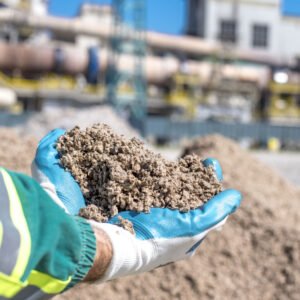
Bentonite slurry is a mixture of bentonite clay and water. Bentonite forms when volcanic ash weathers over time, and it’s particularly rich in a clay mineral called montmorillonite. When mixed with water, bentonite particles swell and create a thick, viscous suspension. This unique property makes bentonite slurry perfect for supporting excavations.
CMS Industries, a leading bentonite manufacturer in India, produces various grades of bentonite specifically designed for diaphragm wall applications. Their manufacturing facilities near Gujarat’s major ports ensure consistent supply for construction projects across the country.
How Diaphragm Wall Construction Works
To understand the role of bentonite slurry, you need to know the basic construction process:
Step 1: Guide Wall Construction Engineers build two parallel concrete guide walls at ground level. These walls outline the trench location and keep excavation equipment properly aligned.
Step 2: Trench Excavation Using specialized equipment like hydraulic grabs or trench cutters, workers excavate a narrow trench to the required depth. This trench can reach depths of 50 to 100 meters in some projects.
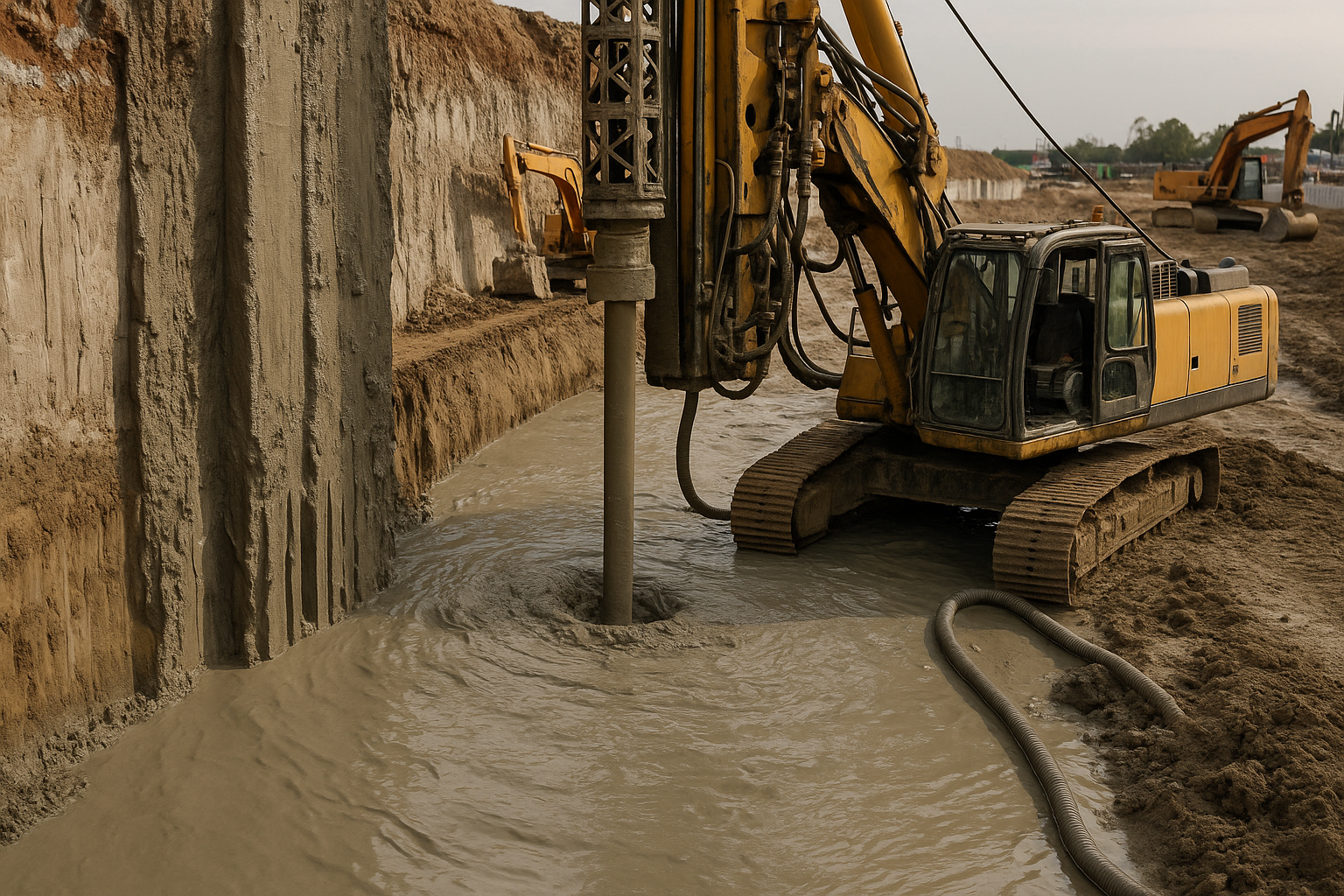
Step 3: Slurry Introduction As excavation progresses, bentonite slurry continuously fills the trench. This happens simultaneously with digging, not after.
Step 4: Reinforcement Placement Once the trench reaches the design depth, workers lower prefabricated steel reinforcement cages into the slurry-filled excavation.
Step 5: Concrete Pouring Concrete is poured into the trench using tremie pipes, which are vertical pipes that reach the bottom of the excavation. The heavier concrete displaces the lighter bentonite slurry upward.
Step 6: Slurry Recovery The displaced slurry is collected, cleaned, and either reused in adjacent panels or properly disposed of.
Primary Uses of Bentonite Slurry in Diaphragm Wall Construction
Trench Stabilization and Wall Support
The most critical function of bentonite slurry in diaphragm wall construction is preventing trench collapse. When you excavate a deep, narrow trench, the surrounding soil wants to cave inward. Bentonite slurry prevents this through hydrostatic pressure.
Here’s how it works: The slurry exerts outward pressure on the trench walls. This pressure counteracts the inward forces from the surrounding soil and groundwater. The slurry essentially acts like liquid scaffolding, holding the walls in place while construction continues.
The density of properly mixed bentonite slurry typically ranges between 1.03 and 1.10 grams per cubic centimeter. This density provides enough pressure to support most soil types without being so heavy that it penetrates too deeply into the surrounding ground.
Filter Cake Formation
One of bentonite’s most remarkable properties is its ability to form a filter cake on the trench walls. This thin layer of bentonite particles develops naturally as the slurry comes into contact with the porous soil.
The filter cake acts as a semi-permeable membrane. It allows some water to pass through while blocking bentonite particles. This creates a seal that reduces water flow into the trench and prevents soil particles from washing into the excavation.
Research shows that bentonite filter cakes typically have hydraulic conductivity values between 2.1 × 10⁻¹¹ and 5.7 × 10⁻¹⁰ meters per second. This extremely low permeability makes the filter cake an effective barrier against groundwater infiltration.
The filter cake thickness usually measures just a few millimeters, but its impact is substantial. It reduces the final permeability of the diaphragm wall structure and helps control groundwater movement around the construction site.
Groundwater Control
Construction sites often deal with high groundwater tables, especially in coastal areas or near rivers. Bentonite slurry helps manage this challenge in several ways.
First, the slurry’s density and the filter cake it forms prevent groundwater from flooding into the excavation. Without this protection, pumping out water continuously would be necessary, which is expensive and can cause ground settlement in surrounding areas.
Second, the bentonite slurry maintains pressure balance. The hydrostatic pressure from the slurry column matches or slightly exceeds the groundwater pressure, preventing water inflow while avoiding excessive pressure that could fracture the surrounding soil.
For projects like those undertaken by CMS Industries’ clients, this groundwater control is particularly important in urban environments where nearby structures could be affected by dewatering.
Cutting Suspension and Removal
As excavation equipment cuts through soil and rock, it creates debris that needs removal. Bentonite slurry serves as a carrier fluid for this material.
The slurry’s gel strength and viscosity allow it to suspend soil cuttings temporarily. When the slurry circulates, it carries these cuttings to the surface where they’re separated through desanding equipment. The cleaned slurry then returns to the trench for reuse.
This suspension capability depends on the slurry’s thixotropic nature. Thixotropy means the material acts like a gel when at rest but flows like a liquid when agitated. When excavation equipment stirs the bentonite slurry, it becomes fluid enough to transport cuttings. When excavation pauses, the slurry thickens again, keeping particles suspended.
Concrete Quality Protection
During the concreting phase, bentonite slurry plays a protective role. The slurry prevents soil from falling into the excavation and contaminating the concrete. It also helps maintain clear working space for proper concrete placement.
When concrete flows through tremie pipes into the trench, it must displace the bentonite slurry cleanly. The density difference between concrete (approximately 2.4 grams per cubic centimeter) and slurry (around 1.05 grams per cubic centimeter) allows this displacement to occur smoothly.
Proper slurry management during concreting prevents defects like slurry pockets, which can weaken the finished wall or cause water leakage problems.
Bentonite Slurry Properties for Diaphragm Wall Applications
Not all bentonite slurries perform equally. Several properties determine effectiveness:
- Density: Usually maintained between 1.03 and 1.10 g/cm³. Too low, and the slurry won’t provide adequate support. Too high, and it may penetrate the soil excessively.
- Viscosity: Measured using a Marsh funnel, typical values range from 32 to 45 seconds. Proper viscosity ensures the slurry can suspend cuttings while still allowing proper concrete placement.
- Sand Content: Should be kept below 4% by volume. Excess sand reduces slurry effectiveness and can contaminate concrete.
- pH Level: Typically maintained between 8 and 11. This range helps preserve the slurry’s properties and prevents corrosion of reinforcement steel.
- Gel Strength: This measures the slurry’s ability to support suspended particles. Initial gel strength typically ranges from 1 to 5 pounds per 100 square feet.
CMS Industries produces bentonite grades specifically formulated to meet these requirements for diaphragm wall construction, with different grades available for varying soil conditions.
Advantages of Using Bentonite Slurry
Cost Effectiveness
Compared to other excavation support methods, bentonite slurry offers economic benefits. The material can be recovered and reused for multiple panels, reducing material costs. While some quality degradation occurs with each use, proper treatment allows slurry to serve through several cycles.
Versatility Across Soil Types
Bentonite slurry works effectively in most soil conditions, from soft clays to dense sands. This versatility makes it the default choice for diaphragm wall projects where subsurface conditions may vary.
Deep Excavation Capability
The method supports excavations to extreme depths. Projects have successfully used bentonite slurry for trenches exceeding 100 meters deep, something difficult to achieve with mechanical shoring systems.
Minimal Site Disturbance
Unlike dewatering methods that can cause settlement in surrounding areas, bentonite slurry maintains ground stability. This makes it ideal for urban construction where nearby buildings must remain unaffected.
Challenges and Considerations
Quality Control Requirements
Bentonite slurry requires constant monitoring and testing. Properties like density, viscosity, and sand content must be checked regularly and adjusted as needed. Failure to maintain proper slurry quality can lead to trench instability or concrete contamination.
Disposal Concerns
Used bentonite slurry becomes contaminated with soil cuttings and eventually needs disposal. The volume can be substantial on large projects. Disposal must follow environmental regulations, which can add costs and logistical complexity.
Site Space Requirements
Slurry management requires storage tanks, mixing equipment, and desanding plants. These facilities need significant space, which can be challenging on confined urban sites.
Weather Sensitivity
Extreme temperatures can affect slurry properties. Very hot weather may increase evaporation and change slurry concentration. Freezing temperatures can prevent proper mixing and hydration of bentonite particles.
Bentonite Slurry vs. Polymer Slurry
While bentonite remains the most common choice, polymer-based slurries have gained popularity in recent years. Understanding the comparison helps:
- Reusability: Polymer slurries can be reused more times than bentonite, with recovery rates exceeding 60% compared to bentonite’s 40%.
- Disposal: Polymer slurries typically have lower disposal costs and less environmental impact.
- Cost: Polymer slurries cost more initially but may prove economical over a full project when factoring in reuse and disposal.
- Reliability: Bentonite works reliably across all soil types, while polymers require specific conditions, particularly low sand content in the soil.
- Experience: Construction teams generally have more experience with bentonite, reducing risk of application errors.
For most projects, particularly those with varying soil conditions, bentonite slurry remains the preferred option. CMS Industries continues to supply high-quality bentonite for major construction projects precisely because of this proven reliability.
Quality Standards and Testing
Diaphragm wall construction follows specific standards for slurry quality. In India, the Bureau of Indian Standards provides guidelines through various codes. International standards from organizations like ASTM also apply.
Common tests include:
- Density Testing: Using a mud balance or hydrometer to measure slurry density multiple times daily.
- Viscosity Testing: The Marsh funnel test measures how long a specific volume of slurry takes to flow through a standardized funnel.
- Sand Content Testing: A graduated tube allows measurement of settleable solids in the slurry.
- pH Testing: Simple pH meters or strips verify that the slurry maintains the proper alkalinity.
- Filter Loss Testing: Specialized equipment measures how much fluid passes through filter paper under pressure, indicating filter cake quality.
Regular testing ensures the slurry maintains properties needed for safe, effective excavation support. Test frequency increases during critical operations like initial excavation or concrete placement.
Best Practices for Bentonite Slurry Management
Proper Mixing
Bentonite should be added slowly to water, not the reverse. Adding water to bentonite creates lumps that won’t hydrate properly. High-shear mixers ensure complete dispersion of particles.
Fresh water produces better results than saltwater or water with high mineral content. Ions in the water can interfere with bentonite’s swelling properties.
Adequate Hydration Time
After mixing, bentonite slurry needs time to fully hydrate. This typically requires 24 hours, though some specifications allow less time. Rushing this process results in slurry with inferior properties.
Continuous Monitoring
Slurry properties change during use as soil cuttings accumulate and bentonite particles degrade. Frequent testing catches problems before they affect construction safety.
Proper Desanding
Removing soil cuttings from the slurry extends its useful life and maintains proper density and viscosity. Desanding equipment should match the project’s excavation rate.
Storage Management
Slurry storage tanks should prevent contamination and allow for easy quality control sampling. Adequate capacity prevents delays when slurry needs replacement or treatment.
Environmental Considerations
Modern construction increasingly focuses on environmental responsibility. Bentonite slurry management fits into this picture:
- Waste Minimization: Reusing slurry reduces the total material needed and decreases disposal volumes.
- Groundwater Protection: The filter cake formed by bentonite actually helps prevent contaminants from migrating through soil, offering some environmental protection.
- Disposal Methods: Used slurry can sometimes be treated and used for other purposes, such as landfill capping material, reducing waste sent to disposal facilities.
- Site Cleanliness: Proper slurry containment prevents spillage that could affect surrounding areas or water bodies.
Companies like CMS Industries that supply bentonite for construction projects increasingly focus on the environmental profile of their materials, offering products that meet both performance and sustainability requirements.
Common Problems and Solutions
Excessive Slurry Loss
Problem: Slurry level drops faster than expected.
Causes: Highly permeable soil, fractures in rock, or inadequate filter cake formation.
Solutions: Increase bentonite concentration, add fibrous materials to aid filter cake formation, or use specialized loss circulation materials.
High Sand Content
Problem: Sand content exceeds acceptable limits. Causes: Desanding equipment inadequate for excavation rate, or very sandy soil conditions. Solutions: Upgrade desanding capacity, reduce excavation speed to allow better cleaning, or replace degraded slurry.
Viscosity Problems
Problem: Slurry becomes too thick or too thin.
Causes: Contamination, temperature changes, or chemical interference.
Solutions: Add water to reduce viscosity, add more bentonite to increase it, or treat with dispersants for certain contamination issues.
Filter Cake Quality
Problem: Filter cake doesn’t form properly or has high permeability.
Causes: Wrong bentonite type for soil conditions, insufficient slurry concentration, or chemical contamination.
Solutions: Adjust bentonite type or grade, increase concentration, or treat water quality issues before mixing.
Future Trends in Slurry Technology
Construction technology continues advancing, and slurry applications evolve accordingly:
- Biodegradable Additives: Research explores additives like pregelatinized starch that enhance slurry performance while being environmentally friendlier.
- Real-Time Monitoring: Sensors that continuously measure slurry properties and transmit data allow faster response to changing conditions.
- Improved Recycling: Better treatment methods increase the number of times slurry can be reused, reducing costs and environmental impact.
- Customized Formulations: Suppliers like CMS Industries develop specialized bentonite blends optimized for specific soil types and project requirements.
Conclusion
Bentonite slurry serves multiple critical functions in diaphragm wall construction. It stabilizes trenches during excavation, controls groundwater, forms protective filter cakes, suspends and removes cuttings, and protects concrete quality. These functions make it possible to construct deep, stable underground structures in challenging soil conditions.
The material’s versatility, cost effectiveness, and proven reliability explain why bentonite slurry remains the standard choice for diaphragm wall projects worldwide. While alternatives like polymer slurries have merits in specific situations, bentonite’s track record and broad applicability keep it at the forefront of deep excavation technology.
Understanding bentonite slurry’s role helps construction professionals make better decisions about materials and methods. As urban development continues pushing underground, this knowledge becomes increasingly important for safe, efficient construction.
Whether you’re involved in planning, executing, or simply understanding construction projects, knowing how bentonite slurry works in diaphragm walls provides insight into the sophisticated engineering that makes modern underground construction possible and highlights the uses of bentonite slurry in construction for stability and soil support.
Frequently Asked Questions
Q1: How long can bentonite slurry be stored before use in diaphragm wall construction?
Properly mixed bentonite slurry remains usable for several weeks when stored correctly. The slurry should be kept in covered tanks to prevent evaporation and contamination. Before use, always test the slurry properties to confirm they meet specifications. Properties may drift over time, requiring adjustment by adding fresh bentonite or water. Generally, using slurry within one to two weeks of mixing provides best results, though longer storage is possible with proper maintenance and testing.
Q2: Can bentonite slurry be used in all soil types for diaphragm walls?
Yes, bentonite slurry works effectively across most soil types, from soft clays to dense sands and even through rock formations. This versatility is one of its main advantages. However, the specific bentonite grade and slurry concentration may need adjustment based on soil permeability. Very coarse soils might require higher bentonite concentrations or additives to form adequate filter cakes. This broad applicability across soil conditions makes bentonite the default choice for diaphragm wall projects where subsurface conditions vary.
Q3: What happens if bentonite slurry properties aren’t maintained properly during construction?
Poor slurry quality can lead to serious construction problems. If density is too low, the trench may collapse during excavation, endangering workers and equipment. Excessive viscosity makes it difficult for concrete to displace the slurry properly, potentially creating weak spots or slurry pockets in the finished wall. High sand content can contaminate concrete and reduce its strength. These issues may not appear immediately but can cause problems like water leakage or structural weakness in the completed diaphragm wall, requiring expensive repairs.
Q4: How does bentonite slurry compare to mechanical shoring for trench support?
Bentonite slurry offers several advantages over mechanical shoring systems. It allows much deeper excavations, easily reaching 50 to 100 meters where mechanical systems become impractical. Slurry also adapts automatically to any trench shape, while mechanical systems require specific configurations. The slurry method causes less vibration and noise, making it better for urban sites near existing structures. However, mechanical shoring might be preferred for shallow excavations or projects where slurry disposal poses challenges. Each method has its place depending on project specifics.
Q5: Why is CMS Industries bentonite preferred for diaphragm wall construction?
CMS Industries produces bentonite specifically graded for construction applications, with consistent quality that meets international standards. Their manufacturing facilities near major ports ensure reliable supply for large projects requiring substantial bentonite quantities. The company offers multiple bentonite grades optimized for different soil conditions and construction requirements, allowing contractors to select the most appropriate product. ISO 9001:2015 certification indicates commitment to quality control, which is critical when material performance directly affects construction safety and project success.