


Look up skin remedies, and you’ll find bentonite clay in just about every “natural” regimen. Most people use it on their backs, legs, and buttocks, usually to get rid of bumps and grease patches. So what actually works, and what is just talk on the web?
Let’s unpack this. In this guide, you’ll learn what a clay mask can and can’t do for this area, how to check your product first, and how to apply it step by step. It also tells you when to skip the clay and see a doctor. This post is for general information only and does not constitute medical advice.
Quick Answer: How Do You Use Bentonite on Your Buttocks?
First, patch test. Then, apply a thin layer of lab-tested, cosmetic-grade bentonite paste to clean skin. Rinse off after about ten minutes and moisturise. Just don’t start more than once a week. Not to be applied on broken, infected, or highly irritated skin.
What Bentonite Clay for Buttocks Can and Cannot Do
Bentonite is a clay made from volcanic ash, and it takes up oil and moisture. A 2017 review article published in the Iranian Journal of Public Health describes its long traditional use on skin and reports that some studies found it helped with nappy dermatitis and skin lesions. A 2024 review in Archives of Dermatological Research takes it even further. It lists oil absorption, anti-inflammatory effects and wound healing as potential benefits for the skin. A similar review says larger randomised trials are still needed to confirm safety and efficacy.
Now the reality check. The most practical benefit of a clay mask, according to an evidence summary from a hospital group, is that it absorbs oil. Medical evidence does not support claims that clay “detoxes” the body. I found no studies that showed clay lifts, firms, or reshapes the buttocks. It can make oily skin feel cleaner and smoother, temporarily. That is fair enough.
Is That Bump Acne or Folliculitis?
Select the right problem, then select a treatment. According to Medical News Today, pimples on the buttocks are usually caused by folliculitis, which is when hair follicles get clogged and infected with bacteria. Healthline says it’s often caused by staph bacteria, and shaving and friction can trigger it. Itching is a clue; true acne normally does not itch.
Why is this important? Many facial acne products don’t work the same way on the buttocks because the underlying cause is different. A clay mask is good for surface oil and sweat. For more information about clay safety and contamination, see whether bentonite clay contains lead. It will not clear a deep infection. If you see boils filled with pus, spreading redness, or pain, treat it as a medical problem, not a skincare project.
Before You Start: Safety Checks
First, go through these checks. It takes a few minutes and prevents most problems.
- Check lead. In 2016, the FDA warned consumers against using one bentonite product, “Bentonite Me Baby”, after lab tests showed elevated levels of lead. Exposure to lead can harm the nervous system, kidneys, and immune system, the agency says. Buy clay from someone who gives a lab report for lead.
- Choose a cosmetic-grade product. Grades for drilling, foundry, or construction are not meant for the skin.
- Do not apply to broken skin. Do not apply clay on open sores, cuts, or boils. If folliculitis worsens, spreads, or develops into a boil, Healthline recommends seeing a doctor.
- Stay away from sensitive areas. Do not get clay on the buttock crease or any mucous membranes.
- If your skin is dry or sensitive, think twice. Clay pulls out the moisture, and dry or inflamed skin can react badly.
What You Need Before You Begin
First, gather your supplies. The longer the paste sits, the thicker it gets, and the better it spreads when it is freshly mixed:
- Cosmetic-grade bentonite powder with vendor lead report
- A clean glass or ceramic bowl and a clean spoon
- Hot water
- A mild cleanser and a fragrance-free moisturiser
- A gentle brush or clean hands
- Timer & clean towel
And put a towel on the bathroom floor. Wet clay results in slippery tiles and a gritty coating in a tub or shower if it dries there.
How to Use Bentonite on Your Buttocks, Step by Step
Here is the routine for the first application:
- Patch test: Rub a little of the paste on the inside of the forearm or a small patch of the area. Wait 24 hours. Stop use if redness, itching, or burning occurs.
- Clean the area. Gently cleanse with lukewarm water and pat dry. Avoid scrubs.
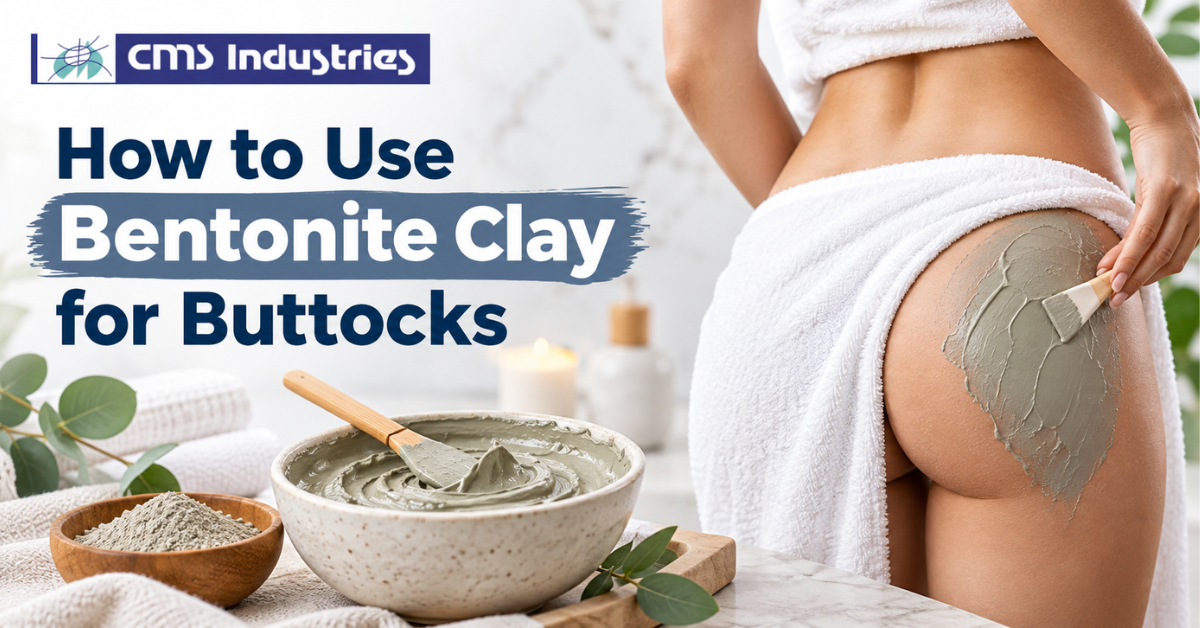
- Combine the paste. You can start with 1 tablespoon bentonite powder and add water little by little. Continue stirring until the paste is smooth and spreadable, like yoghurt.
- Apply a thin, even coat. Clean hands or a soft brush. Leave an unbroken skin barrier away from the fold.
- Set a timer for around ten minutes. One skincare brand’s guide suggests about ten minutes, and a pharmacy product guide suggests 10 to 15.
- Rinse before cracking. Several sources warn that a fully dried clay mask can suck moisture from the skin. Wet with warm water, loosen, and rinse well.
- Dry blot. Use a clean towel and don’t rub.
- Drink water. Apply a fragrance-free moisturiser immediately. A pharmacy guide recommends that you moisturise after every clay mask.
How Often and How Long Should You Use It?
Keep it light, especially in the beginning:
- Frequency: Once a week. A pharmacy guide says twice a week for dry, normal, or combination skin on the face; body skin is not always the same, so start low.
- Timing: Each session should last about ten minutes.
- Review: Check your skin’s appearance and feel after 3-4 uses. If it feels tight, flaky, or sore, stop.
- Clay Oil: Patience. It does not treat an infection or fix the cause of folliculitis.
Common Mistakes to Avoid
Most of the bad experiences are caused by a few repeat errors:
- Leave it on until it cracks. A hospital summary says a very dry, cracked mask is not needed and may worsen irritation.
- Product stacking. The same summary warns against using a clay mask in conjunction with harsh exfoliants, scrubs, or multiple acne treatments on the same day.
- Scrubbin’. Medical News Today includes harsh scrubs in their list of things to avoid with buttock folliculitis.
- Picking or popping bumps. This can transfer bacteria and leave marks.
- Detox Clay. That isn’t supported by the evidence.”
- Skip lead check. A pretty jar doesn’t tell you anything about heavy metals.
Skin Habits That Help More Than a Mask
A mask is a small part of the plan. Healthline says that leaving sweat and dirt on your skin after a workout can cause buttock breakouts, so it’s best to shower soon after exercising. Loose-fitting clothing made from breathable materials might help prevent irritation and promote healing, according to Medical News Today. Shaving can also cause folliculitis, so shave gently, and if you sit for long periods of time, take a break, as friction makes it worse.
The hospital summary above says that frequent masking is less effective than gentle cleansing and regular moisturising for steadier results. Clay is a bonus.
Choosing a Bentonite Product: What to Look For
Not all bentonites are good for skin. According to Encyclopedia Britannica, sodium bentonite is a swelling clay used for industrial jobs such as sealing dams, drilling muds and foundry work. Skin products have a different standard: fine particles, lab data, and clear labelling.
CMS Industries is a Gujarat-based manufacturer, supplier and exporter. Its website lists a cosmetic bentonite grade that it claims has a higher oil absorption capacity and can take up impurities. The company also has grades for drilling, foundry, civil engineering, animal feed, water treatment and other uses. Grades vary; ask any supplier (including CMS Industries) for a certificate of analysis that lists the lead for the specific lot. Most home users buy a finished cosmetic product, so check that product’s lab report the same way.
When to Skip the Clay and See a Doctor
If you see any of these, please book an appointment:
- Boils are a sore lump or a lump filled with pus.
- Spreading redness or warmth
- Lumps that keep coming back for weeks
- Skin rash with fever or feeling unwell
- A rash that gets worse when you wear clay
A dermatologist can diagnose whether you have folliculitis, true acne, or some other skin condition and prescribe treatment if needed.
Next Steps
Bentonite can help to mop up surface oil on the buttocks, but it will not lift, firm, or detox. Here’s a simple plan:
- Know what your bumps are and get checked by a doctor if they appear infected.
- Buy a cosmetic-grade clay with a lab report that shows lead.
- Patch test: Apply a thin layer for ten minutes. Rinse and moisturise
For comparison of bentonite grades and reading of product description, please visit the CMS Industries website at cmsindustries.in.
FAQs
Is it safe to put bentonite on your butt?
Cosmetic-grade bentonite masks, patch tested and used for a short period, pose a low risk for most people with normal skin. Do not use on broken or infected skin. Check the lead report and discontinue use if redness or burning occurs.
How long should you leave a bentonite mask on your skin?
Aim for about ten minutes if you can. The brand and pharmacy guides recommend 10 to 15 minutes. Rinse before the clay dries and cracks. A completely dry mask can pull moisture from the skin and increase irritation.
Can bentonite get rid of butt acne?
It may help with surface oil, but most butt acne is folliculitis, an infected hair follicle. Clay won’t heal an infection. See a dermatologist if bumps continue to appear or spread or form boils.
Will bentonite make your buttocks firmer or bigger?
It does not; no credible research shows it does. The studies reviewed describe effects on skin such as oil absorption, soothing, and wound healing, not lifting or reshaping. Those goals are better approached by exercise and professional medical advice.
How often can you use a bentonite mask?
Begin with once a week. Some guidance from the pharmacy is twice weekly for facial skin, but body skin can respond differently. Stop if the area feels tight, flaky, or sore.