


Look for bentonite balls, and you’ll soon hit a puzzle. A supplier means compressed pellets that seal a well. Another method is to use iron ore balls rolled with bentonite as the glue. Both groups say the word ‘balls’; both depend on the same clay. So what is this product, and where does it work, actually?
Let’s get into it. This guide covers the two common meanings, how bentonite swells and binds, and how industries use it for iron ore pelletising, well sealing, and pond or liner sealing. It also looks at how to select a product and what to ask a supplier. Sources are provided for each claim at the end.
Quick Answer: What Does the Name Mean?
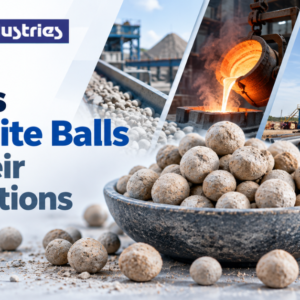
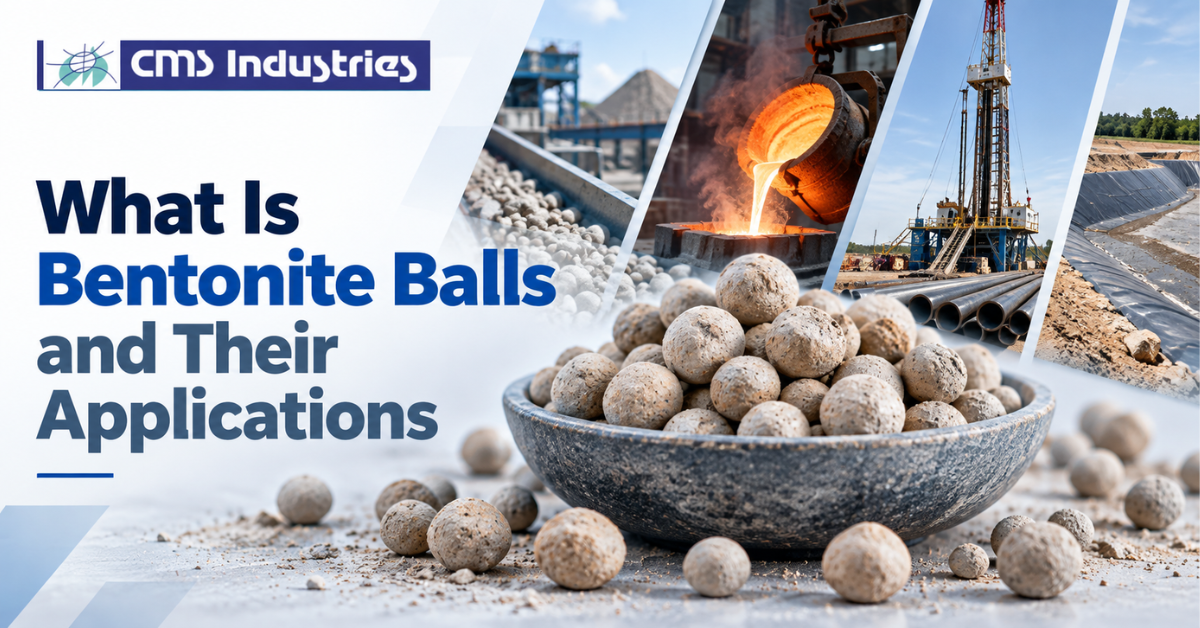
There is no such thing as a standard product by that name. The term usually refers to one of two things: pelletised bentonite (pellets, chips or tablets) that swells to seal wells, ponds and boreholes, or iron ore “green balls” that use bentonite as the binder. In either case, the work is done by the swelling and binding power of the clay.
Two Meanings Behind the Name
- Pelleted Bentonite. Bentonite is processed into pellets, chips, tablets, and granules by producers. They are poured into boreholes by well drillers, where water causes them to swell, and the clay seals the hole. In California, a county ordinance defines bentonite seal as sodium montmorillonite clay that is commercially prepared, granulated, pelletised, or chipped.
- Iron ore pellets bonded with bentonite. In steelmaking, fine iron ore, water, and a little bentonite are rolled into small spheres at the plants. Pellets are balls of iron ore or concentrates and are used as feed for iron making, says Imerys, a major bentonite producer. The ball is not the binder; the bentonite is the binder in the ball.
Suppliers use the term loosely, so always check what a seller means by it before you buy or specify anything.
How Bentonite Swells and Binds
Bentonite is an altered form of volcanic ash. According to Encyclopedia Britannica, sodium bentonites absorb large quantities of water, swelling to many times their initial volume and forming gel-like masses. Calcium bentonites swell much less. Sodium types show free swelling of around five to fifteen times the dry volume, according to patent records.
That single behaviour is what drives both apps:
- Gaps close by swelling. A dry pellet is dropped into a hole, absorbs water, and expands to fill the space.
- Binding causes normal atoms to stick together. When wet clay encounters iron ore fines and water, the clay adheres to the grains, forming a rounded mass.
Application 1: Iron Ore Pelletising
Fine dust, which is normally delivered as iron ore, cannot be used by blast furnaces directly. A guide from Jordan’s Ministry of Mining explains that bentonite binds the fines into spherical pellets, which are then fed to blast furnaces to produce pig iron or direct reduced iron manufacturing plants.
How the Process Works
In a technical paper on binders, the recipe is simple: iron ore, water, and a binder roll together in a disc or drum to make wet pellets, often called green balls. Here is the plain step-by-step sequence:
- Mix. The iron ore concentrate is mixed with a small amount of bentonite.
- Roll. The mix is wetted in a balling drum or disc and tumbled until small spheres are formed.
- Testing. Operators test green balls for their compressive strength and how many drops they can withstand.
- Dry and burn. The balls are run through heat that turns them into pellets.
- Vessel. The finished pellets are forwarded to blast furnaces or direct-reduction plants.
Why Plants Pick Bentonite
Bentonite is the most commonly used binder for iron ore concentrate pellets, according to researchers at Michigan Technological University. A patent on fluxed pellets states bentonite was chosen as the binder because it controls moisture in green pellets, unlike hydrated lime, which caused sticking and plugged screens.
Type is important too. Physicochemical Problems of Mineral Processing, 2015. Sodium, calcium, and mixed bentonites were tested. Sodium samples produced relatively stronger pellets, while calcium and mixed types had to be activated with sodium bicarbonate to gain strength.
Limits to Know
Bentonite has silica in it, and silica can reduce the iron content in the pellets. If 1 per cent bentonite reduces iron content by about 7 kg per tonne of ore, then researchers keep trying other binders, as a paper on boron binders says. Results are also mixed. Michigan Tech found that calcium and magnesium in the ore’s moisture can change a bentonite’s binding power, so each bentonite has to be tested in the plant. For related practical considerations, see whether bentonite clay can clog drains.
Application 2: Sealing Wells and Boreholes
Bentonite in pellet form is a living underground resource. In the United States, it’s government rules that show how professionals handle it.
Wisconsin’s well code allows bentonite chips or pellets to fill and seal wells and drill holes, but only within limits. They can’t go into a hole full of drilling mud or bentonite slurry. Installers must screen and pour below the water table to prevent bridging and monitor depth as they fill. Crews hydrate the clay after placement with clear water from a clean source.
Detail from other agencies:
- Particle size is important. Kern County, California, requires that pellets or chips be less than one-fifth of the radial thickness of the annular space that they fill.
- Hydration is a process. According to the same ordinance, bentonite preparations generally require from 30 minutes to one hour for hydration.
- Water chemistry matters. Oregon permits unhydrated bentonite below the water level only when groundwater is at or below 800 ppm total dissolved solids, unless the manufacturer can show otherwise.
- Some sites are not good candidates. Kern County prohibits the use of bentonite in fractured rock, in flowing water, and in areas where tree roots might penetrate the seal.
- Serve with care. Ohio’s abandoned-well rule allows pelletised or coarse bentonite for some wells and requires grout to cure for a minimum of 12 hours before checking for settling.
Check your local regulations; these are US rules. But they still show a pattern: The product works when installers match it to the water, the hole and the hydration plan.
Application 3: Pond, Landfill, and Liner Sealing
Swelling clay also avoids seepage at the surface. Imerys says its sealing bentonites are suitable for liners in earth construction, waste deposits, water engineering and lakes because of their high water absorption and swelling potential, which keep water permeability low. The same logic applies to farm ponds. The sodium bentonite layer, when in contact with water, swells and slows down the leakage through the porous soil.
Geosynthetic clay liners place bentonite between fabric layers to keep the clay evenly spread. Installers may also need granular and pelletised forms where they can’t roll out a liner, such as around pipes or narrow trenches.
Sodium or Calcium: Which Type Suits Which Job?
Performance depends on type. Here’s a quick guide:
- Sodium bentonite: High swelling, best for sealing and strong iron ore pellets.
- Activated calcium bentonite: Less natural swelling, supplemented with sodium bicarbonate, often used when costs are a consideration.
- Calcium bentonite: Has little swelling, so it is not often good for sealing jobs.
The 2015 pelletising study supports the first 2 points. The swelling differences are supported by Britannica.
How to Choose and Handle Pelletised Bentonite
Look at this list before you order:
- Define the position. Sealing of wells, sealing of ponds, and pelletising require different grades.
- Ask what kind of clay. Activated, calcium, or sodium.
- Requesting size and swell data. Kern County’s one-fifth rule: Pellet or chip size should fit the space.
- Water compatibility check: Oregon’s rule says salty or high-TDS water can limit unhydrated bentonite.
- Hydration plan. There are many rules that require clean water and enough time for the clay to expand.
- Reduce dust. Oregon’s rule recommends that installers keep bentonite dust away from the seal, and the same diligence benefits workers on site.
A Producer’s View: Grades and Forms
CMS Industries, a Gujarat-based bentonite miner, processor and exporter, says its units are capable of producing more than 9,000 metric tonnes of powder and over 26,000 metric tonnes of lumps per month. The site includes grades for iron ore pelletising, geosynthetic clay liners, pond sealing, water well drilling, civil engineering, oil drilling and various other applications. It describes its iron ore grade as having a high natural percentage of iron and low silica, so it forms no additional slag, and it describes its geosynthetic liner grade as having strong sealing and swelling properties that minimise leakage.
Pages I looked at listed powder and lumps, not finished pellets or balls. If it needs to be pelletised, ask any supplier, including CMS Industries, if it can provide that shape and size.
Next Steps
More than one product is called by the same name. It is a fold for pelletised bentonite and for iron ore balls with bentonite as a binder, relying on swelling and binding. Here’s a simple plan:
- Determine whether you require a sealing product or a pelletising binder.
- Match the clay type, size, and water conditions to the job.
- Before ordering in bulk, ask the supplier for test data.
Refer to the CMS Industries website, cmsindustries. for grade descriptions and product details.
FAQs
What are bentonite balls?
The phrase does not have one standard meaning. The term is usually used for pelletised bentonite that swells to seal wells and ponds or for iron ore balls bonded with bentonite in steelmaking. Check the meaning with your supplier.
Why is bentonite used in iron ore pellets?
Bentonite is used to bind fine iron ore and water into spherical green balls that hold their shape during handling and firing. It is the most popular binder, researchers say, though its silica slightly lowers pellet iron content.
Can bentonite pellets seal a well?
Yes, many regulators allow bentonite chips or pellets to be used to seal wells and boreholes under certain conditions. The rules cover particle size, water quality, hydration, and bridging. Please adhere to your local regulations and use qualified installers.
Which bentonite is best for pelletising?
In a 2015 study, sodium bentonite made stronger pellets than calcium or mixed types. Needed activation with sodium bicarbonate. Mixed types and calcium. Each bentonite is still tested by the plants, as the results vary with the ore.
How long do bentonite pellets take to swell?
It varies by product and by water. According to a county ordinance in California, bentonite preparations are typically hydrated for 30 to 60 minutes, and other regulations require pouring in clean water until the seal will no longer take it.