


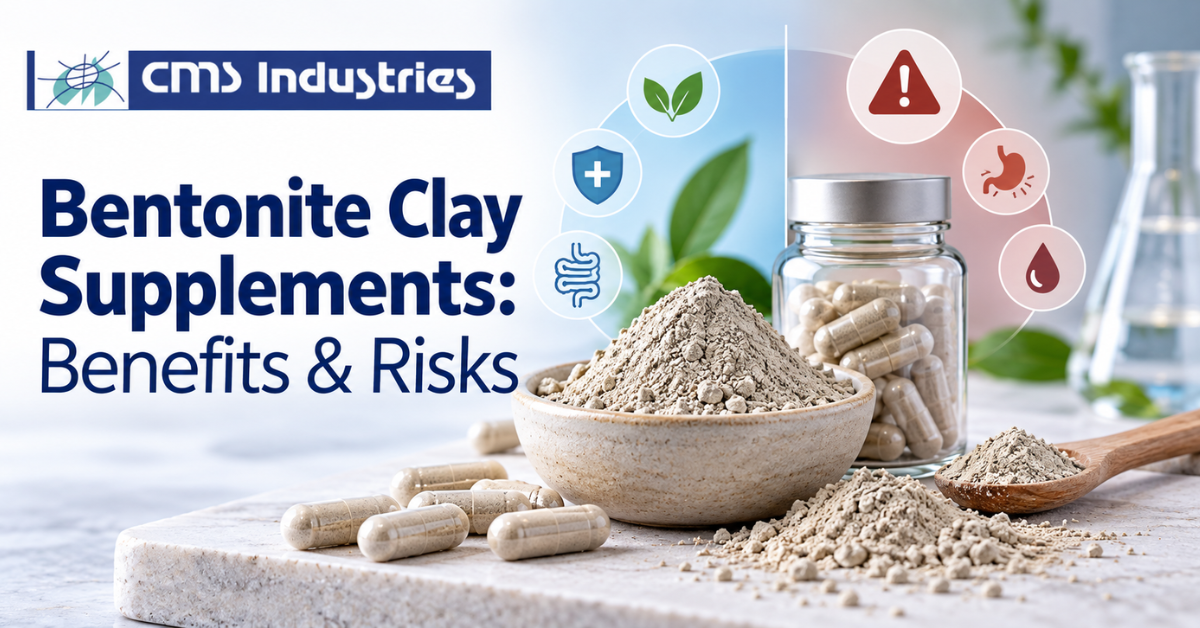
Go to any health food store or browse a wellness feed, and you will see bentonite clay for sale in powder form, in capsules, or as a “detox” drink. The pitch is simple: eat the clay; it pulls toxins out of your gut on the way through. Is that right? Partly in narrow laboratory and field studies. Is it safe to take daily? The answer to that is much less obvious.
Let’s get into it. The guide explains what the research says, where the real risks are, who should avoid these products, and how to read a label. This is general information, not medical advice. Talk with your doctor or chemist before swallowing any clay.
Quick Answer: Are Bentonite Supplements Worth It?
There is little evidence, and the risks are real. Carefully refined clays showed toxin-binding effects in controlled trials, but these are not the same as shelf powders. Off-the-shelf clay may contain lead, cause constipation, and interfere with medications. Most people should avoid it unless a doctor agrees.
What Are Bentonite Clay Supplements?
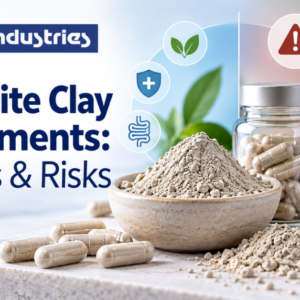
Bentonite is altered volcanic ash. The Encyclopedia Britannica places it in the smectite group of clays and informs us that the sodium types swell many times their original volume in water, while the calcium types do not. The makers grind the clay to a fine powder and sell it for the gut, skin, or hair. Oral products come in the form of powders to be mixed in water, capsules, and liquid blends.
On two points, everything that follows depends. First, bentonite is a mined mineral, and therefore every deposit and batch can vary. Second, a clay supplement sold in the United States does not require FDA approval before it hits store shelves. A health-professional monograph on clay (archived) says herbs and supplements are not strictly regulated by the FDA, so there is no assurance of strength, purity, or safety.
Possible Benefits: What the Research Shows
Binding Toxins in the Gut
“The best evidence is from trials of toxin binding, and it has limitations.” Researchers in Ghana tested NovaSil, a refined calcium montmorillonite clay, in people exposed to aflatoxin, a toxin that can grow on stored grain. In a 3-month double-blind placebo-controlled trial with 507 adult volunteers, safety, tolerance, and binding of the toxin by the clay were evaluated. In a subsequent analysis of the same programme, those who took 3 grams per day had significantly lower urinary markers of a second grain toxin, fumonisin B1, compared to the placebo group. In children, a refined version was tested for two weeks and showed decreases in aflatoxin markers of up to 58 per cent in earlier human studies.
Now the snag. Those products were refined, sized to particle size, and tested for the job. The results do not apply to a jar of bentonite from a wellness shop, which is a different matter. The studies also measured toxin markers in a high exposure population, not general wellness.”
Digestive Comfort
The results for gut symptoms are mixed. A clinical reference monograph says that another type of clay eased pain and discomfort in people with constipation-predominant irritable bowel syndrome, but clay did not appear to help diarrhoea caused by cancer drugs. It concludes that more evidence is needed to grade clay for these uses. Some studies describe bentonite as a detoxifying agent in a 2017 review in the Iranian Journal of Public Health, and one cited example is gastric lavage that removes the poison paraquat. That’s emergency toxicology, not a daily wellness habit.
The “Detox” Claim
There is no good evidence that swallowing clay will detoxify your body. However, a hospital group’s evidence summary on clay masks says there is no medical evidence to back claims that clay detoxes the body. The same group’s overview of bentonite says it should not be used in place of standard care. Your liver and kidneys already do waste removal.”
How Strong Is the Evidence?
These trials were conducted by one research network, tested one refined product, and were conducted in areas of high exposure to grain toxins. Some are based on studies in rats and in lab dishes, though they don’t show that a shelf supplement helps a healthy adult. The 2017 review in the Iranian Journal of Public Health also considers bentonite worthy of further research. In the meantime, consider the use of clay unproven for everyday health until larger independent trials arise.
Risks and Side Effects You Should Know
Lead and Other Heavy Metals
This is the biggest warning sign. In January 2016, the FDA warned consumers not to use “Bentonite Me Baby” after lab tests found high levels of lead. Trade reports said the label promoted it for internal use for detox, and the lead level was measured at 37.5 micrograms per gram. The FDA says lead can affect the nervous system, kidneys, and immune system and that even low-level chronic exposure in children has been associated with lower IQ and behaviour problems.
A 2013 Dutch study of clays sold for oral use found up to 99.7 mg of lead per kilogram. Lead intake from 34 of 36 traditional clays would exceed the toxicological limit by up to 20-fold, while 2 of 27 “health clays” did the same. A potential concern for pregnant women, the authors said. If bentonite contains lead, we wrote about this topic in more detail in our guide.
Constipation and Blockage
Clay absorbs water, so it can slow your gut. Constipation, nausea, bloating, and abdominal discomfort are listed among the oral side effects in an overview by a hospital group. The clay monograph goes further, stating that intestinal blockage, injury, and bowel rupture occurred in people who ate clay. Those with chronic constipation, a bowel disorder, or swallowing problems are at greater risk.
Low Potassium and Low Iron
Likewise, the same monograph rates clay as possibly unsafe by mouth for long periods, because eating clay long-term can cause low potassium and low iron. It cautions that clay can interfere with iron absorption and worsen anaemia and can lower potassium in those who are already low.
Medicine Interactions
Clay can stick to other materials in your gut, including medicines. The monograph also notes that clay may reduce the absorption of cimetidine and quinine, which may reduce their effect. For more information, see using bentonite clay. Ask your chemist how to take your other daily medicine with this one if you are taking it or whether to skip the clay altogether.
Who Should Avoid Bentonite Supplements?
Don’t take oral bentonite and/or get medical clearance first if:
- Pregnant or nursing. Dutch authors worried about possible developmental harm from lead and arsenic in some clays.
- Long-term constipation or bowel illness. A hospital overview says people with chronic constipation or bowel disorders should not self-medicate with oral clay.
- Kidney disease. The same overview also lists kidney disease as a reason to take caution.
- Swallowing disorders. Dry powder can cake down in your throat.
- Reduced immunity. This is also mentioned as a warning in the overview.
- Low potassium; anaemia. Clay, says the monograph, can make both worse.
- Daily medication. Interference is possible, as noted above.
How to Judge a Bentonite Supplement Label
If you and your clinician decide to go ahead, use this checklist before you buy.
- Look at the ingredient panel. Look for the exact name of the clay and any additional ingredients.
- Request a certificate of analysis. It should list lead, arsenic, cadmium, and mercury for the lot you are buying.
- Look for independent tests. A third-party lab report is better than a marketing claim.
- Beware of curse language. Claims such as “detoxifies your body” or “removes heavy metals” are hallmarks of bad science.
- No more piles. Using several binders at once, like clay and charcoal, makes constipation and nutrient loss more probable.
- Learn your stop signs. If you have constipation, cramps, nausea, black stools, or vomiting, stop and call a clinician.
Look what this list leaves out. It doesn’t say how much. There is no established dose for oral bentonite as a health product, and the label directions are highly variable. No jar should determine any amount; your doctor should.
Raw Bentonite vs. a Finished Supplement
Most bentonite never makes it to a supplement. Britannica says its main uses are sealing dams, bonding foundry sands, making drilling muds, and clarifying water. These jobs are concerned with swelling and binding strength.
CMS Industries, a manufacturer and exporter of bentonite in Gujarat, lists grades for oil drilling, foundry work, civil engineering, geosynthetic liners, pond sealing, water treatment, cosmetics, animal feed, and cat litter. It says its animal feed grade is safe and non-toxic for consumption by livestock and that its cosmetic grade has a higher oil absorption. These labels are for industrial and feed use, not for human supplements. The lesson is that a grade suited to one job is not suitable for another. If you buy bentonite from CMS Industries or anyone else, be sure to get the lab data for the lot you are buying that matches the use you have in mind.
Next Steps
Oral bentonite has some encouraging findings from refined products and a long list of cautions for the shelf versions. Here’s a simple plan:
- Before taking any clay by mouth, discuss with your doctor or chemist, especially if you are taking any medicines.
- If you want to try it anyway, demand a lab report that is lot-matched and states lead and other heavy metals.
- At the first sign of constipation or cramps, stop. Seek care for serious symptoms.
- For background on bentonite grades and how producers describe them, visit the CMS Industries website at www.cmsindustries.in.
FAQs
Are bentonite supplements safe?
Not always. The FDA has issued a warning about a bentonite product that has high levels of lead, and clay can also cause constipation, low potassium, and interference with medicine. Consult your doctor first. Safety depends on the product, the batch, and your health.
Do bentonite supplements detox the body?
There is no hard evidence to say that. Some studies showed refined clays binding grain toxins. But a hospital group’s review says the medical evidence does not support general detox claims. Your liver and kidneys already flush waste out.
Can bentonite interact with medicines?
Yes, it could. According to a clay monograph, clay may decrease the absorption of cimetidine and quinine. Clay absorbs things in your gut. Your chemist can tell you how to remove any medicine from clay.
Who should avoid bentonite supplements?
Pregnant or nursing women and those with chronic constipation, bowel disease, or kidney disease, swallowing problems, anaemia, or low potassium should not take oral clay without a clinician’s approval. Anyone on daily medications should enquire first.
How can I choose a safer bentonite supplement?
Look for a product that has a lot-specific certificate of analysis that lists lead, arsenic, cadmium, and mercury, preferably from an independent lab. Forget about cure claims. Don’t layer products. Go with the first sign of constipation.