



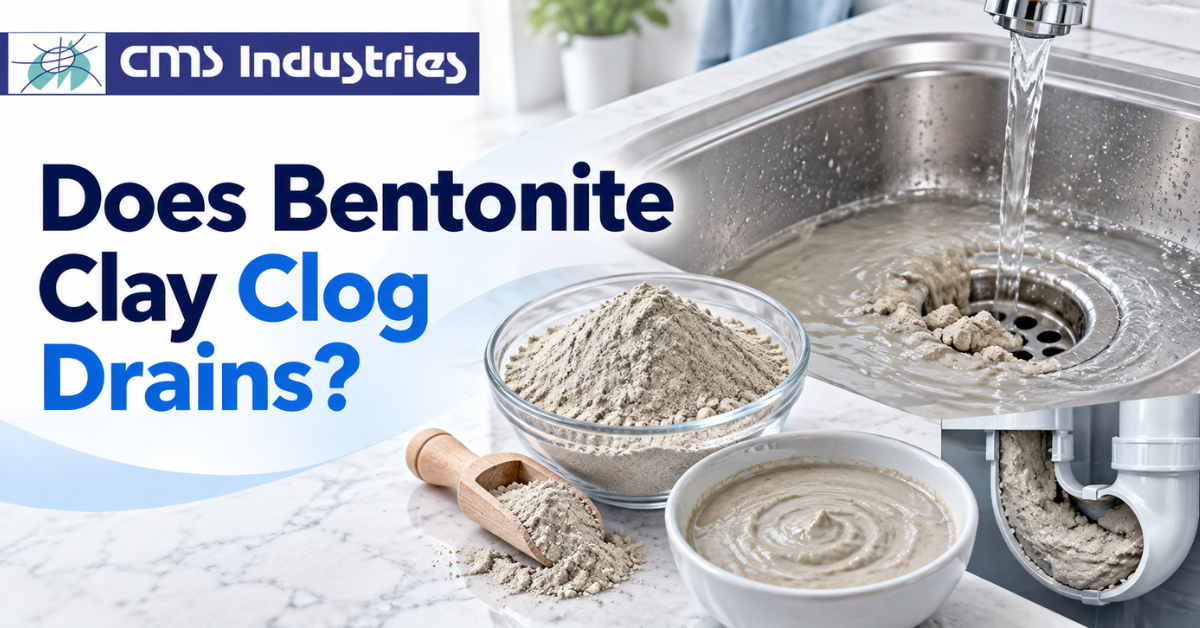
You finish a face mask, rinse the bowl, and watch grey water swirl away. Or you scoop the cat box and wonder if one flush will kill. It’s common for many people to ask the same question during these times: does bentonite clay clog drains? The quick answer is yes, it can, and the damage often happens quietly.
Let’s break it down. Bentonite is a pain in the pipes, and this guide explains why, where it usually gets in, how to dispose of it safely, and what to do if some has already gone down the drain. Each statement is cited from a source at the end.
Quick Answer: Can Bentonite Clog Your Pipes?
Yes. Bentonite takes in water, settles as sediment, and can harden in traps and bends. A single small rinse may be ok, but repeated rinses or flushed cat litter can accumulate into a blockage. Don’t wash clay down the drain; wipe it into the trash.
Why Bentonite Is Hard on Plumbing
Bentonite is a clay formed from altered volcanic ash. The most famous thing it can do is handle water. Sodium bentonites, as explained by Encyclopedia Britannica, absorb large amounts of water and swell up many times their original size to form gel-like masses. Patent records provide for free swelling at about 5-15 times the dry volume. Engineers rely on that behaviour to seal dams and liners, which tells you what it can do inside a pipe: it fills space.
Here are three things that occur when bentonite hits the plumbing:
- It grows. Sodium bentonite swells as it absorbs water and can seal a tight bend.
- It settles down. The fine clay particles drop out of suspension and collect in low-lying areas. Common clay users say the first settling happens in the P-trap under a washbasin or tub.
- It gets tough. Clay sitting in a pipe can dry and harden. “Clay will coat the pipes and then harden, creating clogs that could require a professional to remove,” a plumber told PureWow.
This is a detail that surprises people. Calcium bentonite, the kind you find in many cosmetic clay masks, expands a lot less. Britannica terms calcium bentonite non-swelling. But plumbers advise against rinsing, saying that settling and hardening cause trouble with no swelling whatsoever. Both types belong in the trash, not the washbasin.
Where Bentonite Usually Gets Into Drains
Cat Litter
Clumping litter is the prime offender. AAA’s club magazine has an article on cat care that mentions bentonite in regular litter and says clay in pipes is never a good idea. “Clay and silica clumping litters are designed to absorb moisture and clump. So they can become big clogs almost as soon as they enter your pipes,” a plumber who spoke with Apartment Therapy said.
Water companies agree. A writer for The Conversation contacted five Australian water authorities, including Sydney Water and Melbourne Water, and all five emphasised that no kitty litter should be flushed. The article goes on to explain that bentonite is a common ingredient and that litter can swell and clog sewer pipes, even in your own home. Anglian Water in the UK also warned that flushed litter can block sewers.
A pet-care site that covers plumbing says modern low-flow toilets use less water per flush, increasing the odds that litter will linger in the pipes instead of washing out. “Flushable” litter doesn’t solve the problem. “These products contain biodegradable ingredients that take time to break down, leaving pipes exposed in the meantime,” the AAA article states.
Face and Hair Masks
Much bentonite gets into bathroom sinks and shower drains because of clay masks. Lancaster Plumbing Services, a company that warns about the plumbing hazard, shared the story of a PureWow writer who used a popular calcium bentonite mask and then transitioned to warm paper towels and a trash can for cleanup.
It is easy to get into the habit. In a bowl, mix the mask, rinse the bowl at the sink, and rinse your face over the same drain. Then the clay particles travel only a short way until they find a trap.
Hobby and Home Projects
People making a clay slurry, sealant, or bentonite for a garden project could cause the same problem. That’s why potters use settling buckets, and a thread on one potter’s forum warns against pouring murky clay water down any drain without an easy-to-clean trap.
Signs of a Clay Clog
Clay clogs rarely announce their presence. A pet-care site discussing sewer problems lists common warning signs, and they apply here too:
- Standing water in sinks or tubs
- Gurgling drains
- Slow drains that come back after cleaning
- Bad smells from plumbing
- Backups in the lowest drain in the house
If these signs show up after repeated clay rinses or flushed litter, stop sending clay down the line. The same site warns against trying to clear a hard blockage yourself. Call a licensed plumber who can run a camera down the line before it floods a floor.
How to Dispose of Bentonite Safely
Use these steps after a mask, project, or litter change:
- Wipe dry before rinsing. Wipe most of the clay off the bowl, brush, or tray with a paper towel or old cloth.
- Put the solids in the bin. Discard used towels and any remaining paste in the trash.
- Put a washcloth or wipe on your skin. This is how you get most of a face mask off before going to the washbasin.
- Settle the rinsing water. Pour the rinse water into a bucket. Allow the clay to settle and spoon the sediment into the trash. Above clean water is much safer than below dirty water.
- Scoop the litter into a bag. Tie it and throw it in the trash. Never flush it, even if the bag says “flushable”.
- Keep a covered bin handy. Next to the sink is a small bin with a liner to help encourage wiping instead of rinsing.
- Add a drain catcher. Mesh strainers keep out stray lumps, but they do not catch the fine clay in the water.
What If Some Already Went Down the Drain?
Don’t panic. A cat-litter company blog says one flush rarely does immediate damage, but litter you’ve already flushed can accumulate over time in the bends of your pipes. The same applies for masks. One rinse doesn’t hurt. Habits do.
Next steps are:
- Do not rinse or flush clay any longer.
- Over the next few weeks, watch out for slow flow, gurgling, or smells in your drains.
- If the signs are there, call a plumber early, as a small clog costs less than a main line backup.
Septic Systems and City Sewers
The risk is not very dependent on the type of system. Clay litter is one of those listed by the AAA article as things that should never go down any drain, and homes with septic systems are singled out for special attention. The same problem exists in city sewers but on a broader scale. Water authorities in Australia and the UK are both advising customers to keep litter out of the toilet, partly because it can block the network. For broader information, see bentonite clay supplements.
Better Habits for Cat Owners and Mask Fans
Most of the risk is removed by minor changes:
- Cat owners: Pick up the litter and put it in the bin. Anglian Water also warned that cat faeces may contain toxocara, which it cannot remove during its treatment processes. Some makers of litter support a “compost, do not flush” message.
- Mask wearers: take most of it off with a cloth, then wash your face over a washbasin with a strainer in it.
- Septic tank households: Only dispose of all clay products as trash.
Bentonite Where It Belongs
Bentonite is useful because it handles water, and that is why it fights plumbing. Its jobs include sealing dams, bonding foundry sands, making drilling muds, and clarifying water, Britannica lists. Producers market grades developed for each purpose.
CMS Industries is a bentonite manufacturer and exporter based in Gujarat, which lists grades for oil drilling, foundry work, civil engineering, geosynthetic clay liners, pond sealing, water well drilling, water treatment, cosmetics, and cat litter. It is a geosynthetic liner grade with strong sealing and swelling properties to minimise leakage, and its sodium bentonite page says the clay seals the lower soil bed to reduce seepage. They’re sealing jobs that are done in the ground, in ponds, and in liners, not in household plumbing. For users at an industrial scale, check the local rules on bentonite slurry before disposal.
Next Steps
So, does bentonite block drains? It can by swelling, settling, and hardening. Here’s a simple plan:
- Wipe clay into the trash before rinsing anything and keep a small bin near the sink.
- Cat litter, bag, and bin. Including ‘flushable’ cat litter.
- Watch for slow drains, and at the first sign, call a plumber.
To know about bentonite grades and their applications, please visit the CMS Industries .
FAQs
Can bentonite clay clog drains?
Yes. Bentonite can settle in traps, harden, and, in the sodium form, swell as it absorbs water. One little rinse can get through, but if you rinse a few times or flush the litter, it can cause a clog over time.
Is it safe to wash a clay mask down the sink?
Don’t do it, say the plumbers. Wipe off the mask with a cloth or paper towel, throw away the solids, and wash only the thin film left. A drain strainer catches lumps, but fine clay still gets through.
Can you flush clumping cat litter?
No. Flushing kitty litter should not be done, Australian water authorities say, and Anglian Water agrees. Even stuff marketed as “flushable” litter can clog pipes, so bag it up and throw it in the trash.
What does a clay clog look like?
You might see slow drainage, gurgling, standing water, foul smells, or backups in the lowest drain. A plumber can do a camera inspection to confirm the cause and clear it before it spreads.
Does sepsis make it worse?
Septic tank homes need special consideration. The AAA article cautions against dumping clay litter down any drain and specifically warns against septic systems. Throw all clay in the trash and talk to a septic professional about your system.