


You may have seen “Quaternium-18 Bentonite” somewhere on the ingredient list of a lipstick, a mascara, or a tin of grease. It looks technical, and it is, but when you break it down, the idea behind it is a simple one. This is a complete breakdown of what quaternium-18 bentonite is, how it is made, and where you can find it in everyday products.
What Is Quaternium-18 Bentonite?
Quaternium-18 Bentonite is bentonite clay that has been chemically modified. It is obtained by treatment of natural bentonite with a quaternary ammonium compound, usually derived from hydrogenated tallow. This reaction replaces the natural mineral ions that sit between the layers of the clay with organic, oil-friendly ions.
The result is an organoclay. Regular bentonite will swell and thicken in water; quaternium-18 bentonite does just the opposite. Instead, it disperses in oils, waxes, and silicones to form a gel-like network that thickens and stabilises oil-based products. That one change in chemistry is what turns a common clay mineral into a speciality ingredient used in everything from cosmetics to paints to greases and drilling fluids.
How Is Quaternium-18 Bentonite Made?
Manufacturing begins with mined and purified natural sodium or calcium bentonite that has been cleaned of sand, grit, and other impurities. Let’s take it down to the major steps:
- Purification: Raw bentonite is washed to eliminate non-clay material and produce a clean, consistent base clay.
- Ion exchange reaction: the purified clay is treated with a quaternary ammonium salt, usually a compound derived from hydrogenated tallow. It binds to the negatively charged surface of the clay and displaces the cations that are present naturally.
- Drying and milling: The treated clay is dried and ground to a fine, even powder.
- Quality control. The final organoclay is tested for particle size, gel strength, and dispersion behaviour in oil-based systems.
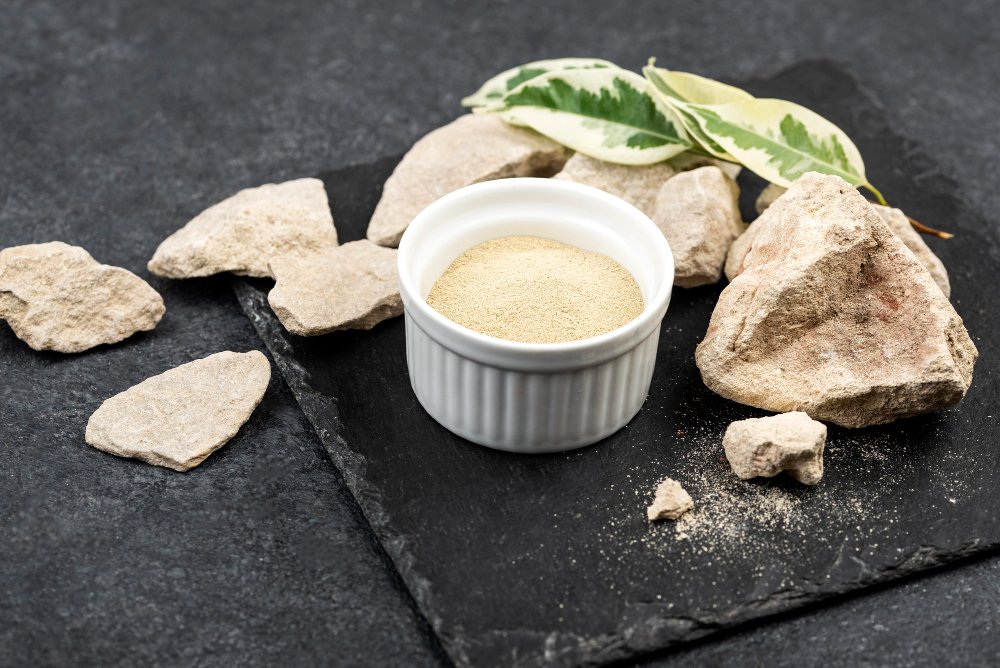
This is a different process than the production of cosmetic-grade natural bentonite, which is derived from bentonite stone and remains untreated, retaining its natural absorption and cleansing properties. Quaternium-18 bentonite is far more advanced because it has been chemically modified to function effectively in oil- and silicone-based formulations rather than water.
Quaternium-18 Bentonite Uses
In Cosmetics and Personal Care
This is where most people will come across quaternium-18 bentonite, even if they don’t realise it. It is used by formulators as a thickening and suspending agent in anhydrous and oil-based products. Some typical examples are:
- Lipstick and lip gloss, where it holds the pigment in suspension and prevents settling
- Mascara, which regulates the thickness and prevents the formulation from separating
- As in stick foundations and pressed powders, it acts as a binder to hold the shape of the product
- Antiperspirant sticks are a suspending agent for active ingredients
- Nail polish, keeping the pigments from settling to the bottom of the bottle
Regulatory authorities have extensively reviewed ingredients used in cosmetic formulations. The Cosmetic Ingredient Review (CIR) Expert Panel reviewed updated safety data and reaffirmed that Quaternium-18 and Quaternium-18 Bentonite are safe as cosmetic ingredients under the current conditions of use and concentration. Earlier evaluations conducted in 1982 also concluded that Quaternium-18 Bentonite, Quaternium-18, and Quaternium-18 Hectorite are safe when used at the established levels and conditions of use.
Granular Bentonite Clay, a naturally occurring clay mineral, is also widely used across cosmetic, skincare, personal care, and industrial applications for its excellent absorbent, cleansing, and mineral-rich properties. It is commonly incorporated into products such as facial masks, body treatments, and detoxifying formulations, where it helps absorb excess oil and impurities while supporting overall product performance. Manufacturers should ensure that any granular bentonite clay used in cosmetic products complies with applicable quality, purity, and regulatory requirements for its intended use.
As a Rheology Modifier in Paints and Coatings
added to solvent-based paints and coatings to control flow and prevent the settling of pigments in the can. It forms a gel structure that keeps the paint texture stable on the shelf and then breaks down with brushing or spraying so the coating goes on smoothly.
In Lubricating Greases
Manufacturers use this organoclay as a thickener in speciality greases, especially greases that must retain their structure at high temperatures. The modified clay is oil soluble and so is evenly distributed in the grease base and helps to prevent separation.
In Oil-Based Drilling Fluids
Organoclay additives such as quaternium-18 bentonite are used in oil and gas drilling to control the viscosity of invert emulsion drilling fluids. The clay forms a gel network in the oil phase to help suspend drill cuttings and stabilises the fluid under pressure and heat downhole.
Preventing Contact Dermatitis
There is a lesser-known medical use as well. Research on skin protection has shown that topical skin protectants and quaternium-18 bentonite, an organoclay, help prevent rhus dermatitis, the allergic skin reaction caused by poison ivy and related plants. This use case is totally outside of cosmetics and points to how the same organoclay chemistry can serve as a physical skin barrier.
Quaternium-18 Bentonite vs. Natural Bentonite
It’s useful to understand how this ingredient differs from the natural bentonite found in skincare masks, soaps, and clay-based products. Here’s the difference, plain and simple:
| Property | Natural Bentonite | Quaternium-18 Bentonite |
| Chemistry | Untreated mineral clay | Chemically modified with quaternary ammonium compound |
| Behaviour in water | Swells and thickens | Does not swell significantly |
| Behaviour in oil | Does not disperse well | Disperses and gels |
| Common use | Face masks, soaps, absorbent products | Thickener in lipstick, paint, grease, drilling fluid |
Most people think of natural bentonite, the clay that pulls oil and impurities out of skin, when they think of skincare. Quaternium-18 bentonite is another kettle of fish altogether, as it is designed to hold oil-based formulas together, not absorb anything from the skin.
Where the Raw Material Comes From
Every batch of quaternium-18 bentonite starts as ordinary, natural bentonite before any chemical treatment takes place. The quality of the starting clay affects the quality of the finished organoclay because consistent particle size and mineral purity make the ion exchange reaction more reliable.
One such company providing this base material is CMS Industries. The company mines and processes natural sodium and calcium bentonite from its own reserves in Kachchh, Gujarat, and supplies cosmetic-grade bentonite under the brand name CMS COSMETICBENT for personal care. To be clear, CMS Industries supplies natural, untreated bentonite, not the organically modified quaternium-18 bentonite itself. In the case of a product that requires the modified organoclay, then you are sourcing that from a specialty organoclay processor, and then natural bentonite grades from a supplier like CMS Industries would apply to water-based cosmetic, soap, or mask formulations.
Is Quaternium-18 Bentonite Safe?
Decades of safety data for this ingredient. Toxicology reviews state that quaternium-18 bentonite and related compounds are typically considered safe cosmetic ingredients and have been widely used as suspending agents in antiperspirants. Studies also indicate that the compound is safe in the acute inhalation toxicity study since no toxic effects were observed even after prolonged exposure of animals to a high concentration of the test substance. This means that for the everyday user, this ingredient has a long history of use in leave-on and rinse-off products at the concentrations typically used in formulation.
Final Thoughts
Quaternium-18 bentonite is a great example of how a simple chemical change can transform an ordinary mineral into a speciality material. Natural bentonite swells in water, which makes it great at drawing oil out of skin. An organically modified version of this clay does just the opposite, gelling oils and stabilising formulas that plain clay could never handle on its own. Whether you’re reading a cosmetic label or sourcing raw bentonite for a formulation, understanding this difference makes it easier to pick the right material for the job. CMS Industries is another one worth checking out as a source for natural bentonite grades that are used as the starting point for such formulations. CMS has its own mining operations and cosmetic-grade processing standards.
Frequently Asked Questions
- Is quaternium-18 bentonite the same as regular bentonite clay?
No. Regular bentonite is an untreated mineral clay that expands in water. Quaternium-18 bentonite is treated chemically with a quaternary ammonium compound and is dispersible in oil, not water.
- Why is quaternium-18 bentonite used in lipstick and mascara?
It keeps pigments evenly suspended and prevents them from settling and helps the product maintain its shape or texture. This way, the formula is the same from the first time to the last.
- Is quaternium-18 bentonite safe for skin?
It has been reviewed many times by cosmetic safety panels and found to be safe at the concentrations used in personal care products. It is chemically and biologically inert and is poorly absorbed through the skin.
- Can quaternium-18 bentonite be used outside cosmetics?
Yes. It is also used as a rheology modifier in solvent-based paints, a thickener in lubricating greases, and a viscosity control agent in oil-based drilling fluids.
- Where does the raw bentonite for organoclay production come from?
It starts as natural sodium or calcium bentonite, which is mined and purified, then chemically treated. A large reserve of bentonite is found in the Gujarat and Rajasthan regions of India, and the raw material for such processing is supplied worldwide.