


You have probably seen “green clay” listed as an ingredient in face masks, animal feed supplements, or water treatment products and wondered what exactly it is. The short answer: it is calcium bentonite, a naturally occurring clay mineral with a surprisingly wide range of uses. Let’s break it down from the ground up.
What Is Calcium Bentonite Green Clay?
Calcium bentonite green clay is a type of phyllosilicate clay belonging to the smectite group. Its primary exchangeable cation is calcium (Ca²⁺), which is what separates it from its more commonly discussed cousin, sodium bentonite. The “green” descriptor refers to the greenish-gray or olive hue that some deposits carry, though calcium bentonite can also appear beige, brown, or gray depending on its mineral composition and iron content.
The mineral was named after Fort Benton, Wyoming, where large deposits were first identified in the 19th century. Today, significant deposits exist across the United States, India, China, and parts of Europe. India, in particular, holds world-class bentonite reserves in the Kachchh region of Gujarat, making it one of the leading producers and exporters globally.
Structurally, calcium bentonite green clay consists of two silica tetrahedral sheets sandwiching one aluminum octahedral sheet. This 2:1 layer structure gives the mineral a large surface area relative to its mass, which is the root cause of its well-documented adsorptive and ion-exchange behavior.
How Is Calcium Bentonite Green Clay Formed?
Here is where geology gets interesting.
Calcium bentonite forms through the weathering and alteration of volcanic ash, typically over thousands to millions of years. When volcanic glass reacts with water, especially in freshwater or mildly alkaline environments, it converts into montmorillonite, the dominant clay mineral in bentonite. When calcium ions are abundant in the surrounding geological environment, the resulting clay takes on calcium as its primary interlayer cation.
The color variation in green clay, specifically the greenish tones, generally relates to the presence of ferrous iron (Fe²⁺) or certain trace minerals. Lower iron content tends to produce lighter, more cream-colored material, while higher iron concentrations push the color toward green or gray.
Calcium Bentonite vs. Sodium Bentonite: What’s the Difference?
This is one of the most searched questions about this material, so let’s address it clearly.
Key differences at a glance:
- Swelling capacity: Sodium bentonite swells significantly more when it absorbs water, sometimes expanding up to 15 times its dry volume. Calcium bentonite swells much less, typically only 3 to 5 times its dry volume.
- pH: Calcium bentonite generally carries a lower pH than sodium bentonite, making it less reactive and better suited for certain sensitive applications.
- Contaminant resistance: Because calcium bentonite is less reactive, it tends to be more resistant to contamination from heavy metals and organic pollutants.
- Dispersibility: Calcium bentonite disperses relatively well in water without excessive swelling, which is useful in cosmetic formulations and treatment processes.
- Conversion: Sodium bentonite can be produced artificially by treating calcium bentonite with sodium carbonate (soda ash), a process known as activation.
Neither type is universally better. The right choice depends entirely on the application.
Physical and Chemical Properties of Calcium Bentonite Green Clay
Understanding the properties and benefits of calcium bentonite helps explain why this clay works the way it does across so many industries.
Typical properties include:
- Color: Beige, greenish, gray, or brown tones; light firing color due to low iron content
- Cation exchange capacity (CEC): Lower than sodium bentonite, generally in the range of 60 to 100 meq/100g
- Swelling index: 3 to 5 times in water (comparatively limited)
- pH: Mildly acidic to neutral (typically 7 to 8.5)
- Surface area: High specific surface area (up to 800 m²/g in some grades), enabling strong adsorption
- Plasticity: Good plasticizing properties when mixed with water
- Thermal stability: Retains structure at moderate temperatures; loses bound water above approximately 100°C
The large surface area combined with its natural ion-exchange ability is what makes calcium bentonite effective at binding toxins, heavy metals, and other contaminants across so many contexts.
Where Is Calcium Bentonite Green Clay Used? Major Industrial Applications
Let’s go through the primary uses.
1. Cosmetics and Skin Care
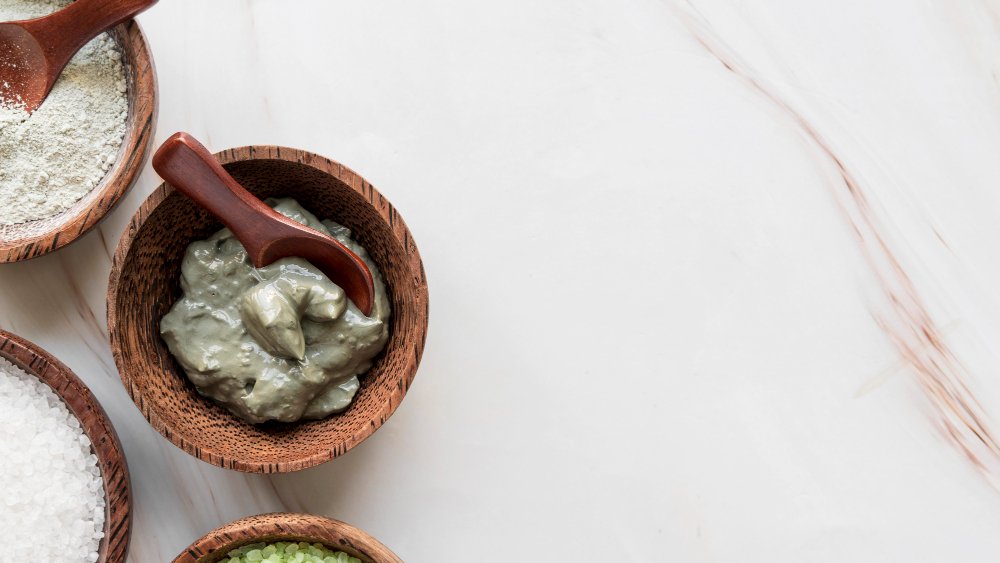
Calcium bentonite clay safe for skin has been used in skin care for centuries. When applied as a mask or poultice, calcium bentonite draws out impurities from the skin by physical adsorption. The clay’s surface carries a mild negative charge once hydrated, which allows it to attract positively charged toxins, heavy metals, and bacteria. This is why it appears in facial masks, cleansing powders, body wraps, and even toothpaste formulations.
It also has a relatively high oil absorption capacity, making it useful for products targeting oily or acne-prone skin.
2. Animal Feed
Calcium bentonite is approved in many countries as a feed additive for livestock and poultry. It acts as an anti-caking agent and binder in pelleted feeds, and it can adsorb mycotoxins in the digestive tract before they are absorbed into the animal’s bloodstream. Mycotoxin contamination in grain-based feeds is a persistent problem, and bentonite provides a practical, cost-effective mitigation option.
3. Bleaching Earth and Oil Purification
Acid-activated calcium bentonite, known as bleaching earth or activated clay, is widely used in the refining of edible oils. The activation process, which involves treating the clay with sulfuric or hydrochloric acid, dramatically increases its surface area and adsorptive capacity. The treated clay removes pigments (chlorophylls, carotenoids), soaps, phospholipids, and trace metals from crude vegetable oils during refining.
This application consumes a significant portion of global calcium bentonite production.
4. Water Treatment
The adsorptive properties of calcium bentonite make it useful in treating both industrial wastewater and municipal water. It can bind heavy metals such as lead, cadmium, and arsenic, as well as some organic pollutants, through ion exchange and surface adsorption. Its coagulant properties also help clarify turbid water by causing fine particles to aggregate and settle.
5. Agriculture and Soil Amendment
In sandy or heavily leached soils, calcium bentonite acts as a soil conditioner. Its cation exchange capacity helps retain nutrients like potassium and calcium that would otherwise leach out of the root zone. It also improves water retention in sandy soils and can help reduce the compaction issues common in clay-heavy soils when used correctly as part of a broader amendment strategy.
6. Pond and Aquaculture Management
Calcium bentonite has a practical application in fish pond management. It can clarify turbid water, bind excess nutrients, and support better water quality for aquaculture. Its relative safety for aquatic life makes it a preferred option over more aggressive chemical treatments.
7. Industrial Uses
Beyond personal care and agriculture, calcium bentonite serves as a plasticizer in ceramic production, a filler in paper manufacturing, and a constituent in certain paint and coatings formulations. Its binding properties also find use in pelletizing processes in the iron ore industry.
How Calcium Bentonite Green Clay Works as an Adsorbent
Here is the mechanism in plain terms.
When calcium bentonite contacts a liquid containing charged contaminants, the clay’s layered structure and large surface area create millions of adsorption sites. Positively charged heavy metal ions and organic toxins are attracted to the negatively charged clay surface. The calcium ions in the interlayer spaces can also be exchanged for other cations through ion exchange reactions.
This is not a chemical reaction in the traditional sense. It is a physical-chemical process where the clay acts as a sponge with a preference for certain contaminants. The clay does not dissolve or transform the pollutants; it binds them and holds them within its structure until the clay itself is removed from the system.
Green Clay in Detox Applications: What the Science Says
There is genuine scientific interest in calcium bentonite’s adsorptive capabilities, particularly for mycotoxin binding and heavy metal removal. Studies published in journals such as Applied Clay Science have demonstrated that acid-activated bentonite effectively reduces mycotoxin bioavailability in animal feed models.
That said, extrapolating industrial clay science into human detox therapy requires caution. The human gut is not a simple adsorption column, and clinical evidence supporting the ingestion of raw clay for human detoxification purposes remains limited. The cosmetic and topical applications of green clay are far better supported by both traditional use and the basic chemistry of how the material behaves.
Calcium Bentonite Green Clay: A Supplier’s Perspective
India is one of the world’s primary sources of naturally occurring calcium bentonite, with substantial reserves located in Gujarat’s Kachchh district. Companies like CMS Industries, based in Mandvi Taluka near the ports of Mundra and Kandla, mine, process, and export multiple grades of calcium bentonite to industrial buyers worldwide. CMS Industries supplies calcium bentonite in both powder and lump form, with grades tailored for cosmetics, animal feed, bleaching earth, and water treatment applications. Their product, CMS CALCIUMBENT®, is noted for its healing, binding, and detoxifying properties across these sectors.
The proximity of Gujarat-based processors to major port infrastructure gives Indian suppliers a practical logistics advantage in global supply chains.
Frequently Asked Questions About Calcium Bentonite Green Clay
Q1. What makes calcium bentonite green clay different from regular bentonite?
The “green” in calcium bentonite green clay refers to the clay’s color, which comes from specific mineral compositions and trace iron content. It is a naturally occurring form of bentonite where calcium is the dominant exchangeable cation, as opposed to sodium bentonite where sodium dominates. The difference affects swelling behavior, pH, and the range of suitable applications.
Q2. Is calcium bentonite green clay safe to use on skin?
Yes, calcium bentonite is widely used in cosmetic products and is generally recognized as safe for topical application. It appears in facial masks, cleansers, and body wrap formulations. People with very sensitive or dry skin should use it sparingly, as the clay’s adsorptive properties can also draw out natural skin oils if left on for extended periods.
Q3. Can calcium bentonite green clay be used in animal feed?
Yes. Calcium bentonite is approved as an anti-caking agent and mycotoxin binder in animal feed in many jurisdictions, including within EU feed additive regulations. It helps improve feed pellet quality and can reduce the absorption of harmful mycotoxins in the animal’s digestive tract. The dosage and grade must meet regulatory specifications for feed-grade material.
Q4. How does calcium bentonite help with water treatment?
Calcium bentonite works in water treatment through two mechanisms: adsorption and coagulation. The clay’s large surface area binds heavy metal ions and certain organic contaminants, while its colloidal behavior in water helps aggregate fine suspended particles, causing them to settle. This makes it useful in treating both industrial effluent and turbid surface water.
Q5. Where does India’s calcium bentonite come from, and why is Indian bentonite widely exported?
India’s calcium bentonite reserves are concentrated primarily in the Kachchh region of Gujarat. The region’s geological history of volcanic activity and subsequent weathering has created large, high-quality bentonite deposits. Processors in the area, like CMS Industries, benefit from proximity to world-class port infrastructure at Mundra and Kandla, which keeps export logistics competitive. Indian bentonite is exported to buyers across Asia, the Middle East, Europe, and beyond.