


If you have pets, you’ve probably dealt with fleas at some point. And if you’ve looked into natural flea control, you’ve almost certainly come across diatomaceous earth (DE). More recently, people have started asking a more specific question: does a combination of diatomaceous earth with calcium bentonite work even better? Let’s dig into the science, the practical side, and the honest limitations.
What Is Diatomaceous Earth, and How Does It Kill Fleas?
Diatomaceous earth is a fine, white powder made from the fossilized remains of microscopic aquatic organisms called diatoms. These organisms lived millions of years ago, and their silica-rich skeletons eventually accumulated in river and lake sediment. That sediment gets mined, ground up, and sold as DE powder.
Here’s the part that surprises most people: DE doesn’t kill fleas with any kind of chemical poison. The mechanism is entirely physical.
Under a microscope, DE particles look like tiny broken shards of glass. When a flea walks through treated areas, those microscopic sharp edges scratch through the waxy, protective layer of the flea’s exoskeleton. Once that barrier is breached, the flea begins to lose moisture rapidly. It dehydrates and dies, typically within 24 to 48 hours of contact.
Because this process is mechanical rather than chemical, fleas cannot develop resistance to it the way they can with pesticides. That’s a meaningful advantage for pet owners dealing with recurring infestations.
There are two types of DE on the market: food-grade and filter-grade (also called pool-grade or industrial-grade). Only food-grade DE is safe to use around pets and humans. Filter-grade DE is treated with high heat in a process called calcination, which converts the silica into crystalline form. Crystalline silica is abrasive and toxic when inhaled, and it should never be used for flea control in any home or garden setting.
What Is Calcium Bentonite, and Why Is It Paired with DE?
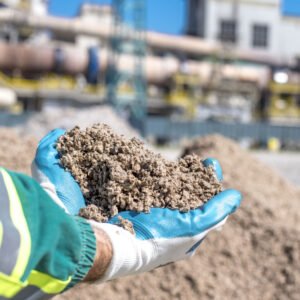
Calcium bentonite is a naturally occurring clay that forms when volcanic ash weathers over long periods of time. It goes by a few names, including montmorillonite clay, and it’s found in large deposits across the world, including in Gujarat, India, where manufacturers like CMS Industries mine and process it in multiple grades for agricultural, industrial, and pet-care applications.
Unlike sodium bentonite, which swells significantly when it gets wet, calcium bentonite is valued primarily for its absorbent and mineral-rich properties. It contains magnesium, potassium, silica, and calcium, among other trace minerals.
When it comes to flea control, calcium bentonite brings two things to the table:
- Absorption: It draws moisture from fleas, working alongside DE’s desiccating effect.
- Fine texture: As a powder, it helps distribute and hold DE in treated areas, contributing to a more even application on carpets or pet coats.
Some natural flea powder recipes combine DE with calcium bentonite specifically because the clay complements DE’s drying action. The clay’s adsorption properties help pull moisture and oils away from a flea’s body, while DE’s abrasive particles physically damage the exoskeleton. Think of them as working the same problem from two angles.
Does the Combination Actually Work Better Than DE Alone?
This is where things get a little more complicated, and honest.
On one hand, there’s genuine logic behind combining the two. Calcium bentonite applied topically as a dust can dehydrate fleas on its own, and its fine texture means it clings to a flea’s body efficiently. When combined with food-grade DE, both materials target the flea’s exoskeleton through physical means. Herbalist and natural pet care writer Stephanie Tourles has noted that calcium bentonite “works well in tandem with diatomaceous earth against fleas and ticks in a topical powder.”
On the other hand, there’s a complicating factor worth knowing about. Some DE products sold at farm supply stores, such as Red Lake Earth brand, contain calcium bentonite as an additive. Some users have reported that this particular blend performed less effectively against fleas than pure DE alone. The theory is that the calcium in the bentonite may interfere with DE’s desiccating action by adding a mineral buffer that slows down moisture absorption. This isn’t settled science, but it’s worth keeping in mind when choosing products.
The bottom line: a well-formulated combination of food-grade DE and quality calcium bentonite can be effective against adult fleas and some larvae. But the ratio matters, and the grade of each material matters even more.
How to Use Diatomaceous Earth with Calcium Bentonite for Flea Control
Here’s a clear, step-by-step breakdown for using this combination at home.
For indoor areas (carpets, baseboards, pet bedding):
- Vacuum the area thoroughly before applying anything. This removes existing flea eggs, larvae, and debris that would otherwise reduce contact.
- Apply a thin, even layer of food-grade DE (with or without calcium bentonite) to carpets, along baseboards, and under furniture where pets rest.
- Use a soft brush or broom to work the powder gently into carpet fibers.
- Wear a dust mask during application. Both DE and bentonite are fine powders that can irritate your airways if inhaled.
- Leave the powder undisturbed for 24 to 48 hours.
- Vacuum the treated area thoroughly and dispose of the vacuum bag or empty the canister outside.
- Repeat after one week if the infestation persists.
For pets:
Apply only food-grade DE (or a food-grade DE and calcium bentonite blend) to your pet’s coat. Use a very small amount. Work it in gently, avoiding the face, eyes, nose, and mouth entirely. A flea comb helps distribute the powder and catches fleas already in the coat.
Do not apply directly to a pet’s skin repeatedly, as both DE and calcium bentonite safe for skin clay can cause dryness and irritation with heavy or frequent use. And check with your veterinarian before adding anything new to your pet’s flea control routine.
What DE and Calcium Bentonite Can’t Do
Being realistic about limitations here matters. Neither DE nor calcium bentonite has any meaningful effect on flea eggs or pupae. The pupal stage is protected inside a sticky cocoon that the powder simply cannot penetrate. This means that even after successfully killing adult fleas, new ones will continue to emerge from pupae already in your carpets and furniture.
That’s why most pest control professionals recommend using DE as part of a broader program, can calcium bentonite really clean teeth not as the only treatment. Regular vacuuming, washing pet bedding in hot water, treating the yard if pets go outdoors, and using a vet-recommended flea preventative on the animal itself are all part of getting an infestation under control.
Adult fleas represent only about 5% of the total flea population in a home. The other 95% are eggs, larvae, and pupae living in carpet fibers, soil, and furniture. DE addresses the 5% you can see and contact. The rest requires time, persistence, and often additional tools.
Safety Considerations
Both food-grade diatomaceous earth and calcium bentonite are considered non-toxic for humans and pets when used correctly. The FDA classifies food-grade DE as “generally recognized as safe” for use in food and animal products.
That said, inhalation is the main concern with both powders. Fine silica particles and clay dust can irritate the lungs with repeated exposure. Always use a dust mask when applying, keep pets and children out of the room until the dust settles, and avoid applying in enclosed spaces without ventilation.
If a pet shows signs of eye redness, sneezing, coughing, or skin irritation after exposure, stop use and consult a veterinarian. Exotic pets, birds, and reptiles are particularly sensitive to airborne fine particulates and should be kept out of treated areas entirely.
CMS Industries, one of India’s largest bentonite producers, offers food-grade calcium bentonite (DOLCHEM Bentonite BNT101) processed under ISO 9001:2015 standards. Food-grade certification is the single most important factor when choosing any bentonite product for use around pets.
Diatomaceous Earth with Calcium Bentonite vs. Chemical Flea Treatments
Natural options like DE and calcium bentonite appeal to pet owners who are uncomfortable with synthetic pesticides, and that’s a legitimate concern. Spot-on chemical treatments and flea collars are effective, but they contain active compounds that some pets react to badly.
The tradeoff is speed and completeness. Chemical flea treatments typically work faster and cover more of the flea’s life cycle. DE and calcium bentonite work slowly (24 to 72 hours to kill adult fleas) and leave eggs and pupae untouched. For a mild or early-stage infestation, the natural approach can be enough. For a severe infestation, pairing DE with a vet-prescribed treatment is usually the smarter call.
Frequently Asked Questions
- How long does diatomaceous earth with calcium bentonite take to kill fleas?
Adult fleas that come into direct contact with DE typically die within 24 to 48 hours. Some sources report up to 72 hours depending on the flea’s exposure level. The powder must remain dry to stay effective. Moisture significantly reduces its potency, so reapplication after cleaning or pet baths is necessary.
- Can I put a DE and calcium bentonite mixture directly on my cat or dog?
Yes, but with caution. Use only food-grade versions of both materials and apply sparingly, avoiding the face, eyes, and nose. Cats are especially sensitive, so consult your vet before topical use. Repeated direct application can dry out a pet’s skin, so use it as a targeted, short-term measure rather than a daily routine.
- Does the calcium bentonite in DE products like Red Lake Earth make them less effective?
Some pet owners and forum users have reported reduced flea control effectiveness with DE products that contain calcium bentonite as an additive. The concern is that the mineral content may reduce DE’s desiccating effect. If you’re not getting results with a blended product, try pure food-grade DE and see if that changes things.
- Is diatomaceous earth with calcium bentonite safe to use near children?
Food-grade DE and calcium bentonite are considered non-toxic, but they’re fine powders that can irritate the airways if inhaled. Keep children and pets out of rooms during application and while the powder settles. Once dust has settled and you’ve vacuumed up the residue, the area is generally safe for normal use again.
- Can I use DE and calcium bentonite outdoors to control yard fleas?
You can, but outdoor effectiveness is lower because rain, dew, and wind quickly displace and wet the powder, making it inactive. Focus on shaded, dry spots where pets rest, such as under porches or along fence lines. Reapply after any rain. For widespread yard infestations, dedicated outdoor flea treatments tend to work better.