


One of those natural minerals is white bentonite clay that quietly underpins dozens of industries—from skincare and pharmaceuticals to papermaking and water treatment. You may have seen it on a face mask label or heard it in connection with industrial drilling. But what is it exactly, and why is it found in so many different places?
Let’s take it apart.
What Is White Bentonite Clay?
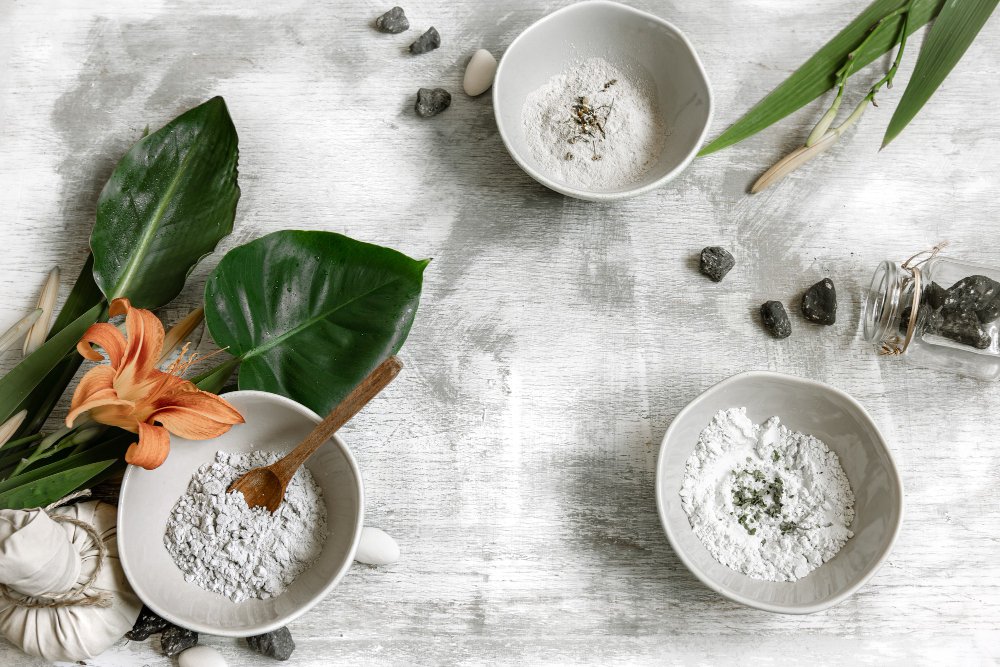
White bentonite clay is a kind of bentonite that is created from weathered volcanic ash. Published research on the use of bentonite in plant growth has shown that white bentonite is mainly calcium bentonite with high cation exchange capacity (CEC) and low crystalline silica content. This low silica figure is especially significant in pharmaceutical and cosmetic applications where the purity standards are high.
All varieties of bentonite fall within the smectite group of clays. White bentonite consists essentially of the mineral montmorillonite, a hydrated aluminum silicate that is responsible for the characteristic layered, sheet-like structure of the clay. Water molecules can easily get between these layers. This is why bentonite swells up so much when it comes into contact with liquid.
The color difference between white bentonite and the more common grey or buff sodium bentonite is mainly due to mineral content. For example, the green color that you see in some bentonites is caused by iron (Fe²⁺) ions. White bentonite contains a much lower amount of iron. This makes it more suitable where color is important in the finished product, such as cosmetic powders, ceramic glazes, and paper coatings.
Here’s why it’s important: the lower the iron content, the less it will stain or darken the material it’s mixed into. In ceramics, for example, even small percentages of normal bentonite can affect the fired color of porcelain, while white-firing bentonites maintain the body color.
Key Properties That Make White Bentonite Clay Useful
Before we discuss the specific applications, it is helpful to know what properties make white bentonite so widely used:
- High Cation Exchange Capacity (CEC): Negative charge on the surface of the clay. This attracts positively charged ions such as heavy metals, toxins, and nutrients. That attraction mechanism lies at the heart of just about every application in which white bentonite is used.
- Swelling and Water Absorption: Sodium bentonite can absorb up to 10 times its weight in water and swell up to 18 times its dry volume. Calcium and white bentonite types swell less but still considerably and can be used where moderate expansion is desired without extreme pressure build-up.
- Thixotropic Behavior: Bentonite suspensions form a gel when left undisturbed but become fluid on agitation. This is a property that is heavily used by the drilling, painting, and foundry industries.
- High Surface Area: When bentonite breaks down into colloidal particles, it offers a very high surface area per unit weight. That’s the surface area that makes it so good at carrying and releasing chemicals, absorbing oils, and binding contaminants.
- Low Crystalline Silica: Cristobalite content in white bentonite is low, which is important for safety in products used in contact with the human body.
Industrial and Commercial Uses of White Bentonite Clay
1. Cosmetics and Skincare
The color advantage of white bentonite is most apparent here. The clay is used in face masks, cleansers, soaps, mineral makeup, and toothpaste formulations. Bentonite is non-comedogenic. Its absorption ability pulls out excess sebum, dirt, and impurities from pores without clogging them. According to research published in Cosmetics (MDPI, 2024), bentonite clay a binder ranks second only to kaolin in terms of the number of reported cosmetic uses, as tracked by the Cosmetic Ingredient Review.
Skin, like soil or water, is amenable to the cation exchange mechanism: positively charged contaminants are attracted to the negatively charged clay and held there. As you rinse off the mask or cleanser, it takes those impurities with it.
White bentonite is especially suitable for cosmetic applications, as its pale color does not influence the appearance of creams, powders, and emulsions. A grey or buff clay would need color correction.
2. Pharmaceutical Applications
There is a formal role of bentonite in pharmaceutical formulations. It is used as an excipient and as a binder, as a thickening agent, as a carrier for active ingredients, and as an anticaking agent in tablets. It is also used as an active ingredient in some preparations for the treatment of antacids and anti-diarrhea and in dermatological protectors.
Chemistry Central Journal, PubMed (2021) Bentonite clay for horses used in pharmaceuticals must meet strict physical, chemical, and toxicological requirements, including low levels of non-clay minerals such as cristobalite and quartz. White bentonite has a natural advantage here because of its low silica content.
3. Paper Manufacturing
In papermaking, bentonite has several functions within the same process. It is a retention aid. It helps fine fibers and fillers to remain in the paper sheet rather than washing out with the process water. It also controls resin and pitch deposits that accumulate in paper-making machinery and contaminate the product.
Imerys, one of the world’s leading producers of industrial minerals, said that bentonite, due to its high surface area and unique charge properties, is excellent for retention systems and loop water treatment in paper mills. White bentonite is preferred where the paper must be kept bright and clean, as darker bentonites can affect sheet appearance.
4. Water Treatment
The bentonite adsorption properties make it useful for the treatment of industrial and municipal water. Its high surface area and CEC allow it to absorb heavy metals and organic contaminants from solution. It applies both to the treatment of industrial wastewater and to the purification of process water before discharge.
The clay also helps to coagulate, aggregating and helping fine suspended particles to settle. “This is a low-cost way of cleaning water before the traditional filtration steps.
5. Agriculture and Soil Conditioning
White bentonite is used as a soil conditioner in agriculture. It has a high CEC, so it holds nutrients like potassium and calcium, preventing them from leaching away with rainfall and keeping them in the root zone. It also helps to trap moisture, which is good for crops in places where drought is a problem.
Bentonite improves soil structure as well as retaining nutrients. When mixed with sandy soils, it adds cohesion and reduces erosion. It is used as a slow-release carrier for fertilizers to prolong the time that nutrients are released to the plants.
6. Ceramics and Pottery
White-firing bentonites are used in ceramics, in particular. Even a small percentage addition (2 to 5 percent) to a clay body will greatly improve workability and dry strength. The problem with regular bentonite in ceramics is that the iron in it can discolor a white-burning porcelain body. This is where white bentonite comes in. It has a uniform and light-fired color.
The thixotropic property of bentonite is also useful in ceramic slip casting and glaze formulations, where the slip should stay in suspension without settling but become fluid again when poured.
7. Cat Litter
White and calcium bentonite are widely used in clumping cat litter products. The water absorption and swelling properties cause the clay to form firm clumps on contact with moisture, which makes it easy to scoop and dispose of. Bentonite cat litter also has natural odor-controlling properties.
White Bentonite vs. Other Bentonite Types
It helps to put white bentonite in context alongside the two major industrial classes:
| Property | Sodium Bentonite | Calcium/White Bentonite |
| Swelling | Very high (up to 18x) | Moderate |
| Colour | Grey, buff, yellow-brown | White to pale cream |
| Iron content | Can be higher | Low |
| Main applications | Drilling mud, civil engineering, and pond sealing | Cosmetics, pharma, ceramics, paper |
| Ion exchange | High | High CEC, lower swelling than the sodium type |
Sodium bentonite is the more commonly mined type of bentonite globally and is suitable for applications where swelling and sealing properties are paramount. White and calcium bentonite are less prevalent but command a premium for applications where purity and color are non-negotiable.
Sourcing Quality White Bentonite Clay in India
India is one of the leading bentonite-producing countries in the world. Major bentonite deposits in India occur in the Kutch region of Gujarat. Companies such as CMS Industries operate mines and processing facilities in this belt, producing bentonite in several grades for a wide variety of industries. CMS Industries is ISO 9001:2015 certified and exports bentonite products, such as cosmetic grade and calcium bentonite grades, to markets all over the world.
If you are sourcing white bentonite clay for industrial or commercial use, you need to consider grade consistency, not just price. Mineral composition, particle size distribution, moisture content, and CEC values affect performance in the end application. Such parameters can be found in the technical data sheets of well-known manufacturers.
FAQs About White Bentonite Clay
- What makes white bentonite clay different from grey or green bentonite?
White bentonite has low iron and crystalline silica content. It is mainly calcium bentonite, which is formed from weathered volcanic ash. Its pale color is a result of the absence of iron ions that give green and gray bentonites their darker colors. White bentonite is the most suitable for cosmetics, pharmaceuticals, and white ceramics, where color consistency is important.
- Is white bentonite clay safe to use in cosmetics and skincare products? White bentonite masks, cleansers, and mineral cosmetics. Bentonite is reviewed as a cosmetic ingredient by regulatory authorities, including the Cosmetic Ingredient Review. For cosmetic or pharmaceutical use, the bentonite must have certain purity standards, such as low non-clay mineral content. Always ensure that you receive testing data from the supplier for each batch.
- How does white bentonite clay work in water treatment?
The clay has a negative surface charge and high cation exchange capacity. This allows the clay to attract and bind positively charged contaminants such as heavy metals and organic pollutants. It acts as a coagulant, causing fine particles suspended in water to coagulate and settle out. This double effect permits its application in the treatment of industrial wastewater and the clarification of municipal waters.
- Can white bentonite clay be used in agriculture?
Yes. White and calcium bentonite are good soil amendments. The clay binds with nutrients and holds them in the root zone, preventing nutrient leaching. It also increases the water-holding capacity of sandy soils, which benefits crops during drought. It can be added directly to soil or mixed with fertilizers as a carrier.
- What industries in India use white bentonite clay the most?
In India, white and calcium bentonites are used in cosmetics, in the formulation of pharmaceuticals, in the production of paper, and in food-grade applications such as clarifying wine and juice. “Companies such as CMS Industries sell cosmetic-grade bentonite to manufacturers who require a consistent level of purity and color for their products.”