


So if you’re working on a borehole, water well, or environmental monitoring project, at some point, someone will ask you if you should use bentonite pellets or bentonite chips for the seal. At first sight, they look the same. Both are based on sodium bentonite. Both do essentially the same job, expanding when wet to form a water-tight barrier.
But the differences between them can affect your seal’s performance, installation time, and project cost.
Let’s break it down.
What Are Bentonite Chips?
Bentonite chips are crushed and screened chunks of naturally occurring sodium bentonite, usually between ⅜ inch and ¾ inch in size, that are quarried. They are not compressed or processed beyond crushing and sizing, so the bentonite content can vary somewhat from batch to batch depending on the source material.
Their irregular shape makes chips move in a characteristic “seesaw” motion as they fall through water in a borehole. This slow tumbling rate of fall is a good thing. This allows the chips to reach the desired depth before they begin to swell significantly, thus helping to prevent premature bridging in the annular space.
The Driller (2016) stated that bentonite chips have a lower swell rate and lower total swell capacity than pellets, primarily due to the higher moisture content and lower purity.
What Are Bentonite Pellets?
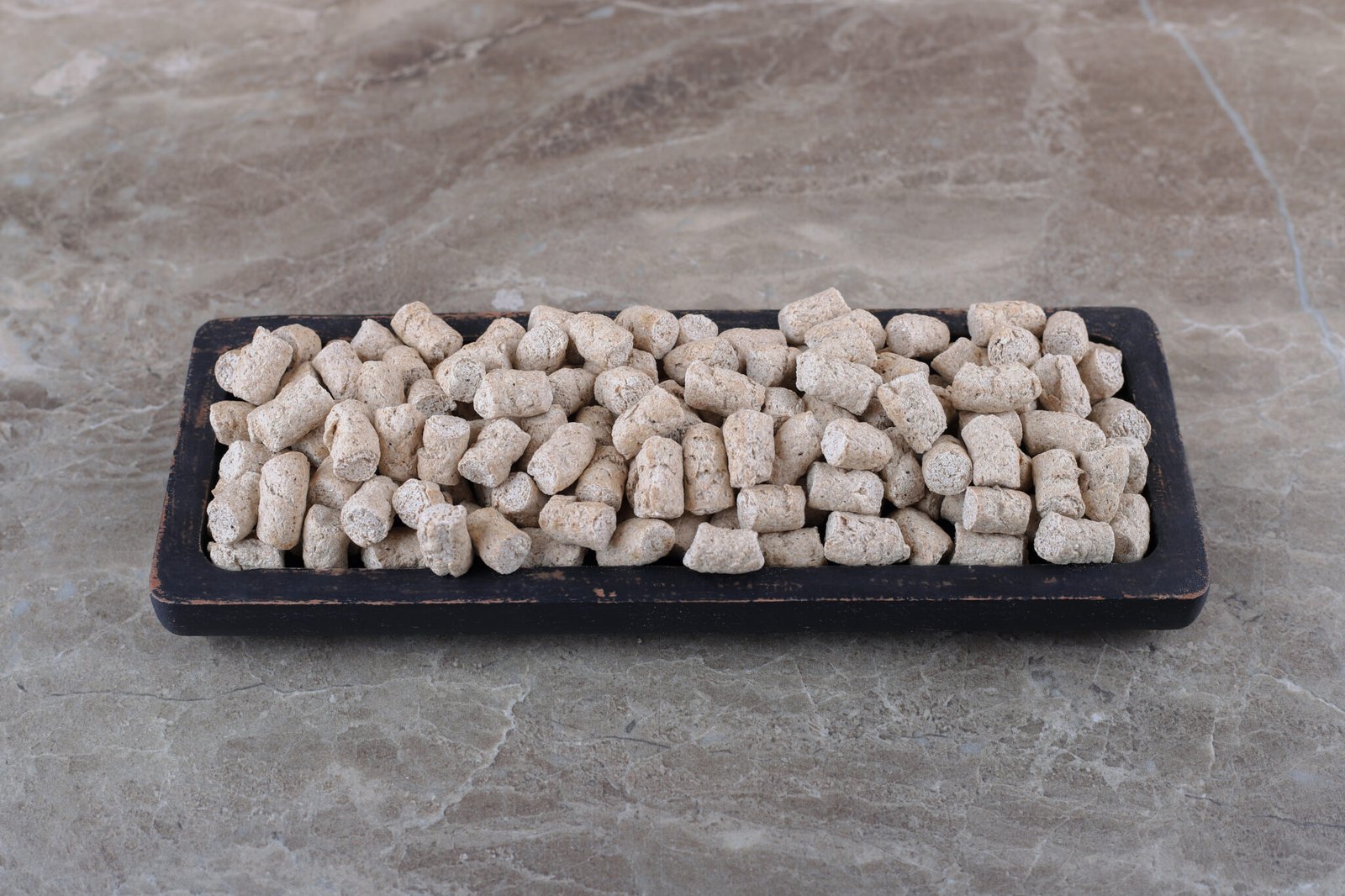
Bentonite pellets (sometimes called tablets) are produced from a high-quality, high-swelling bentonite used in wine making source that has been further processed. The clay is dried in the field and then in a rotary kiln, screened to a granular consistency, and compressed into a uniform pellet shape.
This extra step in processing does matter. Compression increases the density and purity of the material, which means a stronger, faster-acting seal once the pellets hydrate.
According to a patent on environmentally safe well plugging compositions, compressed bentonite pellets swell to about 8 to 12 times their dry volume when exposed to water, compared to 4 to 6 times for uncompressed chips. That’s a big difference if you are counting on swelling pressure to make a good seal.
Bentonite Pellets vs Bentonite Chips: Key Differences
This is a side-by-side of how the two measure up against each other on the factors that matter most on a job site.
| Factor | Bentonite Chips | Bentonite Pellets |
| Shape | Irregular, varied size | Uniform, compressed |
| Purity | Lower (natural, unprocessed) | Higher (processed and compressed) |
| Swell capacity | 4 to 6 times the dry volume | 8 to 12 times the dry volume |
| Swell rate | Slower | Faster |
| Fall rate through water | Slower, “seesaw” motion | Faster, more direct |
| Risk of bridging in narrow spaces | Higher | Lower |
| Cost | Generally lower | Generally higher |
| Best suited for | Wider annular spaces, general well sealing | Narrow annular spaces, deep wells, fast-set requirements |
When to Choose Bentonite Chips
Bentonite clay for horses chips are the most commonly used dry sealant for water wells because they offer a good compromise between cost and performance.
Here are the situations where chips are most useful:
The standard borehole diameters. Where the annular space is wide enough that bridging is unlikely, the chips fall reliably and seal well.
Budget projects. Chips cost less than pellets, and that’s important on big jobs where you need a lot of sealing material.
More shallow wells. Chips grow more slowly, so there is less chance of the material growing before it gets to the target zone.
General abandonment of wells. Chips are a reliable and economical seal for plugging boreholes that are no longer in use.
When to Choose Bentonite Pellets
Pellets were never intended to replace chips. They are meant for specific situations where chips are not enough.
When to Use Pellets:
- The annulus space is tight. Pellets have a uniform shape, allowing them to pass through small openings without bridging, an issue that irregular chips are more prone to.
- You want a quick sink rate. Pellets fall faster and more predictably down a column of water, which is useful in deep wells where you want the material to get to the bottom before it starts to swell.
- Structural integrity is key. The pellets are composed of higher-purity bentonite and create a denser, more robust seal when hydrated.
- Environmental monitoring wells are of concern. These wells have a more demanding requirement for sealing, and the added safety margin of the higher swell capacity and consistency of pellets is a plus.
Some pellets are also coated, commonly with food-grade shellac, to delay hydration by approximately 30 minutes. This coated version is useful when contractors need more time to place the material before it starts to swell (The Driller, 2020).
A Quick Note on Sink Rate
One aspect that is often overlooked is how fast each material sinks through standing water in a borehole. Driller (2019) found in field tests that the average sinking rate of medium bentonite chips was about 0.94 feet per second, while pellets sank faster because of their uniform shape and higher density.
This difference adds up for deep wells. The faster, more predictable sink rate means the material is less likely to get stuck partway down the borehole, reducing the risk of an incomplete or uneven seal.
Cost vs Performance: How to Decide
The truth of the matter is that there is no “better” product when it comes to bentonite pellets or bentonite chips. Which is right depends on the specifics of your project.
If your borehole has a generous annular space, your budget is tight, and you are working on a relatively shallow well, chips will probably do the job at a lower cost. If you are in a tight annulus, a deep well, or a project where seal structural integrity is a must, then the added cost of pellets is worth it.
Many contractors have both on hand and decide based on the conditions of each borehole rather than committing to one product across every job.
Sourcing Bentonite Pellets and Chips in India
Most of the bentonite reserves in India are located in the Kutch region of Gujarat, which supplies raw material for chip and pellet production in the country and for exports. The belt has mines and processing units of companies like CMS Industries, which supply sodium bentonite in various forms, like chips, granules, and powder, for water well drilling, civil engineering, and environmental sealing applications.
For each of the products, request data from the suppliers on swell index, moisture content, and particle size distribution. These numbers will give you a better idea of how the material will behave in the field vs. just the name of the product.
Frequently Asked Questions
- Are bentonite pellets better than bentonite chips?
Neither is universally better. Pellets allow higher purity, faster swelling, and a better seal. They can be used in tight annular spaces and deep wells. Chips are more cost-effective and are efficient for standard borehole diameters and general well sealing. The right one depends on project depth, annular space, and budget.
- Why do bentonite chips have a “seesaw” fall pattern?
The bentonite chips are not uniform in shape. They are crushed and screened, not compressed into a uniform shape. Due to their irregular shape, they tumble and fall slowly through the water. This is actually beneficial, as they can reach the target depth before swelling commences, thus reducing the risk of bridging.
- Do bentonite pellets swell faster than chips?
Yes. Bentonite pellets are made from higher-purity, compressed bentonite and expand typically 8 to 12 times their dry volume versus 4 to 6 times for chips. This quicker, larger swelling creates a denser seal faster, which is helpful where quick sealing is needed.
- Can bentonite chips be used in deep wells?
Bentonite chips can be used in deep wells, but they fall more slowly and seesaw more, so they take a longer time to reach the bottom. Bentonite pellets are often preferred for very deep wells or narrow annular spaces because of their faster, more predictable sink rate.
- What is the cost difference between bentonite pellets and chips?
Bentonite pellets are usually more expensive than chips, as they need extra drying, screening, and compression during manufacture. Chips are mined and screened with little processing, which helps lower the cost. Compare the cost difference against the sealing requirements of the particular job.