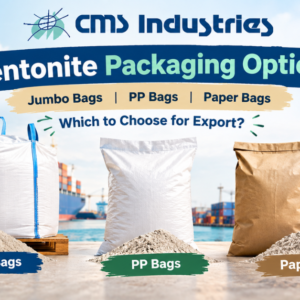



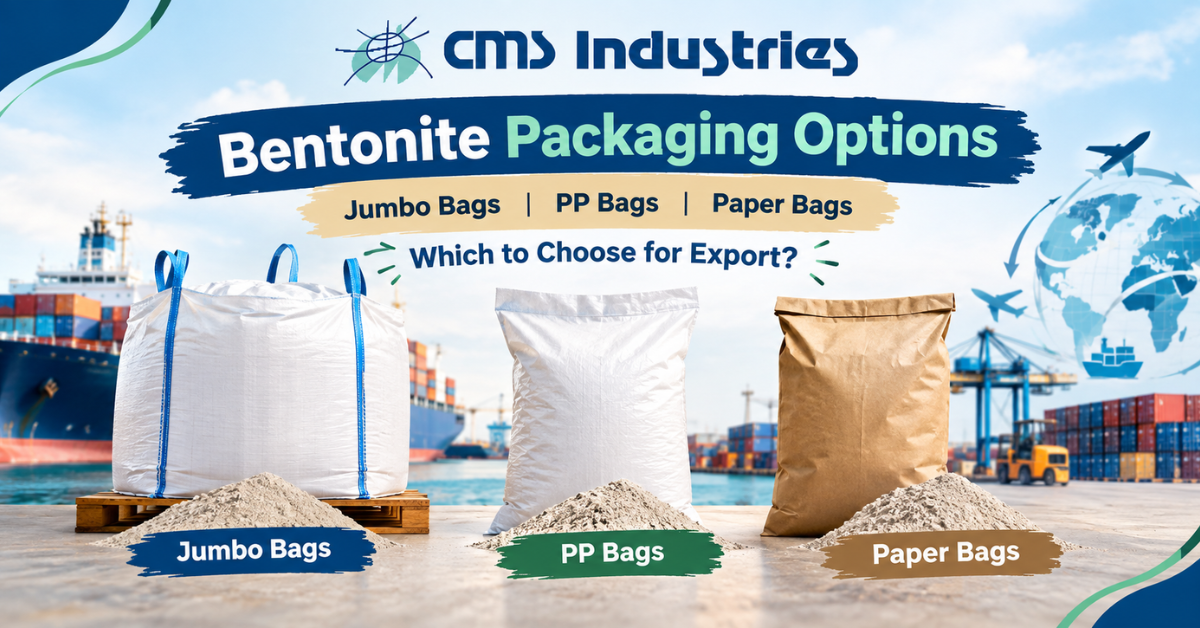
The first thing that comes to mind when you order bentonite from an Indian supplier is packaging. Will it be supplied in one-tonne jumbo bags, standard 25 or 50 kg PP sacks, or paper bags? The answer depends on the size of the order, the end use, the shipping method, and even the humidity level at the destination port. Let’s look at what each option actually offers and how to pick the right one for an export shipment.
Why Bentonite Packaging Choice Matters
Bentonite is a fine absorbent mineral powder which takes up moisture from the air as soon as it is exposed. That same swelling property that makes it useful in drilling, foundry, and construction work is what makes it sensitive to the way it is packed and stored. Poor packaging allows moisture to enter, clumps the powder, and can interfere with swelling and viscosity performance by the time the material reaches a job site. The choice of the right packaging format is as much a logistics decision as a product quality one.
What Is a Jumbo Bag (FIBC)?
An FIBC (Flexible Intermediate Bulk Container), or big bag or jumbo bag, is a large woven polypropylene container designed to transport bulk material in one lifting unit. The holding capacity of jumbo bags is usually between 500 kg and 2,000 kg or more; mineral powders such as bentonite are often packed in 1,000 kg and 1,500 kg bags.
Key features of jumbo bags are:
- Lifting loops sewn into top corners for crane or forklift handling
- Woven polypropylene fabric (generally 130 to 280 GSM for durability)
- Optional liners (usually a polyethylene inner bag) to protect moisture-sensitive material such as bentonite from humidity during transit and storage
Spout or open-top filling options and discharge spouts for controlled emptying at the destination.
What Are PP Bags?
PP bags, or polypropylene woven bags, are the typical small sacks used around the world for packaging mineral and agricultural products. PP bags for bentonite typically are 25 kg or 50 kg and may have an inner polyethylene liner for a moisture barrier.
Main features of PP bags are:
- Lower unit cost than jumbo bags, making them practical for smaller or mixed product orders
- Manual handling is easy; a 25- or 50 kg bag can be lifted, stacked, and moved without mechanical equipment
- Excellent compatibility with standard palletising and warehouse systems used by distributors and smaller buyers
- BOPP lamination options for a printed, glossy outer layer for branding and increased moisture resistance
What Are Paper Bags?
Bentonite for skin is typically packaged in multi-wall kraft paper bags and sometimes has a polyethylene liner for additional moisture protection. They are less frequently used for bentonite in particular and more commonly for cement or food-grade powders, but some buyers require them regardless, especially for smaller retail or agricultural packs.
The key features of paper bags are:
- Appealing to customers with sustainability requirements; biodegradable outer material
- Good breathability, good for products that need to release trapped moisture rather than seal it in.
- Lower load capacity, typically 5 kg to 50 kg, similar to PP bags but with less resistance to tearing and water exposure
- Less common for bulk mineral exports, as bentonite’s moisture sensitivity generally favours PP or laminated options over plain paper
Jumbo Bags vs PP Bags vs Paper Bags: Quick Comparison
This is a side-by-side comparison of the three options for bentonite:
- Capacity: Jumbo bags can carry from 500 kg to 2,000+ kg. PP bags are usually 25 kg to 50 kg. Paper bags generally contain 5 kg to 50 kg.
- Moisture protection: PE-lined jumbo bags and laminated PP bags provide strong protection. Plain paper bags offer the least protection from humidity.
- Handling: Requires forklifts or cranes for jumbo bags. Basic palletised products and hand-packed products are available in PP and paper bags.
- Cost per tonne: Jumbo bags tend to be cheaper per tonne, since there’s less labour and loading is faster. PP bags require more labour per tonne but are good for smaller mixed orders. Paper bags are comparably priced to PP bags but are less durable.
- Container utilisation: Jumbo bags are more efficient in the use of container space, reducing wasted volume when shipping overseas.
- Desired buyers: Jumbo bags are good for big industrial buyers, like drillers or foundries ordering full containers. Distributors, mid-size buyers, and mixed product shipments can use PP bags. Smaller retail packs or buyers with specific sustainability requirements suit paper bags.
Moisture and Dust Considerations Specific to Bentonite
When bentonite in cosmetic industry comes into contact with water, it swells and absorbs moisture; therefore, packaging that does not control humidity can result in lump formation, uneven flow when being used, and reduced swelling performance once the material gets to its destination. That is why polyethylene liners in jumbo bags and PP bags are more important for bentonite than for less moisture-sensitive materials.
Another thing to think about is dust control. Bentonite is a fine powder, and loose handling during bagging or container loading can generate dust that impacts worker safety and product yield. Sealed filling processes, for jumbo bags or smaller PP sacks, reduce this loss and make the packaging area cleaner.
The storage conditions prior to shipment are almost as important as the bag itself. Even if the bentonite is well packaged, it can begin to absorb moisture through seams, stitching, or small tears before it ever reaches the port if it is stored in a humid warehouse. If you are a buyer placing large orders, ask your suppliers about their warehouse conditions and the average time that material spends between processing and container loading. Even a well-made bag can lose quality if stored in poor conditions by the time it reaches its destination.
Which Packaging Suits Export Shipments Best?
The right choice very much depends on who is buying and how the material will be used:
- Jumbo bags are usually most economical for full container load buyers such as drilling companies and large foundries. Big bags are the practical standard for bulk industrial orders, as they offer lower handling labour, better container space utilisation, and a lower packaging cost per tonne.
- Mid-sized buyers and distributors generally prefer 25 kg or 50 kg PP bags, as these are easier to split into smaller units for resale or use across multiple sites with no forklift access at every stage.
- Smaller speciality buyers, such as those sourcing bentonite for repackaging for cosmetic or agricultural uses, sometimes request paper bags for their biodegradable appeal, even if the moisture protection is weaker than PP alternatives, says retail-facing.
- If your bags are going to high humidity or coastal areas, then you should consider using PE-lined jumbo bags or laminated PP bags. In high humidity or coastal areas, you are more likely to have problems with humidity in transit and in storage. If you are ordering small quantities, you should consider PE-lined jumbo bags or laminated PP bags instead of plain paper packaging.
How to Choose Bentonite Packaging for Your Export Order
In practice, the decision process looks like this:
- Check your order quantity. Jumbo bags are generally used for full container loads, while smaller or split orders are generally better suited for PP bags.
- Check the climate and storage conditions of your destination. In humid climates, the moisture barrier needs to be stronger, which normally means no plain paper packaging.
- Check your handling equipment at the receiving end. I always go for the big bags, but you need forklifts/cranes to move the jumbo bags, so make sure the buyer has the ability to do that.
- Enquire about liner choices. A polyethylene liner inside a jumbo bag or PP bag provides meaningful moisture protection at a relatively small cost increase.
- Think about the resale or redistribution. If the buyer intends to break down the shipment into smaller retail units, PP or paper bags may save a repackaging step later.
- Verify the labelling and documentation requirements. Many export shipments require specific weight, batch, and origin labelling on each bag, so check this with your supplier before the packing begins.
How CMS Industries Packages Bentonite for Export
CMS Industries sells bentonite in granules, powder, micronised powder, ores and lumps depending on the size and application of the buyer’s order and packages material in small bags, bulk bags and loose bulk lumps directly into shipping containers. CMS Industries has manufacturing units near Mundra and Kandla ports in Gujarat. That enables it to service both full container loads of jumbo-bagged material for large industrial buyers and smaller bagged orders for distributors, matching packaging format to how each customer plans to receive and use the bentonite.
Final Thoughts
There is no one correct way to package bentonite exports. – Jumbo bags lead the way in lower cost per tonne and quicker handling for large industrial orders. – PP bags offer flexibility for mid-sized and mixed shipments. – Paper bags occupy a smaller niche where sustainability trumps moisture protection concerns. The real decision is matching the packaging format to order size, destination climate, and the buyer’s own capability to handle it. That’s what determines whether a shipment arrives ready to use or already compromised by moisture and rough handling.
Frequently Asked Questions
What is the standard packaging for bulk bentonite exports?
Jumbo bags (typically 1,000 kg to 1,500 kg, with a polyethylene liner) are the common choice for bulk bentonite exports, especially for full container load orders going to drilling, foundry, or construction buyers.
Are PP bags or jumbo bags cheaper for bentonite shipments?
Less labour and faster container loading make jumbo bags cheaper per tonne, but PP bags are often more convenient and cheaper for smaller or mixed product shipments that won’t fill a whole container.
Why do jumbo bags need a liner for bentonite?
Bentonite is hygroscopic, and a polyethylene liner inside the jumbo bag stops moisture from reaching the powder during transit and storage, safeguarding swelling and viscosity performance until the material is needed.
Is paper bag packaging suitable for bentonite export?
Suitable for smaller retail packs or buyers with sustainability requirements. Paper bags do not protect the product as well from moisture as PP or jumbo bags and are therefore less common for bulk industrial bentonite shipments.
How does packaging affect how much material fits in a container?
Jumbo bags usually provide better container space utilisation than stacked smaller bags, because fewer, larger units minimise voids and facilitate faster loading and unloading at each end of the shipment.