


If you’ve shopped for a clay mask or mineral-based skin care cream in the past few years, you’ve probably seen the word “bentonite” on the label. The clay appears in face masks, soap bars, and now in bentonite cream formulations for oily, acne-prone skin. But not all the “bentonite” jars started the same. Some is from a mine that does its own lab tests on each batch. Some is scooped up, dried, and bagged with no further processing.
This gap is larger than most shoppers and some formulators would think. Here’s the difference: How cosmetic-grade bentonite mined for manufacturing purposes is different than the raw clay sold in small retail tubs, and how that difference shows up in a bentonite cream long before it touches a customer’s skin.
What Bentonite Cream Actually Contains
Bentonite is a clay that forms from weathered volcanic ash. Its main mineral content is montmorillonite, a layered silicate that swells in water and draws oil and particulates to its surface. That swelling and binding action is why formulators like to use it in masks, creams, and cleansing bars.
A bentonite cream is usually based on one of two types of the clay:
- Sodium bentonite swells in water better and is good for thick gel-like textures.
- Calcium bentonite, which is less aggressive and more appropriate for leave-on skincare formats.
Cosmetic chemists like to use calcium bentonite in facial products because it tends to sit lightly on the barrier of the skin while still drawing the oil from the surface. Bentonite is the second most commonly used clay in cosmetic formulations, after kaolin, but each raw lot must be purified and tested before it meets cosmetic-use standards, according to a recent review of clay minerals used in cosmetics and dermocosmetics.
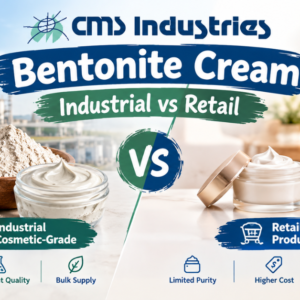
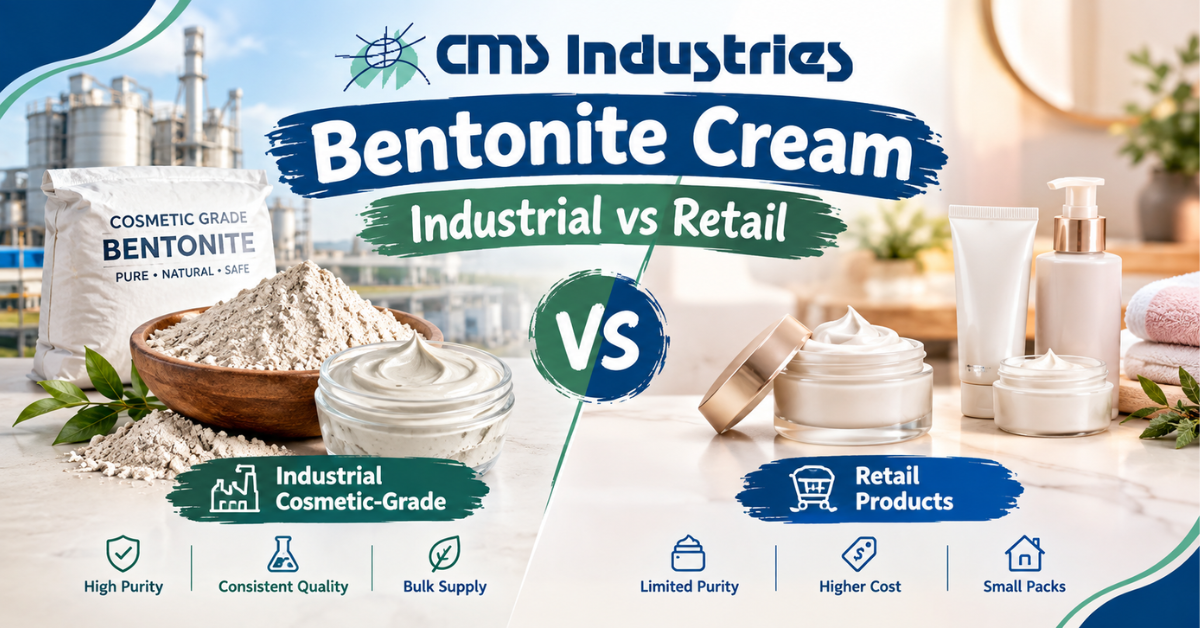
Industrial Cosmetic-Grade Sourcing: What Happens Before the Clay Reaches a Formula
Cosmetic-grade bentonite doesn’t go from the ground right into a jar. Generally, the clay has to go through several steps by a supplier working in an industrial environment before it can be labelled for cosmetic use.
Mine Selection and Seam Testing
Not all the bentonite seams in a deposit have the same mineral composition. Teams of miners test the seams for their content of montmorillonite, pH, and levels of trace minerals before deciding which layer will feed cosmetic production and which will go to industrial uses such as binding foundry sand or making drilling mud.
Purification and Micronisation
Raw clay has organic material, sand, and rock fragments. These are filtered out, and the clay is ground to a fine, consistent particle size in a cosmetic-grade process. Bentonite cream is smoother when the particles are finer and more uniform, which reduces the graininess that occurs with poorly processed clay.
Free Silica Reduction
Free silica in raw clay can irritate the skin upon contact. In cosmetic supply chains, suppliers work to keep free silica low because this one factor affects the comfort of the finished cream during and after use.
Lab Testing for Heavy Metals and Microbial Load
This is the step in which cosmetic-grade sourcing differs most from craft-scale or unregulated retail supply. Some deposits of bentonite clay remove hair color contain naturally occurring heavy metals, such as lead and arsenic. A supplier who has an in-house lab can screen each batch and reject material that is out of safe limits. A supplier who doesn’t have that lab doesn’t have that check, and neither does a small retail seller repackaging clay they bought from someone else.
The Lesson From Retail Bentonite: Why Sourcing Discipline Matters
And this danger is not hypothetical. In 2016, the U.S. Food and Drug Administration advised consumers to stop using a bentonite clay product called Bentonite Me Baby after lab testing found the clay contained a lead concentration of 37.5 parts per million. The alert began when a Minnesota nonprofit worker sent a store-bought jar to an independent lab and got back some troubling results, which she reported to state health officials who contacted the FDA. The FDA sent a separate warning letter in June 2016 to another bentonite vendor after its own plant inspection and lab analysis found lead contamination in that company’s product too.
Neither product was subjected to the kind of seam testing, purification, and batch screening that a cosmetic-grade supply chain builds in from the start. That’s exactly why regulatory agencies and ingredient safety panels keep coming back to sourcing when they review clay ingredients. Bentonite and related clays have been reviewed multiple times by the Cosmetic Ingredient Review panel, which reviews raw materials for use in cosmetics in the United States, and the panel has reported that these minerals are not restricted from cosmetic use in the European Union, with bentonite and kaolin listed as allowed colourants under specific purity conditions. Material that has been tested and characterised, not raw clay scooped from some random seam, is the basis for such a conclusion.
How Formulators and Buyers Can Evaluate a Bentonite Supplier
Anyone sourcing bulk bentonite soil and their uses for a cosmetic cream, mask or bar should run through a short checklist before placing an order. This makes a convenient quick reference:
- Ask for a certificate of analysis with each batch that includes heavy metal levels, pH, and moisture content.
- Can you please confirm whether the clay is from a company-owned mine or bought from a third party, as tracing becomes difficult very fast once the clay has changed hands more than one time.
- Look for an in-house testing lab. Not just a data sheet that says “cosmetic grade”.
- Ask for the particle size information, as a coarser grind will affect the feel of the cream and how it performs on skin.
- Check packaging options, as bulk buyers need bag sizes that can be flexible to match production runs.
- A supplier that can provide documentation for all five points, not just marketing copy, is operating at the level a cosmetic manufacturer needs.
Where CMS Industries Fits in the Bentonite Supply Chain
COSMETICBENT is a line of cosmetic-grade bentonite offered by CMS Industries, a mining and processing company based in Gujarat, which is produced from calcium bentonite that is selectively mined. The product information on the CMS Industries website indicates that the material is processed for low free silica and has a low pH profile, suitable for use in facial products, bleach, anti-acne formulations, and lipstick binders. The company also has an in-house lab for testing batches of raw material and finished product, along with a research and development team that works in tandem with its mining and processing activities.
For buyers comparing suppliers, this kind of documented process from mine to lab to finished bag is the practical difference between a cosmetic-grade material and clay sold without any testing history attached. You can look up CMS Industries product specifications right on their site before you make a bulk order—it’s a reasonable step no matter which supplier a formulator ends up working with.
Bentonite Cream Formats: What Buyers Typically See on the Market
You will see bentonite cream in a few standard forms in skincare and personal care lines:
- Rinse-off masks: Thick pastes that dry on the skin and are washed away after ten to twenty minutes.
- Leave-on spot treatments: Lighter creams for localised breakouts.
- In bar soap additives, powdered bentonite is mixed with a soap base for a gentler cleansing effect.
- Bleaching and lightening bases. Bentonite as a binder and carrier of active ingredients.
Each format requires a particle size and moisture level that is a bit different. This is one more reason that bulk buyers need a supplier that is willing to customise a batch, rather than sell one generic grade for all purposes.
A Quick Word on Safety and Realistic Expectations
Bentonite cream is not a medical treatment, and no clay product should be used in place of a dermatologist’s advice for ongoing skin conditions. The clay is known to absorb oil, but there is no evidence from current research to support claims of “detox” or internal cleansing. The FDA’s 2016 warning was about a product sold for topical and internal use, a different risk category than a cosmetic cream applied to the surface of the skin. The lesson still applies to any bentonite product: Know where the clay came from and if anyone tested it before it got on your skin.
Frequently Asked Questions
What is the difference between bentonite cream and regular clay masks?
Bentonite cream generally refers to a formulated product based on calcium or sodium bentonite as the main active ingredient, typically mixed with water, oils, or actives. A simple clay mask might be a blend of clays with fewer processing steps or particle-size controls.
Is bentonite cream safe for daily use?
Most dermatologists recommend using bentonite-based masks two to three times per week rather than daily, as frequent use can dry out the skin barrier. Usually, leave-on spot treatments that come in a cream formula are milder and better to use more often.
Why does sourcing matter for bentonite used in cosmetics?
Depending on the mine and seam from which it is mined, raw bentonite may contain heavy metals and organic impurities. We mitigate these risks with lab testing and purification steps using our cosmetic-grade sourcing (which are often skipped with untested retail clay).
Can bentonite clay help with acne?
Bentonite is present in many anti-acne formulations because it has oil-absorbing properties that decrease the shine on the surface and clear the pores. It is suggested to be used as part of a complete skincare routine rather than a standalone treatment.
How do manufacturers pick a bentonite supplier for cosmetic products?
Before bulk orders, manufacturers generally ask for a certificate of analysis, verify the supplier owns or directly controls its mining source, and look for an in-house testing lab. Particle size and packaging flexibility are also considerations in supplier selection.