


Food poisoning happens fast. One minute you’re fine, and the next you’re sprinting to the bathroom with cramps, nausea, and a headache that won’t quit. If you’ve spent any time at all browsing through natural health forums, you’ve likely seen bentonite clay recommended as a home remedy for this very problem. But does it actually work, or is it just another wellness trend that sounds better than it performs?
Let’s unravel it with what research, regulators, and industry data actually say.
What Is Bentonite Clay?
Bentonite clay is formed from weathered volcanic ash, mainly in areas of high activity from volcanoes. The ash, over thousands of years, breaks down into a fine mineral clay that is negatively charged. It is mined and processed into powder, granules, or lumps for use in a wide range of industries, from oil drilling and foundry casting to agriculture and feed.
The two main types are:
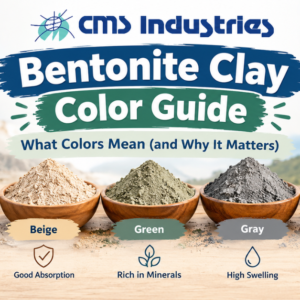
- Sodium bentonite: This bentonite expands greatly in water and is valued for its sealing and viscosity characteristics. It finds wide use in civil engineering, drilling fluids, and lining ponds.
- Calcium bentonite: Swells less but has stronger absorption properties. This is why it is more often seen in cosmetic and wellness applications.
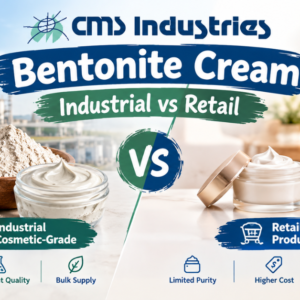
CMS Industries is a manufacturer and exporter of bentonite based in Gujarat, providing both sodium and calcium bentonite manufacturers grades to industries in diverse fields such as agriculture, animal feed, and cosmetics. Calcium bentonite grade is used in facial masks and skin care formulations, where the absorbent properties of the clay can be used to draw out excess oil and impurities from the skin.
The Theory Behind Bentonite Clay and Food Poisoning
That’s why people turn to bentonite clay when their stomachs turn on them. Bentonite clay has a negative electrical charge. Lots of bacterial toxins and pathogens are positively charged. In theory, when the two enter the digestive tract, the clay clings to the toxins as a magnet attracts metal filings and then helps carry them from the body through normal digestion, rather than allowing them to enter the bloodstream.
This adsorption property is real and well-documented, but predominantly in one specific context: animal feed.
What the Research Actually Shows
- Animal studies have shown support for toxin binding, particularly aflatoxins. Calcium bentonite is a well-established additive in livestock feed to control aflatoxin contamination, a toxin produced by certain moulds in grain and feed. Research has shown it to be effective in binding aflatoxins, but it is a poor binder of other mycotoxins such as DON, zearalenone, or fumonisins. Therefore, feed producers often combine it with other binders, for example, yeast cell wall extracts, to cover a wider range of contaminants.
- There’s little human clinical data. There are no large clinical trials testing bentonite clay for food poisoning in human beings. Much of what you’ll find on the Internet is based on personal stories, traditional remedies handed down over generations, or lab or animal data extrapolated to humans. That’s a huge leap, and health researchers are clear it hasn’t been proven.
- There are a few older references, but they are dated and limited. Medical reports from decades ago mention the use of clay in diarrhoea associated with food poisoning and viral infections. The reports are largely observational, not controlled clinical trials, so they can’t prove cause and effect as modern research standards require.
The Bigger Concern: Contamination Risk
This is the part most of the home remedy articles miss, and it is more important than the absorption theory.
Bentonite clay and activated charcoal can use together is formed in the ground and therefore may contain trace amounts of heavy metals from the surrounding soil, such as lead, arsenic, and cadmium. Since lab tests showed high levels of lead in bentonite clay products, the U.S. Food and Drug Administration has issued several consumer warnings. One product tested at 37.5 parts per million of lead, a level the FDA considers dangerous, particularly for children and pregnant women.
Purity is highly variable from brand to brand, as the FDA does not regulate all bentonite clay products sold for internal use. A clay sold for skin care is not automatically safe to ingest, and a clay that works great in agriculture or industrial applications is not formulated or tested for human consumption at all.
What Actually Helps With Food Poisoning
- If you’re suffering from food poisoning, doctors and public health bodies agree on a few basics with good evidence behind them:
- Drink lots of water. Oral rehydration solutions with the right balance of salts and sugar work better than plain water to replace what you lose through vomiting and diarrhoea.
- Sleep and eat lightly. Once you can keep liquids down, bland foods such as rice, toast, and bananas are easier on an irritated gut.
- Look for warning signs. If you have a high fever, blood in your stool, signs of dehydration, or symptoms lasting more than a couple of days, it’s time to see a doctor.
- Don’t self-medicate severe cases. Certain varieties of bacteria, such as Salmonella or E. coli, may cause food poisoning that is fast-moving and serious, especially in young children, older adults, and pregnant women.
Should You Try Bentonite Clay?
If you are still curious about it, check with a doctor first, especially if you are pregnant, treating a child, or have a health condition. Most medical sources suggest sticking with proven rehydration and rest over using clay as your primary treatment, as there are no human clinical data and documented contamination risks.
Bentonite clay really earns its keep outside of the medicine cabinet. A well-proven performer in oil drilling, foundry casting, civil engineering, water treatment, cosmetics, and agriculture, its swelling, sealing, and adsorption properties are enhanced by decades of industrial use and testing. CMS Industries built its business on these industrial and cosmetic grades, not on promoting bentonite as a cure for food poisoning.
Next Steps
In most cases, food poisoning will pass in a day or two with enough fluids and rest. If you are looking to try bentonite clay for skin care or other non-ingestible uses, find a supplier who can provide testing data and clear grade specifications, as opposed to vague wellness claims. CMS Industries offers a number of grades of bentonite with documented specifications for industrial, agricultural, and cosmetic applications to ensure consistency and traceability for buyers.
Frequently Asked Questions
- Can I drink bentonite clay when I have food poisoning?
Some do and use it on the basis of traditional use, but there is no strong evidence from human clinical studies that it works, and there is a documented risk of contamination with heavy metals such as lead. Check with a doctor before use, especially for children and pregnant women.
- How does bentonite clay supposedly work against toxins?
It has a negative charge that could help attract positively charged toxins and bacteria in the gut to be eliminated through digestion. Animal and laboratory studies support this mechanism, but human clinical trials do not prove it.
- Is bentonite clay safe to eat?
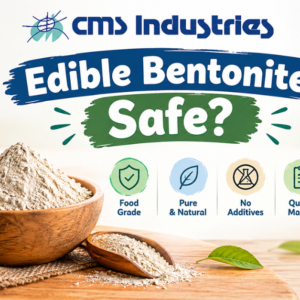
Not all bentonite clay is safe to eat. Not all products sold for ingestion are regulated by the FDA, and some brands have been found to have unsafe levels of lead when tested. Only products that are tested and labeled for internal use should be considered.
- What is the fastest way to recover from food poisoning?
Rest and bland foods once you’re able to eat again. Steady hydration, preferably with oral rehydration solutions. If you have a high fever or blood in your stool, or if your symptoms last more than two to three days, see your doctor.
- What is bentonite clay actually used for besides health remedies?
It is used in oil and water well drilling, foundry sand binding, civil engineering and pond sealing, agriculture, animal feed, water treatment, and cosmetic products such as facial masks. There is much more research and quality standards behind its use in industry than as a health remedy.