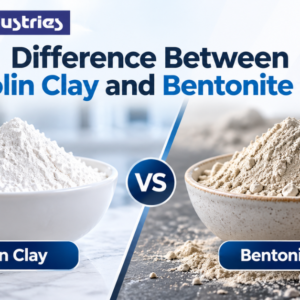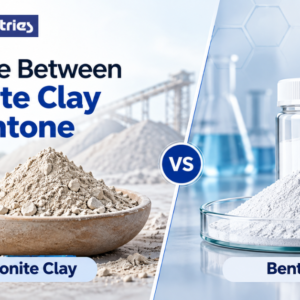



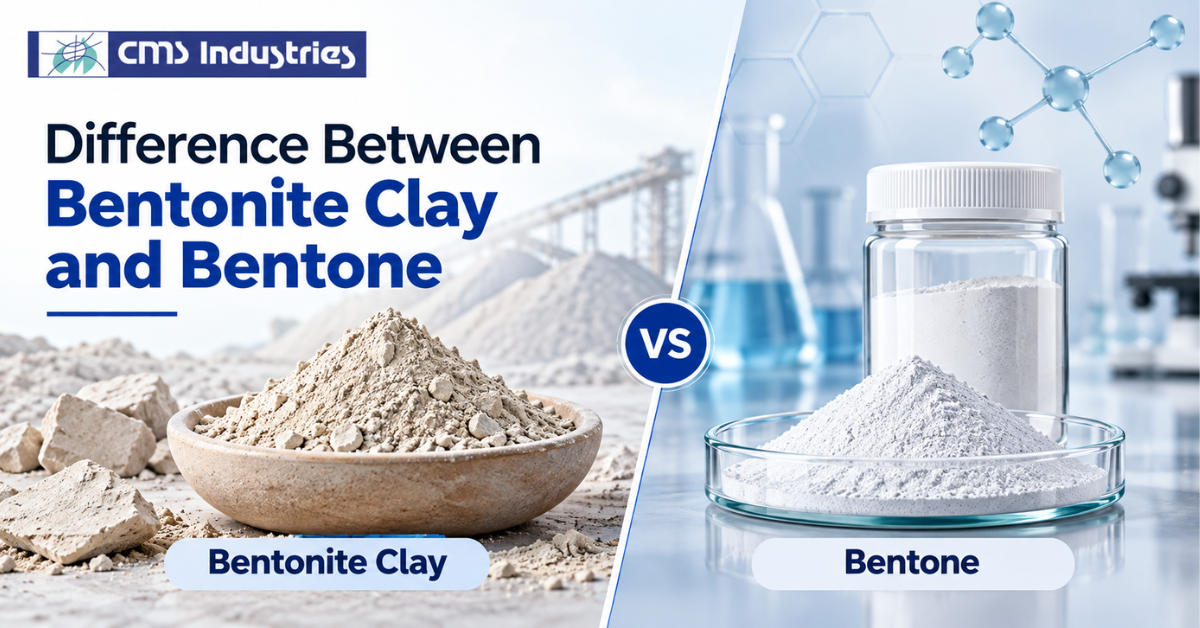
Search “bentonite clay vs bentone”, and you will find people treating the two names as one product. They’re not. Bentonite is a naturally occurring clay, mined from the earth. Bentone is a brand name for engineered clay additives. Most are treated with chemicals, so they behave very differently in the presence of water. If you mix them up, you could send a buyer to the wrong material and ruin a batch. Let’s dissect that.
Quick Answer: How Bentonite and Bentone Differ
Bentonite is a natural clay, primarily consisting of montmorillonite. It swells up to a gel in the presence of water and in the sodium state. Bentone is a registered trademark of speciality chemicals company Elementis. Most Bentone grades are organoclays – bentonite or hectorite clays modified with quaternary ammonium compounds to thicken solvent-based paints, coatings, adhesives and inks.
Here’s the short story:
- Origin: Bentonite is a natural product from volcanic dust. Bentone grades are factory-produced products.
- Chemistry. Sodium or calcium ions are carried between the clay layers of bentonite. Organoclays take up those ions in exchange for organics.
- Water behaviour: Bentonite is water-attracting. Organoclay doesn’t like it.
- Main job: Bentonite seals, binds, drills, and absorbs. Bentonite thickens liquids and prevents pigments from settling.
- Name: Bentonite is a general mineral name. Bentone is a registered trademark.
What Is Bentonite Clay?
Bentonite is formed when volcanic ash settles in water and slowly changes into clay. The Wyoming State Geological Survey says it “is any natural material composed largely of smectite-group clay minerals.” The major mineral in the samples is montmorillonite, with minor amounts of feldspar also identified by the Kansas Geological Survey. Older mining reports add mica and quartz to the list.
Early Wyoming prospectors called the stuff “mineral soap” due to its slick feeling when wet. In 1898, the name ‘bentonite’ was accepted by geologists. Today the name “clay of a thousand uses” fits better, and you can see why in the numbers. Wyoming sodium bentonite is used in cat litter (25 percent), drilling mud (20 percent), foundry binders (19 percent), and iron ore pelletising (13 percent). The other 23 per cent goes to other uses.
Sodium Bentonite vs Calcium Bentonite
The two most important types are:
- Sodium bentonite, when it comes into contact with water, swells up to 15 times its original volume. It forms heavy gels and is thus used in drilling fluids, foundry moulds and sealing work.
- Calcium bentonite adsorbs liquids and impurities but doesn’t swell much.
That division explains why suppliers have a few grades of bentonite for different jobs. The clay is left natural. Producers mine, dry, and grind it to a desired particle size.
What Is Bentone?
Bentone is not a mineral. It is a registered trademark of Elementis, a speciality chemicals supplier. Several rheological additives are included in the name. These are ingredients that govern the feel and flow of a liquid and its viscosity.
Elementis is splitting the brand into two families. The first is for natural clay grades for water-based systems, such as BENTONE WBS, which the company lists as a bentonite clay for waterborne use. The second one contains organoclays for solvent-based systems. This second family is what most people mean when they say “Bentone”.
Organoclays are derived from smectite clays such as bentonite or hectorite. The manufacturer swaps the natural sodium or calcium ions in the clay for larger organic ions. “Hectorite modified with quaternary ammonium compounds becomes an organoclay for solvent-borne systems,” Elementis says. In the SpecialChem catalogue, the Bentone range is described as organically modified bentonite and hectorite clays which act as thickeners and anti-settling agents in adhesives and sealants.
Industry writers also refer to “bentone” as slang for any organoclay. One product, BARAGEL 3000, is described by Elementis itself as an organically modified bentonite clay for low polarity systems.
What Does Bentone Do?
Organoclays provide three major controls for the formulator:
- Viscosity control: When at rest, the liquid is thick.
- Sag control: Coatings stay on vertical surfaces.
- Pigment suspension – solids remain in suspension during storage.
These exact benefits are described in U.S. patent text for rheological agents in non-aqueous systems. Elementis includes BENTONE 1000 for anti-settling and anti-sagging use, and the product page has USFDA 21 CFR and European Packaging Inks labels.
Hectorite deserves a quick mention. Elementis notes that hectorite is much finer than bentonite and therefore has more effective shear thinning in water-based systems. They’re both smectite clays, but they’re not the same mineral.”
How Bentonite Becomes an Organoclay
This is the process in simple steps:
- Use a smectite clay. The usual choice of makers is sodium bentonite or hectorite, which is dispersed in water.
- Add a quaternary ammonium. One patent teaches 75 to 110 milliequivalents of the compound per 100 grams of dry clay.
- Allow ion exchange to occur. The organic cations displace the sodium or calcium ions which are situated between the clay layers.
- Watch the surface alter. Each organic cation has a hydrocarbon chain, and that chain turns the clay surface from water-loving to water-hating.
- Build the thing. Then the producers dry it and grind it into a powder.
Organoclays are described as hybrid materials combining swelling clay minerals and surfactants in a 2019 review in Comptes Rendus Chimie. The review also says the exchange makes the clay hydrophobic instead of hydrophilic. That one change is responsible for nearly every difference you’ll read about below.
Bentonite Clay vs Bentone: Side-by-Side Comparison
How Each One Handles Water
Natural bentonite absorbs water. One organoclay supplier states that untreated bentonite can absorb seven times its weight in water. After treatment, the clay takes up only 5 to 10 per cent of its weight in water. It absorbs 40 to 70 per cent of its weight in oil, grease, and other hydrophobic compounds.
Untreated clay surfaces don’t have much attraction for organic liquids. A Brazilian study explains that organic molecules are hydrophobic; that is, they do not have affinity for the hydrophilic surfaces of natural clay. Replacing the cations with quaternary ammonium cations corrects that mismatch.
Where Each One Works
- Natural bentonite: drilling fluids, foundry sand binders, civil engineering slurries, sealing of ponds and landfills, cat litter, animal feed, water treatment, cosmetics.
- Bentone organoclays: paints, coatings, adhesives, sealants and printing inks in solvent-based systems.
- Natural clay grades of Bentone: water-based coatings and associated systems.
Organoclays are also used for cleaning water. Suppliers use them to pull oil and grease out of wastewater, typically before activated carbon or membranes.
How Each One Gets Activated
Raw sodium bentonite needs water and some mixing time for hydration and swelling. Standard bentonite organoclays behave differently. Conventional grades need to be polar activated and pre-gelled, SpecialChem says. Older patents refer to the activator as a combination of methanol and water. Elementis also supplies easy-dispersing grades such as BENTONE SD-1, activated under low shear.
Safety and Handling
Both materials create dust, so crews should wear dust protection and see the supplier’s safety data sheet. Organoclays bring another concern. Conventional quaternary ammonium halides have moderate toxicity [2019 review]. The Italian study on pesticide removal flags concern over salts that could be toxic if they reach our drinking water. These findings do not make the product unsafe for use. They tell you why you should read the data sheet before you pick a grade.
Where Raw Bentonite Gets Used
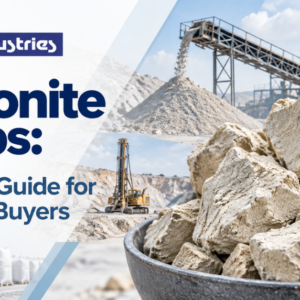
It is used in many industries, and the company’s list of products shows this. CMS Industries in Kachchh, Gujarat, mines and processes bentonite and is ISO 9001:2015 certified. Grades listed on its website include oil drilling, water well drilling, horizontal directional drilling, foundry sand binding, civil engineering and piling, geosynthetic clay liners, pond sealing, water treatment, agriculture, animal feed, paper, cosmetics, earthing, iron ore pelletising and cat litter. It also lists sodium bentonite and calcium bentonite as different grades. You can learn more in this bentonite lumps guide.
That list is telling you something useful. When a job needs swelling, sealing, binding, or absorbing, natural bentonite is the answer. None of those jobs have anything to do with thickening a solvent-based paint; that job is for the Bentone-style organoclays.
Common Mix-Ups to Avoid
Here’s why the two names are so confusing:
- “Bentone is just bentonite, fancy name. “Not exactly. The treatment changes the surface chemistry, so the clay behaves differently around water and oil.
- Bentonite can make any raw paint thicker. It will work in some water-based systems. It shows poor dispersibility in solvent-based systems.
- Hectorite is the same as bentonite. Both are smectite clays, but hectorite has much smaller particles and builds stronger flow control.
- Always means an organoclay, Bentone. The brand also offers natural clay grades for water-based applications.
How to Choose Between Them: Next Steps
When you need to select a clay, use this checklist:
- Give your liquid a name. Water-based systems refer to natural bentonite or hectorite grades. The presence of organoclays points to solvent systems.
- Define the role. Bentonite is used for sealing, binding, drilling, and absorption. An organoclay is required for thickening and anti-sag control.
- Check polarity range. Organoclay data sheets will list the solvent polarity for which each grade is intended.
- Verify the activation method. Certain grades need a polar activator. Others are spread out at low shear.
- Match regulatory label. Each use – food, feed, cosmetic, or packaging – has its own rules, so ask the supplier for documents.
- Make a small test batch. [7] Lab results always beat assumptions.
Final Thoughts
The difference between these two materials is just one modification. Bentonite is clay as natural as it can be. In their organoclay form, Bentone grades are clay that a chemist rebuilt to repel water and thicken solvents. Select bentonite for swellability, sealing, binding, or absorption applications. If flow and sag control are required in a solvent-based formulation, choose an organoclay. If you buy natural grades, suppliers such as CMS Industries will produce application lists indicating which type of bentonite is suitable for which job. Next steps: Read the data sheet, test a small batch, and confirm the rules for your end use.
Frequently Asked Questions
What is the main difference between bentonite clay and bentonite?
Bentonite is a natural clay that can expand or absorb water. Bentone is an Elementis brand for rheological additives, predominantly organoclays made by treating bentonite or hectorite with quaternary ammonium compounds. BENTONE thickens solvent-based products. BENTONITE seals, binds, drills, and absorbs.
Is Bentone made from bentonite?
Some are grades. Elementis also offers organically modified bentonite and hectorite clays under the name Bentone. Hectorite is a smectite clay mineral with distinctive smaller particles. To determine the clay inside a particular grade, refer to the technical data sheet.
Can bentonite clay replace bentonite in paint or coatings?
Generally not in solvent-based systems. Untreated bentonite has an affinity for water, not organic liquids, and disperses poorly in them. Water-borne paints can be made from natural clay grades. First test a small batch, and read the supplier’s data sheet.
Does Bentone swell in water like sodium bentonite?
No. It is made hydrophobic by treatment with quaternary ammonium compounds. One supplier says its treated clay absorbs just 5% to 10% of its weight in water, compared with natural bentonite that can absorb as much as seven times its weight.
Which one works better for sealing ponds or drilling wells?
Sodium bentonite, natural. It swells and forms gels and is used in sealing, drilling fluids, and for foundry moulds. Organoclays are used for coatings, adhesives, inks, and some oil-water filtration jobs for solvent-based systems. Match the work and the liquid to the clay.