


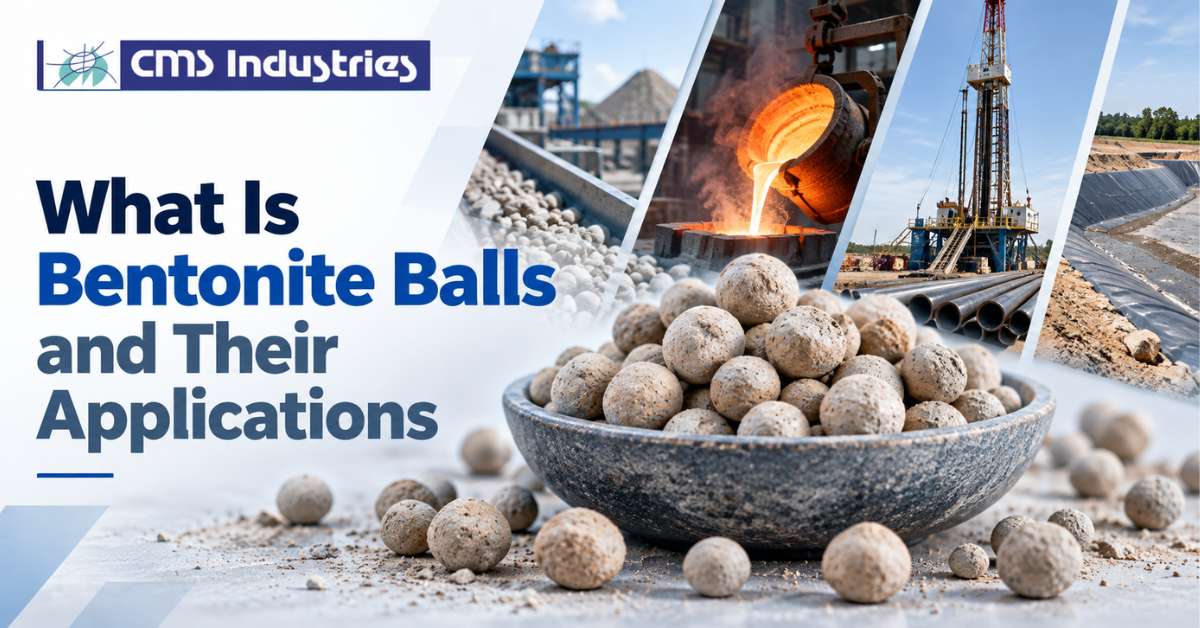
Bentonite turns up in more places than most people would expect—under a pond, inside a steel plant, on a drilling rig, or in a cat box. It is sold by the producers in the form of powder, lumps, granules, and, in a coarse form, often known as ‘crumbles’. So where do bentonite crumbles actually make their place in modern industries, and where does a different form work better?
Let’s strip it out. This guide will tell you what crumbles are, and then take you through ten real uses, from pond sealing to animal feed. It also tells you how to choose the right form and what to ask a supplier. All claims are backed up with sources at the end.
Quick Answer: What Are the Top 10 Uses?
Here is the short list: Producers and regulators identify these ten uses for bentonite in granular, lump, or powder form:
- Sealing of ponds and dams
- Water well and borehole waterproofing
- Landfills and geosynthetic clay liners
- Oil & gas drilling fluids
- Foundry moulding sand
- Iron ore pelletisation
- Civil Engineering, Piling and Tunnelling
- Kitty litter
- Animal feed and farming
- Chemical transportation, paper and water treatment
What Are Bentonite Crumbles?
Crumbles are a granular bentonite. One major producer describes its Volclay Crumbles as a double-screened granular sodium bentonite with an average particle size between 8 and 20 mesh and sells them for applications where controlled particle size is important, such as chemical carriers, fillers, and pond sealing. A pond sealing retailer sells its granular product as minus 8 mesh, which means that each particle passes through an opening of approximately 2.4 millimetres.
The clay itself is derived from altered volcanic ash. According to Encyclopedia Britannica, sodium bentonites absorb large quantities of water and swell up to many times their original volume and form gel-like masses. Patent records show free swelling to be about five to fifteen times the dry volume. That swelling and strong binding apply to almost all of the uses below.
One caveat: “Crumble” is a term of art, not a formal standard. Sizes and swelling data vary by producer, so always consult the spec sheet.
1. Pond and Dam Sealing
Crumbles are good for this purpose as the granules break up easily and swell when soaked. Instructions from a retailer are to drain the pond, work the bentonite into the soil of the bottom and sides, disc it, and compact it. It recommends a mixture of about 30 per cent bentonite to 70 per cent native soil for a dam seepage trench.
This is the seller talking, not a regulator. Take the rates as a starting point, and try a small area first. Imerys lists lakes and water engineering among other uses for its sealing bentonites, which have high water absorption and swelling to maintain low permeability.
2. Water Well and Borehole Sealing
Granular, flaked, and pelleted bentonite is used to seal the annular space around well casings and fill abandoned wells. Baroid describes its 8-mesh granular sodium bentonite as a sealing and plugging agent for well casings and earthen structures. The product is not for drilling mud.
Regulators place limits. Wisconsin permits bentonite chips or pellets in some wells, but not in holes filled with drilling mud, and requires clean water to hydrate the clay afterward. Oregon says granular bentonite may only be used in a dry annular space above the first water. In Kern County, California, bentonite is prohibited in fractured rock or where flowing water might erode it. These are US rules; check your local code.
3. Landfill and Geosynthetic Clay Liners
Waste sites need barriers to prevent leakage for years. The swelling keeps the water permeability low, and Imerys says sealing bentonites are suitable for liners in earth construction, waste deposits, and water engineering. Geosynthetic clay liners hold bentonite between fabric layers so the clay is evenly distributed. Loose granular bentonite then fills in spaces around pipes and edges that the rolls cannot reach.
4. Oil and Gas Drilling Fluids
Drilling muds are listed by Britannica as one of the classic uses of sodium bentonite. The clay thickens the fluid, carries the cuttings, and helps seal the wall of the borehole. The nuance with crumbles is that drillers generally want fine powder that disperses quickly, and Baroid’s granular sealing product is listed as not for drilling mud. Producers add bentonite to a mud system as a powder. They first grind it to that consistency.
5. Foundry Moulding Sand
Metal casters make green-sand moulds by mixing bentonite and sand. “Bentonite finds application in the casting of high-quality foundry products, and the sand and binder can be largely reused in a cycle,” says Imerys. Britannica also mentions it as a use for bonding foundry sands. Crumbles are not the final form here but serve as feedstock for foundries, which buy ground bentonite in most cases.
6. Iron Ore Pelletising
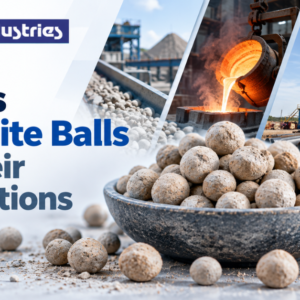
Steel plants use bentonite as a binder to roll fine iron ore into balls. Jordan’s mining ministry guide says, “Bentonite turns ore fines into spherical pellets for blast furnaces and direct reduction. According to researchers at Michigan Technological University, the most popular binder. Calcium types require activation with sodium bicarbonate. A 2015 study found sodium bentonite produced stronger pellets than calcium or mixed types.
7. Civil Engineering, Piling, and Tunnelling
Imerys says it has bentonite markets including tunnelling and dam sealing. Contractors use a slurry of bentonite and water to keep trenches and bored piles open, and similar fluids are used by trenchless crews for horizontal drilling. Here, the work is done by swelling and viscosity. Again, powder blends fastest, but coarser grades may be used as feedstock.
8. Cat Litter
Imerys sells clumping pet litter made from bentonite, which is convenient for cat owners. The clay absorbs liquid and forms into scoopable clumps. Grains pour and clump cleanly, making granular sizes well suited for this use. One note of caution: never flush clumping litter. Bentonite can expand and block pipes.
9. Animal Feed and Agriculture
According to the guide of the Jordanian Ministry of Mining, bentonite is used as a supplement in animal feed, as a pelletising aid in feed pellets, and as a flowability aid for powders. It is also used by gardeners and farmers to retain moisture in light soils. Grades for feed and soil must be tested for purity. Ask for the lab data before you buy.
10. Water Treatment, Paper, and Chemical Carriers
Bentonite is used to clarify water and make paper, and the guide in Jordan said it is good for the paper industry (Britannica). Each grain holds and releases other ingredients on a predictable schedule, so producers also sell controlled-size crumbles as chemical carriers and fillers. Here the size of the particles and the purity are more important than the swelling.
Crumbles, Lumps, and Powder: A Quick Comparison
All three begin with the same mined clay. What changes is the amount that a producer crushes, screens, or grinds it:
- Lumps. Coarse, crushed bits. They ship in bulk, and they often feed further processing.
- Crumbles and granules: Screened to a controlled size range suitable for sealing, carriers and fillers.
- Powder: Finely ground for fast dispersion, good for drilling fluids, foundry mixes, and pelletising.
Choose by the task, not the name. A grade that works well for pond sealing may not perform as well in a mud pit.
Handling and Safety Tips
Dry bentonite causes dust. Wet bentonite turns slick. In Oregon, the well rule directs installers to use the minimum amount of bentonite dust necessary in the seal; workers are protected the same way. Wear a dust mask when pouring. Keep walkways clear of spills. Store bags off the ground so moisture does not start hydrating the clay early. For more information, see this guide on bentonite balls and their applications. Be sure to follow the supplier’s safety data sheet for your grade.
How to Choose the Right Form
Use this checklist to match the form to the job:
- Define the use. Sealing, binding, and carrying need different grades.
- Choose the type. The most swelling type is sodium bentonite. Calcium bentonite swells a little.
- Check particle size. Ask for the mesh range and the results of the sieve analysis.
- Request swell data. A SWELL index allows you to compare suppliers on an even playing field.
- Check your water. Oregon’s rule shows that salty water can limit unhydrated bentonite.
- Storage planning. Store bags dry until use to prevent premature hydration of the clay.
A Producer’s View: Grades Behind These Uses
CMS Industries, a bentonite miner, processor and exporter in Gujarat, says its units can produce over 9,000 metric tonnes of powder and over 26,000 metric tonnes of lumps per month. Its website lists grades for many of the uses above, including oil drilling, foundry, civil engineering, iron ore pelletising, horizontal directional drilling, geosynthetic clay liners, pond sealing, water well drilling, animal feed, agriculture, water treatment, and cat litter.
The pages I saw show powder and lumps, not a product called “crumbles”. Anyone needing a granular size should ask for the exact mesh size range and the swell data from any supplier, including CMS Industries.
Next Steps
Bentonite crumbles in modern industries work mostly where a controlled granular size meets water, such as in ponds, wells, and carriers, while other uses rely on powder or lumps. Here’s a simple plan:
- Give the name of your usage, then choose the form.
- Request particle size, swelling index, and clay type in writing.
- Test a small batch before ordering in bulk.
- For grade descriptions of these uses, visit the CMS Industries website at www.cmsindustries.in.
FAQs
What are bentonite crumbles?
Crumbles are a granulated form of bentonite. One producer characterises its crumbles as double-screened granular sodium bentonite, 8 to 20 mesh. This is a trade name; check size and swelling data with each supplier.
Which industries use bentonite the most?
Drilling, foundry casting, iron ore pelletising, civil engineering, and sealing work top the list. Also included in established markets are cat litter, paper, feed and water treatment, according to Producers and Britannica.
Are crumbles better than powder?
Not necessarily. Flows and spreads easily, ideal for pond and well sealing. Powder disperses faster, so ground bentonite is usually used in drilling fluids, foundry mixes and pelletising. Tailor the form to the job.
Does sodium or calcium bentonite swell more?
Sodium bentonite expands much more. Sodium types swell to many times their original volume; calcium types are nonswelling, Britannica says. One 2015 study on pelletising describes the use of sodium bicarbonate to activate calcium types.
Can bentonite seal a leaking pond?
It often can’t. Sodium bentonite swells in the presence of water and slows the seepage through the soil. Retailers recommend draining the pond, mixing the clay into the soil, and compacting it. Test a small spot first.