


If your mead is sitting cloudy for months and not clearing up on its own, bentonite is probably the answer you’re looking for. Basically, bentonite is a natural clay that attracts the suspended proteins and particles that cause haze and pulls them out of the mead, making it go from cloudy to bright and clear. Let’s look at precisely what bentonite does, when to add it, and how to do it correctly so you don’t end up with a bland, stripped-down batch.
What Is Bentonite?
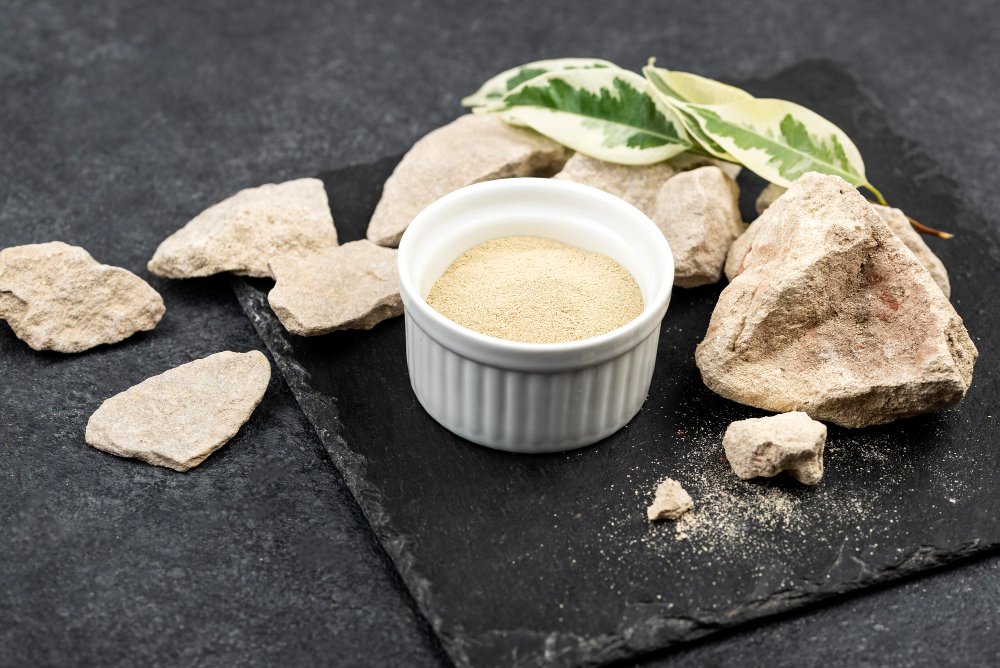
Bentonite is a natural clay that forms from the weathering of volcanic ash. It’s mostly montmorillonite, a mineral with a negative electrical charge that can hold many times its weight in water. The negative charge is why it works so well in mead-making, and we will get into why in a moment.
The two common forms of bentonite used in fermentation are the following:
- Sodium bentonite with a higher swelling capacity and more aggressive protein binding
- A softer calcium bentonite, which produces a more compact sediment
Both types are used in winemaking, cider, beer, and mead, but which you choose can impact how your final batch turns out.
What Does Bentonite Actually Do to Mead?
Honey naturally contains proteins, pollen fragments, and other organic particles. During fermentation, dead yeast cells add even more suspended material to the mix. All of this floating debris is what causes mead to look hazy or cloudy, even after fermentation has finished.
Here’s the science behind how bentonite fixes this. Most of the proteins and particles causing haze in mead carry a positive charge. Bentonite carries a negative charge. When you add bentonite to your mead, the two attract each other, similar to a magnet pulling in metal filings. The bentonite binds to these positively charged particles, and the combined clumps become heavy enough to sink to the bottom of your fermenter as sediment, called lees. Once that sediment settles, you rack the mead off it, leaving a clear, bright liquid behind.
Research from Purdue Extension backs this up, noting that bentonite clay can irreversibly bind proteins of different sizes and has long been the fining agent of choice for this kind of clarification work. Iowa State University Extension adds an important detail: bentonite clay good for rashes only removes particles that carry a positive charge relative to the liquid’s pH, since bentonite’s own negative charge means it can’t attract particles that are already negatively charged. That’s why bench testing on a small sample before treating a full batch is always a good idea.
Why Would You Add Bentonite to Mead?
The primary reasons mead makers use bentonite are the following.
- Quicker clarity. Some mead batches take a year or more to clear on their own. “Bentonite can show visible results in days.
- Removes haze from protein and pectin. These are the common reasons for unending cloudiness in mead made with honey and fruit additions.
- Improves appearance for bottling or competition. A crystal clear mead just looks more refined and professional.
- Easier to stack. Bentonite pulls the loose particles into a denser sediment that is easier to separate from the liquid medium above it.
- Can smooth out rough taste edges. Some mead makers say fining gives a crisper, cleaner flavour because some of the off-tasting compounds are removed along with the haze.
When Should You Add Bentonite to Mead?
You have two choices, and both have their pluses and minuses.
- Adding it prior to or during primary fermentation. One of the few fining agents that works well pre-fermentation. As fermentation produces carbon dioxide, the bubbles carry bentonite particles up through the mead and back down again, repeatedly cycling it through the liquid. This means less total bentonite, and the clarification takes place slowly as the mead ferments.
- Add after fermentation is complete. This is the more old-fashioned way. Since there is no CO₂ activity to help distribute the clay, you will need a slightly higher dose and vigorous manual stirring to make sure it disperses evenly.
- If your mead has a lot of honey solids, pollen, or fruit pulp in it, adding bentonite early can save you a lot of waiting. If you are just polishing off a mostly clear batch before bottling, adding something post-fermentation is fine.
How to Use Bentonite in Mead: Step-by-Step
Bentonite is not soluble in water. First, it needs to be hydrated properly, or else it will just sit as a useless clump at the bottom of your fermenter.
Here’s the process:
- Measure out your bentonite. A common dose is about 1/2 – 1 tsp per gallon of mead. The amount of haze you are dealing with will determine the dosage.
- Soak it separately. Use approximately 1/2 cup of water for a 5-gallon batch. Dissolve the bentonite powder in hot water (140° to 160°F or 60° to 71°C).
- Mix out the lumps. Bentonite will form clumps when it first meets water, so be sure to stir it vigorously to break these apart.
- Allow the slurry to hydrate. Allow it to sit for a few hours or more; many mead makers prefer to let it sit overnight to achieve a smoother, fully hydrated slurry.
- Add slurry to your mead. Pour in and mix gently but thoroughly to distribute evenly through the batch.
- Let it go on. Depending on whether you added it before or after fermentation, this can take from a few hours to a couple of weeks.
- Rack the mead from its lees. As soon as the mead is clear and the lees have settled to the bottom, draw off the clear liquor into a clean vessel.
How Much Bentonite Should You Use?
The dosage is very dependent on when you add it and how much haze-causing material is in there.
- In general, additions made before fermentation will require more bentonite, as some of it will be permanently lost before fermentation even begins. A typical range is 3 to 5 grams per gallon.
- These are usually lower, in the range of 1 to 2 grams per gallon, since the mead is more settled and easier to treat with one thoroughly mixed dose.
- If you are new to fining, start at the lower end of the range. You can always add a bit more if the mead hasn’t cleared enough, but you can’t undo an overdose.
Does Bentonite Affect the Taste of Mead?
Bentonite does not affect flavour too much when used correctly. But it’s not perfectly picky. Because it functions by general electrostatic attraction, rather than targeting one specific compound, too much can strip out some of the aroma and flavour-active compounds along with the haze-causing proteins and bentonite waterstop. This is sometimes called “flavour stripping” and is the main reason that experienced mead makers recommend starting with a conservative dose and running a small bench trial before treating your entire batch.
Sodium Bentonite vs Calcium Bentonite for Mead
Both types will work on mead, but they behave a little differently:
- Hydrated sodium bentonite swells more and binds protein more tightly, so it does a better job of removing heavier haze, although it can create more fluffy, loose sediment.
- Calcium bentonite is more gentle and produces a tighter, more compact sediment, so less mead is lost in the racking.
Many home mead makers choose based on trial and error, as it can depend on the specific honey, water, and yeast used in a given batch.
Where Food-Grade Bentonite for Mead Making Comes From
Not all bentonites are suitable for beverage use. The bentonite used in industry for drilling or construction is not purified to the same degree as food-grade or oenological-grade bentonite, which is refined to meet purity limits for heavy metals and other impurities before it can be safely used in contact with anything you intend to drink.
Operating as a manufacturer of bentonite, CMS Industries is based in Gujarat, India, and makes food-grade and oenological-grade sodium and calcium bentonite in addition to industrial grades for use in construction and drilling. Bentonite is going right into your fermenting liquid, so getting a properly tested, food-grade product is more important than you think. If you want to know the difference between food-grade bentonite and industrial bentonite, CMS Industries has more details on its website.
The Bottom Line
Bentonite adds nothing to your mead. This works by extracting the suspended proteins, pollen particles, and dead yeast cells that keep your mead looking cloudy, binding them into a heavier sediment that settles to the bottom so you can rack off a clear, bright batch. If used sparingly, with plenty of water, to a sensible quantity, it is one of the most reliable tools for the home mead maker who doesn’t want to wait a year for natural clarification.
Frequently Asked Questions
Does bentonite change the taste of mead?
The taste effect is small, even in small and properly measured doses. Overdosing can sweep some aroma and flavour compounds away with the haze, so start with a conservative amount and go from there.
Can I add bentonite to mead during active fermentation?
Yes. One of the few fining agents that works well during fermentation is this, because the bubbles of carbon dioxide help circulate the clay through the mead so that it clears gradually as fermentation continues.
How long does it take for bentonite to clear mead?
It depends. Some batches show visible clarity within hours, while others take one to two weeks to fully settle, depending on the dose used and how much haze-causing material is present.
Is bentonite safe to use in mead-making?
Yes, you can if you use food-grade or oenological-grade bentonite. It’s a natural clay with a long history in winemaking and mead-making, and it’s approved for beverage clarification under recognised winemaking standards.
What’s the difference between sodium and calcium bentonite for mead?
Sodium bentonite swells more and more aggressively and binds haze-causing proteins, and calcium bentonite is more gentle and produces a more compact sediment. A lot of mead makers go by how much haze they need to clear.