


Did you know fungal infections are actually quite common? Athlete’s foot in between your toes, yellow toenails that just won’t go away, or an unexpected ringworm on your skin. Fungal infections affect millions each year. As more and more people are turning to natural remedies to help heal their infections, one mineral in particular has been popping up everywhere: bentonite clay.
But does bentonite clay really help fungal infections? Well, let’s look at the facts, shall we?
What Is Bentonite Clay, Exactly?
Bentonite clay is a naturally formed mineral resulting from volcanic ash weathering. Bentonite’s most active ingredient is montmorillonite, a layered aluminosilicate which consists of layers of silica and alumina sheets. Research studies in the journal Applied Clay Science found that this structure allows bentonite to have extremely high surface area and cation exchange capacity. In other words bentonite clay can adhere to (draw out) impurities very strongly. Bentonite manufacturer and supplier clay’s swelling and adsorption ability comes from its major constituent montmorillonite and pure montmorillonite is required for Bentonite clay to be used in medical procedures. Sodium Bentonite and Calcium Bentonite are the two types used topically for health and beauty purposes. Sodium bentonite expands with much more force than calcium bentonite when exposed to water. Calcium bentonite is preferred over sodium bentonite when applied to skin as it is less drying and harsh. CMS Industries (mine-owner/exporter of bentonite clay) located in Kachchh (Gujarat) exports both Sodium & Calcium bentonite to industrial as well as cosmetic industry.
How Does Bentonite Clay Interact with Skin and Microbes?
Here is a BIG reason bentonite clay is touted so highly in the natural health world. When combined with water and applied topically, bentonite is highly charged with negative ions. Pathogens, toxins and most organic substances have a positive ionic charge. Basically, the clay will attract these toxins to its top layer through a process called adsorption.
Montmorillonite clays like bentonite adsorb to the surface of the skin creating a physical barrier. Not only does it bond with irritants and allergens but it also minimizes transdermal uptake of pro-inflammatory compounds.
Adsorption also dries the surface. And that’s important too when it comes to fungi. Many of the fungi that cause us problems including Candida albicans, Trichophyton(the fungus responsible for ringworm and athlete’s foot), needs moisture to grow and multiply. By binding to surface moisture, clay helps starve fungi.
Does Bentonite Clay Actually Fight Fungi?
This is where precision matters. Let’s separate what research shows from what is merely assumed.
What lab research shows:
One article published in the Zaporozhye Medical Journal studied microbes taken from deposits of bentonite clay found in Ukraine. They discovered a strain known as Streptomyces SVP-71 that inhibited 100% of the fungi they tested in vitro. This included Candida albicans, Aspergillus niger, and many other types of pathogenic fungi. Keep in mind: this antifungal effect benefits of bentonite clay for dogs was due to a bacterium that was living in the clay sample, not the mineral itself. Clay
In a different study, published in Applied Microbiology (referenced in several articles about clay and the microbiome), researchers have observed that certain mineral clays can have heat-stable antimicrobial effects. Another study, published in the Journal of Antimicrobial Chemotherapy, discovered that certain mineral based products (bentonite included) displayed heat stable antibacterial activity that may help treat skin infections caused by bacteria.
What clinical evidence shows:
One double-blind randomized controlled trial conducted with 60 infants with diaper dermatitis showed that those treated with bentonite recovered from their symptoms faster than those in the control group at six hours (93% versus 40%) and three days (90% versus 37%). Clearly diaper rash isn’t always fungal but most cases involve Candida overgrowth. Promising!
The authors of a 2023 Skin Research & Technology article on treating acne and oily skin say about bentonite clay, “subjects using bentonite clay showed improvements in skin hydration and texture.”
What hasn’t been done, and I will just come out and say it, is a large randomized controlled trial studying the efficacy of bentonite clay against fungal skin infections in humans. We do not have that data.
Bentonite Clay for Specific Fungal Conditions
Athlete’s Foot (Tinea Pedis)
Athlete’s foot fungi like warm moist environments. Applying a paste of bentonite clay between toes and on the sole of your foot will absorb sweat and surface moisture, drying it out for your feet and making them less attractive to Trichophyton species fungi. Many people combine the clay with apple cider vinegar. ACV acidifies the skin pH by itself can slow fungal growth rates.
Of course, athlete’s foot that’s worked its way down into the skin or nail bed won’t clear up with external applications of clay. Oral terbinafine works better than topical treatments for infections in the nail bed/onychomycosis because of higher efficacy and a shorter treatment course.
Ringworm (Tinea Corporis)
Ringworm is a fungal infection of the superficial layers of skin. This is the fungal infection for which bentonite clay has the most theoretical application as an adjunct therapy and calcium bentonite good for chickens, as it lives on the surface of the skin. The absorptive abilities of the clay could theoretically decrease moisture promoting proliferation. But as always, treatments with scientific evidence like topical clotrimazole remain the gold standard of care.
Topical clotrimazole prevents growth of fungus that cause infection. It is typically applied two times each day.
Candida Skin Infections
Candida skin overgrowth usually presents itself in areas where skin touches skin, warm areas where creases occur, and areas where sweat tends to accumulate. Once again, the drying properties of bentonite clay may help with superficial issues. The in vitro studies done demonstrating inhibition of Candida albicans by microorganisms present in bentonite deposits is somewhat intriguing, however we are very far from any clinical evidence.
How to Use Bentonite Clay on Fungal-Affected Skin
If you want to try bentonite clay as a supportive home measure, here is a straightforward approach:
- Choose the right grade. Use cosmetic-grade or food-grade bentonite, not industrial varieties. The FDA lists bentonite as generally recognized as safe (GRAS) for certain cosmetic applications.
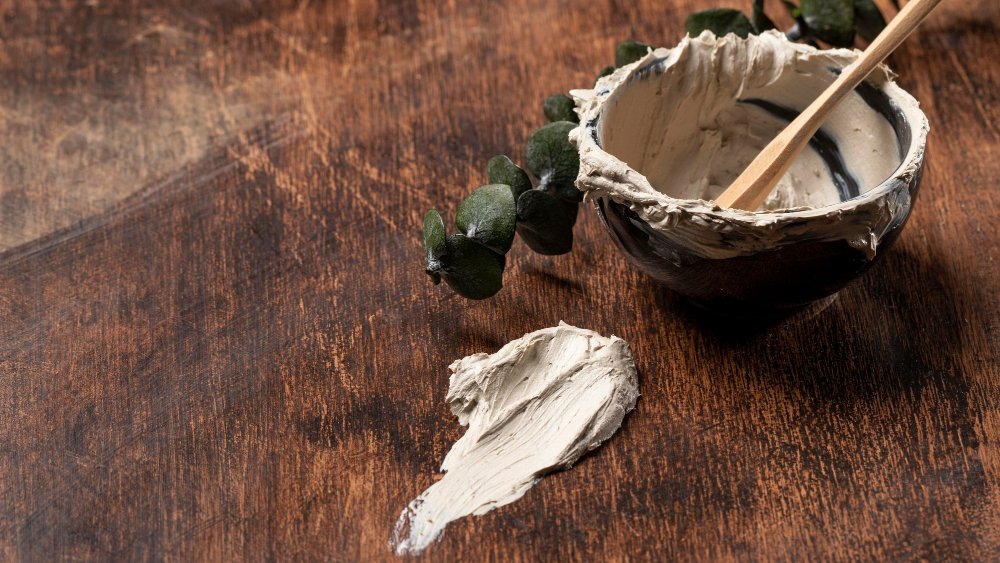
- Mix with water or apple cider vinegar. Combine one to two tablespoons of clay powder with enough liquid to form a thick paste.
- Avoid metal tools. Use a wooden or plastic spoon. Metal can interact with the clay’s ionic charge and reduce its effectiveness.
- Apply to the affected area. Spread a thin, even layer over the skin.
- Let it dry. Leave it on for 10 to 20 minutes. Do not let it dry completely if you have dry or sensitive skin, as this can cause irritation.
- Rinse with warm water. Pat the area dry thoroughly. Moisture left behind defeats the purpose.
- Repeat consistently. For best results, apply daily or several times per week. Do not use this as a replacement for prescribed antifungal treatment.
Do not use bentonite clay on:
- Open wounds or broken skin
- Areas with active eczema or psoriasis flares
- Mucous membranes
What Bentonite Clay Cannot Do for Fungal Infections
Real talk time. Bentonite clay is not an antifungal medication. It doesn’t have azoles or allylamines or any of the active ingredients that prescription and over-the-counter antifungals use to kill fungi by disturbing cell membranes.
If your infection is under the skin, in your nails, or hasn’t improved with at-home treatment in two to four weeks you should seek medical care. Someone with a fungal infection can consult their physician about what medication would work best for them, as the antimicrobial properties of bentonite clay still need further study.
There is also the potential issue of heavy metals. Some brands of clay have tested high for lead or arsenic. Only buy from companies that can provide you with documentation of testing and transparent information about the origin of their clay. CMS Industries has its own laboratory that runs quality tests on our various grades of bentonite. This is the type of processing you want to look for when something will be near your skin.
The Bottom Line on Bentonite Clay for Fungal Infections
As you can see, Bentonite clay does have potential as an adjunctive skin care product. It can adsorb toxins. It has clinically proven skin soothing properties. There is in vitro evidence that it may have some antimicrobial benefits. As part of an overall regimen for superficial fungal infections, it makes sense to use bentonite clay.
What it should not do is stand in place of an antifungal drug for moderate to severe rashes, nail fungus, or any infection that persists beyond two or four weeks home care treatments.
View bentonite clay as you would dry and cover a cut. It’s good skin care. It helps healing. And it isn’t harmful if used properly. But please don’t expect it to magically heal a problem on its own.
Frequently Asked Questions
1. Can bentonite clay cure toenail fungus completely?
Bentonite clay is unlikely to cure toenail fungus on its own. Nail fungal infections (onychomycosis) are deep infections that require antifungal agents able to penetrate the nail plate. Oral medications like terbinafine are typically needed for complete clearance. Clay may help as a supplementary measure but should not replace medical treatment for nail infections.
2. How long does it take for bentonite clay to help with a fungal skin infection?
Results vary by the severity and type of infection. For very mild, superficial cases, some people notice a reduction in itching and moisture within one to two weeks of daily use. If you see no improvement after three to four weeks of consistent application, consult a dermatologist. Do not delay medical care hoping the clay will eventually work.
3. Is it safe to use bentonite clay on sensitive skin with a fungal infection?
Bentonite clay is generally well-tolerated on skin, with a 2023 clinical study showing no significant adverse reactions in adults with oily, sensitive skin over four weeks of use. That said, the drying effect of the clay can cause irritation if left on too long. Start with short contact times (10 minutes) and rinse thoroughly. Avoid broken or raw skin.
4. What type of bentonite clay is best for fungal skin conditions?
Calcium bentonite is generally preferred for topical use because it is gentler and less aggressively drying than sodium bentonite. Look for cosmetic-grade or food-grade bentonite from verified suppliers with documented quality testing. Industrial-grade bentonite is not appropriate for skin use.
5. Can I use bentonite clay alongside antifungal creams?
Yes, in most cases you can. Apply the antifungal cream as directed by your doctor or the product label, and use the bentonite clay mask separately, not over the cream. Give the antifungal time to absorb first. The clay’s moisture-absorbing properties can complement the medication by keeping the treatment area dry and clean between applications.